


 CDN NEWS |
  US NEWS







Demand has climbed since the Strait of Hormuz was disrupted in February, with Asian buyers who can no longer count on Persian Gulf oil turning to Canada instead
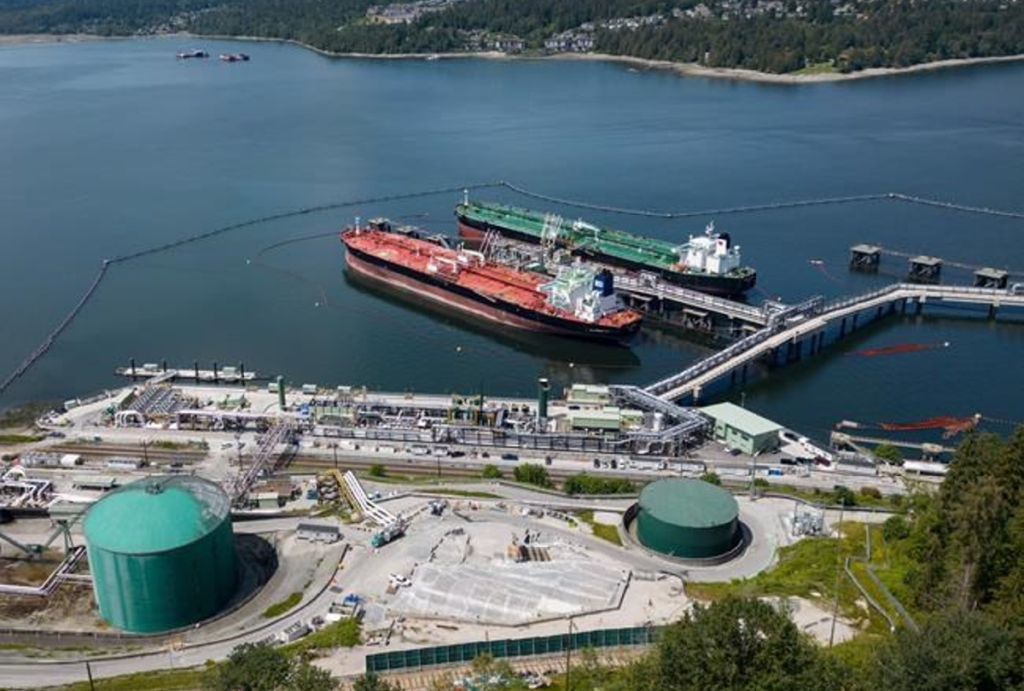
The federal Crown corporation that owns Alberta’s only pipeline to the Pacific Ocean wants to reserve more space for companies that sign long-term contracts, but it’s already filling up.
Trans Mountain Corp. has asked the Canada Energy Regulator for permission to set aside 90 per cent of the line for those shippers, up from 80 per cent. It wants an answer by Oct. 1 and the change in place by January.
The previous round of long-term contracts, which closed in June, “demonstrated strong demand for long-term transportation service” on the line, Mark Maki, Trans Mountain’s chief executive, said when the company filed the request.
He said with the system “running at full or near full capacity for months,” the company is focused on getting more out of the infrastructure it already has.
Trans Mountain has loaded 528 tankers since the expanded line opened in May 2024, and 64 per cent of them went to Asia, according to the company’s first-quarter results.
Demand has climbed since the Strait of Hormuz was disrupted in February, with Asian buyers who can no longer count on Persian Gulf oil turning to Canada instead. More oil was offered to Trans Mountain in June than its pipeline could take, the first time that had happened since the line was expanded in 2024, Reuters reported.
Jason Balasch, Trans Mountain’s vice-president of business development, told the news agency that uncertainty in global crude markets and the disruption to the strait had increased Asian demand for Canadian oil, but made it hard to predict how full the line would run.
The pipeline can carry 890,000 barrels a day. If the regulator agrees, the space left for other companies would drop by roughly half to about 89,000 barrels a day from about 178,000.
Setting aside 90 per cent is not unusual for a Canadian export line. About 94 per cent of South Bow Corp.’s Keystone system, which carries Alberta crude to refineries in the United States, is under contract, according to Oil Sands Magazine.



Alberta gets royalties as a share of what its oil sells for, so barrels that reach the coast are worth more to the provincial treasury than the ones that cannot get there. The Business Council of Alberta estimates improved market access will be worth about $5 billion in extra provincial revenue this year.
The companies without contracts would be the first to lose their space when a pipeline is full. Trans Mountain closed bidding Monday on new capacity, roughly 90,000 barrels a day it says it can add by year-end, but would not say whether anyone won any of it.
Some producers, however, are covered. Canadian Natural Resources Ltd. holds 256,500 barrels a day of contracted export capacity to the West Coast and the U.S. Gulf Coast, about 21 per cent of the liquids it expects to produce this year, according to its Aug. 6 second-quarter release.
But holding a contract is not open to everyone.
“Securing direct pipeline capacity requires significant financial strength,” Patrick O’Rourke, managing director of equity research at ATB Cormark Capital Markets, said.
Larger producers hold that space, he said, because they carry an investment-grade credit rating or the balance sheet to post substantial letters of credit against their commitment, and those capital requirements are why they dominate the contracted space.
Smaller and mid-sized producers “rely on third-party marketers like Trafigura, Macquarie, Shell and BP to aggregate and transport their crude,” O’Rourke said.
The ones without space of their own sell at home instead, at Edmonton or Hardisty prices, and give up the higher prices their barrels could fetch overseas, he said.
Alberta has not said whether it supports Trans Mountain’s change. Asked about oil prices and the province’s fiscal outlook, the office of Finance Minister Jason Nixon said Alberta is watching global energy markets and that the longer-term impact of those markets remains uncertain.
Persian Gulf energy producers are concluding that Iran’s control of the strait will become permanent, according to a Wall Street Journal article on Monday.
But the longer the current situation lasts, the more Canadian oil the world will want. The companies with contracts on the Trans Mountain pipeline already have their space on the only line that can deliver it. The regulator will decide by Oct. 1 how much is left for everyone else.
Share This:






















On The Verge: Energy Sector Primed for New Wave of Growth – ATB Economics