


 CDN NEWS |
  US NEWS







By Terry J. Winnitoy
Environmental organizations and anti-oil and gas activists are increasingly making liquefied natural gas, or LNG, a central target of their campaigns in Canada.
The reason is strategic. LNG is not simply another energy project. It is the most important potential driver of future natural gas development in Western Canada.
A large LNG export terminal creates demand for decades of additional gas production. That means more drilling and hydraulic fracturing, new gas-processing facilities, expanded pipeline systems, additional electricity generation and transmission, coastal infrastructure and increased marine shipping.
From an activist perspective, stopping an LNG terminal can potentially stop or slow that entire chain of development.
LNG Is the Gateway to Future Natural Gas Growth
Canada has traditionally sold most of its natural gas to the United States. LNG terminals on the British Columbia coast allow Canadian producers to reach Asian and other international markets.
That is particularly important for producers operating in the Montney formation of northeastern British Columbia and northwestern Alberta, one of North America’s largest natural gas resources.
Without LNG export capacity, Canadian gas production remains heavily dependent on domestic consumption and the increasingly competitive U.S. market. With LNG, producers gain access to global prices and long-term demand from countries seeking reliable energy supplies.
Environmental organizations understand this connection. They do not see an LNG terminal as an isolated facility. They view the terminal, the pipeline supplying it, upstream drilling and the eventual burning of the exported gas as one interconnected system.
Stopping export capacity therefore reduces the economic case for additional wells, pipelines and processing plants.
LNG Is Replacing Pipelines as the Major Campaign Battleground
For more than two decades, environmental groups focused heavily on oilsands pipelines such as Northern Gateway, Keystone XL, Energy East and Trans Mountain.
Some were cancelled, others were delayed, and Trans Mountain was eventually completed after years of controversy.
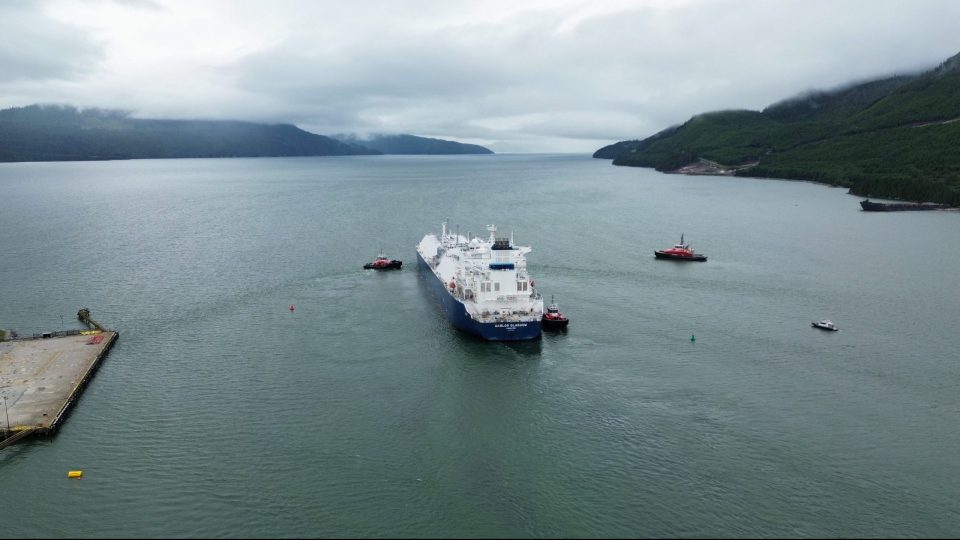
Today, Canada’s political environment is shifting. Governments are emphasizing energy security, trade diversification, Indigenous economic participation and faster development of major projects. LNG Canada is operating, while Cedar LNG and Woodfibre LNG are under construction. Other projects, including LNG Canada Phase 2 and Ksi Lisims LNG, could significantly expand Canada’s export capacity.
LNG has consequently become the logical next battleground. It represents one of the few areas where substantial fossil-fuel production growth remains possible.
Several environmental organizations openly state that their objective is not merely to improve LNG regulations but to prevent additional LNG and fracking development entirely.
The Carbon “Lock-In” Argument
LNG facilities cost billions of dollars and are designed to operate for several decades. Once constructed, governments, companies, employees and communities all acquire a financial interest in keeping them operating.
Activists describe this as “carbon lock-in.”
Their argument is that approving new LNG infrastructure today commits Canada to continued natural gas production long after governments are supposed to be reducing greenhouse gas emissions.
This is why environmental campaigns concentrate heavily on projects that have not yet reached a final investment decision. It is far easier to stop a project before construction begins than to close one after billions of dollars have been invested.
Methane Has Changed the Natural Gas Debate
Natural gas has traditionally been promoted as a cleaner-burning alternative to coal. When used to replace coal-fired electricity, it can significantly reduce carbon dioxide emissions at the point of combustion.
Opponents respond that natural gas is primarily methane and that emissions can occur throughout the supply chain, from drilling and processing to pipelines, liquefaction and shipping.
Methane is a particularly potent greenhouse gas over the shorter term. This has allowed activists to challenge the industry’s description of gas as a “bridge fuel” and instead present LNG as another high-emission fossil fuel.
Canada has strengthened regulations intended to reduce methane emissions from the oil and gas industry. Supporters argue that Canadian methane standards, electrified facilities and efficient LNG technology could make Canadian LNG among the lowest-emission LNG in the world.
Opponents counter that lower-emission LNG is still additional fossil-fuel production and does not eliminate the emissions created when the gas is ultimately consumed.
Activists Challenge the Coal-Replacement Argument
One of the strongest arguments supporting Canadian LNG is that it could replace coal in countries such as China, India, Japan and South Korea.
Environmental groups challenge this assumption because no producer can guarantee how every shipment will be used.
Canadian LNG may replace coal, but it could also replace LNG from another country, compete with renewable energy or simply meet new energy demand rather than displacing an existing fuel.



This does not mean Canadian LNG cannot reduce global emissions. It means the result depends on what fuel it replaces, how much methane escapes during production and whether the gas adds to or substitutes for existing consumption.
That uncertainty gives opponents a way to challenge one of the industry’s most persuasive public-interest arguments.
British Columbia’s Climate Targets
LNG projects can have relatively low emissions per tonne of production while still creating significant total emissions because of their enormous scale.
Environmental groups argue that additional LNG facilities and upstream natural gas production will make British Columbia’s climate targets increasingly difficult to achieve.
The disagreement centres on the difference between emissions intensity and total emissions.
Governments and project proponents emphasize that Canadian facilities can be far cleaner than many international competitors. Opponents argue that even highly efficient LNG projects add millions of tonnes of emissions when production is expanded.
Both statements can be true. A facility may be among the cleanest in the world while still becoming one of the province’s largest industrial emitters.
Clean Electricity Has Become Another Point of Conflict
Several Canadian LNG projects plan to use BC Hydro electricity rather than natural gas to power their liquefaction equipment. This can sharply reduce terminal emissions.
Activists have responded by changing their argument. Instead of criticizing gas-powered compressors, they question whether scarce clean electricity should be used to produce fossil fuel for export.
British Columbia will also need electricity for homes, electric vehicles, mines, data centres, manufacturing and the broader electrification of the economy.
Opponents argue that supplying LNG projects could require billions of dollars in new generation and transmission infrastructure while reducing the electricity available for other industries.
Financing, Subsidies and Legal Challenges
LNG projects are highly capital-intensive. Projects that have not reached final investment decisions can be vulnerable to higher financing costs, regulatory delays and political uncertainty.
Environmental groups are increasingly targeting banks, pension funds, insurance companies, export-credit agencies and government financing programs.
Their objective is not always to secure an outright government prohibition. Increasing costs, delaying approvals or discouraging lenders may be enough to make a project uneconomic.
Public financing is particularly controversial. Opponents argue that taxpayers should not carry the construction, commodity-price or stranded-asset risks associated with LNG.
Supporters respond that government-backed infrastructure and financing are commonly used to help Canada compete internationally and attract major investments.
Indigenous Support and Opposition Complicate the Campaign
LNG presents a major challenge for environmental organizations because several important projects are Indigenous-led or Indigenous-owned.
Cedar LNG is majority-owned by the Haisla Nation, while Ksi Lisims LNG is being developed with the Nisga’a Nation. Many First Nations view LNG as an opportunity to generate long-term revenues, employment and economic independence.
At the same time, other Indigenous communities oppose particular pipelines or terminals because of concerns involving territory, consent, salmon, water and cumulative environmental impacts.
The reality is project-specific. Indigenous communities do not hold one unified position on LNG.
The Real Reason LNG Is Being Targeted
LNG is being targeted because it is the gateway to the next generation of Canadian natural gas development.
Stopping one terminal can affect drilling, pipelines, processing plants, electricity infrastructure, investment decisions and decades of production.
The debate is therefore about much more than whether natural gas burns more cleanly than coal.
For proponents, the challenge will be demonstrating that Canadian LNG development is meaningfully lower in emissions, supported by the majority of affected Indigenous communities and capable of providing genuine global and domestic benefits.
Effectvely demonstrating credible answers to politicians and the general public will go a long way in silencing anti-oil and gas activists and segments of the mainstream media that continue to report on them.
Share This:






















On The Verge: Energy Sector Primed for New Wave of Growth – ATB Economics