


 CDN NEWS |
  US NEWS







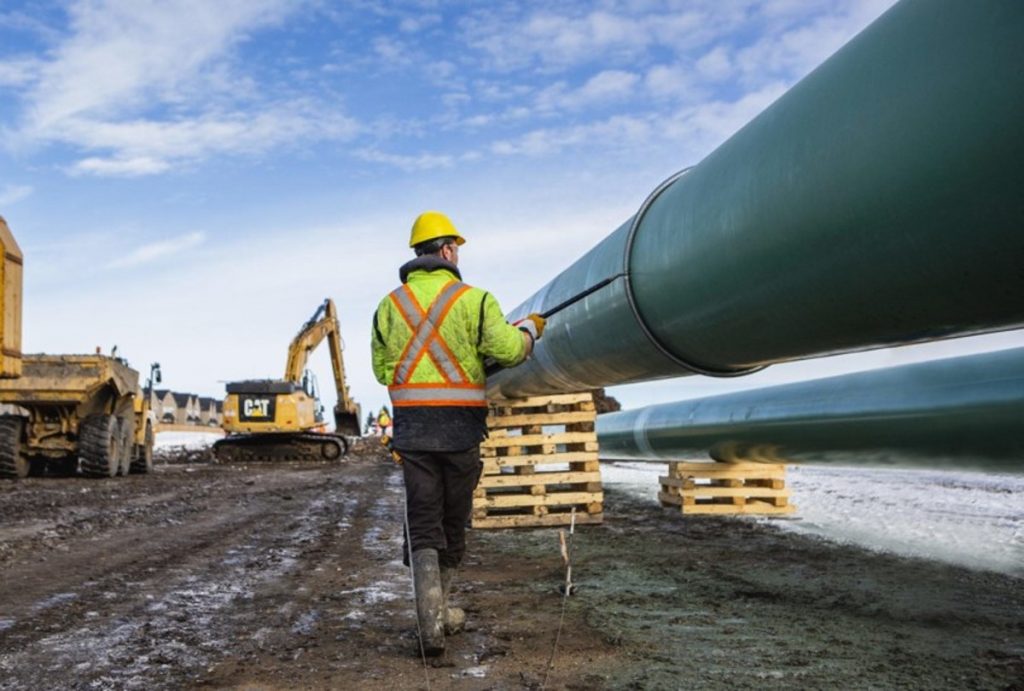
Canada’s Trans Mountain pipeline is running at full capacity for the first time since the completion of a major expansion two years ago, but an executive said Wednesday that ongoing global turmoil makes predicting future capacity rates difficult.
* The 890,000-barrel-per-day pipeline, which carries oil from the province of Alberta to British Columbia’s west coast, is at apportionment for the month of June.
* Apportionment is an industry term for when shipper demand for spot capacity on a pipeline exceeds what is available.
* The uncertainty in global crude markets and the disruption to the Strait of Hormuz have increased demand for Canadian oil from Asian markets, but have also made it difficult to predict the pipeline’s utilization rates beyond the short-term, said Jason Balasch, vice president of business development for Trans Mountain.
* As recently as last summer, the Trans Mountain system, which is owned by the Canadian government, was only about 84% full.



* Oil production in Canada, the world’s fourth-largest crude producer, is growing, with output in 2026 expected to exceed last year’s record of 5.3 million bpd.29dk2902l
* Trans Mountain is currently planning several optimization projects, including the addition of drag-reducing agents and new pumping stations, which are expected to add 300,000 bpd of capacity to the system by the end of 2028.
* Alberta, Canada’s main oil-producing province, has also been exploring the feasibility of a new 1-million-barrel-per-day crude oil pipeline to British Columbia’s northwest coast to increase exports to Asia, but no private-sector company has committed to such an effort yet.
* Canadian heavy crude prices have improved sharply since the 2024 completion of the Trans Mountain expansion, which tripled the pipeline’s capacity.
(Reporting by Amanda Stephenson in Calgary; Editing by Sonali Paul)
Share This:






















BEYOND THE DEAL: What Comes Next for Energy Entrepreneurs? – Reece Tomlinson