


 CDN NEWS |
  US NEWS







By Iain Boekhoff

A proposal by a Kevin O’Leary-backed firm to build Canada’s largest data center in northwestern Alberta is facing pushback from some residents and Indigenous groups.
Hundreds of people poured into the community hall in the hamlet of Grovedale, Alberta, to hear from O’Leary Digital Ltd. officials and their contracted experts last week. The company wants to build a 7.5 gigawatt data center called Wonder Valley in the region, which is about 300 miles northwest of the provincial capital of Edmonton.
One gigawatt is roughly the equivalent of the power of a traditional nuclear reactor.
The Alberta plan has similarities to O’Leary Digital’s Utah data center proposal, which has triggered protests and even death threats against elected officials over environmental concerns, including water usage in the Great Salt Lake area. O’Leary, an investor who’s best known for his role on the Shark Tank television series, told lawmakers last week the company would cut the 40,000-acre Utah project in half.
In Alberta, O’Leary Digital is trying to take advantage of two major natural features — abundant natural gas to provide the power for the data centers, and a northern climate that makes cooling them more efficient. The firm hopes to begin construction as soon as next year, if it can get the necessary regulatory permits and investment.
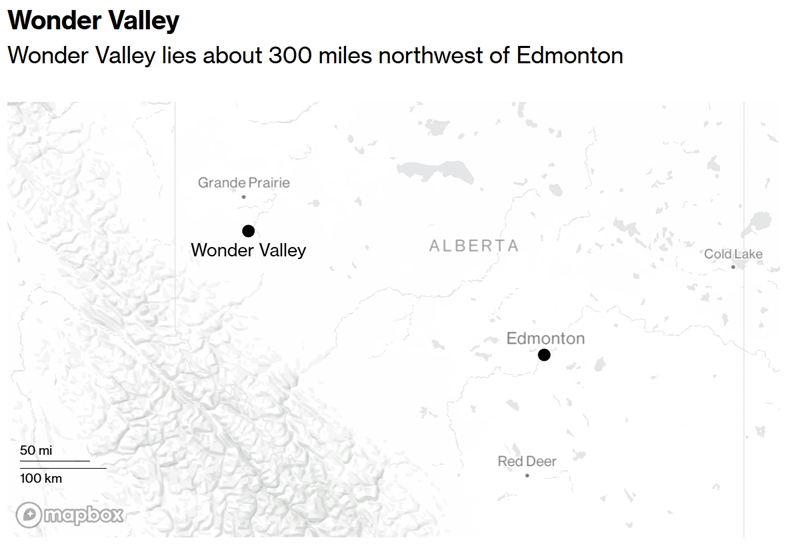
Source: Bloomberg
Residents at the town hall meeting expressed particular concern about the effects on water and wildlife, the types of data being processed in the facilities, possible impacts on the electrical grid, transparency around the approval process and how the local economy would benefit. People inside and outside the building handed out pamphlets opposed to the project.
Representatives from the company “seem like lovely people, but nothing in there has made me believe that this is a good thing for our community,” said Sandra Willman, who lives in the nearby city of Grande Prairie.
Data center projects are facing growing opposition in parts of the US and Canada over water usage, electricity consumption, and the economic and social effects of the rapid development of artificial intelligence. In the latest example, Illinois Governor JB Pritzker issued an order pausing tax incentives for data centers after the state legislature stalled his plan to keep data-center energy costs from affecting residents’ bills.
In Canada, Wonder Valley has been the subject of scrutiny around environmental permitting and a Change.org petition asking for it to be halted.
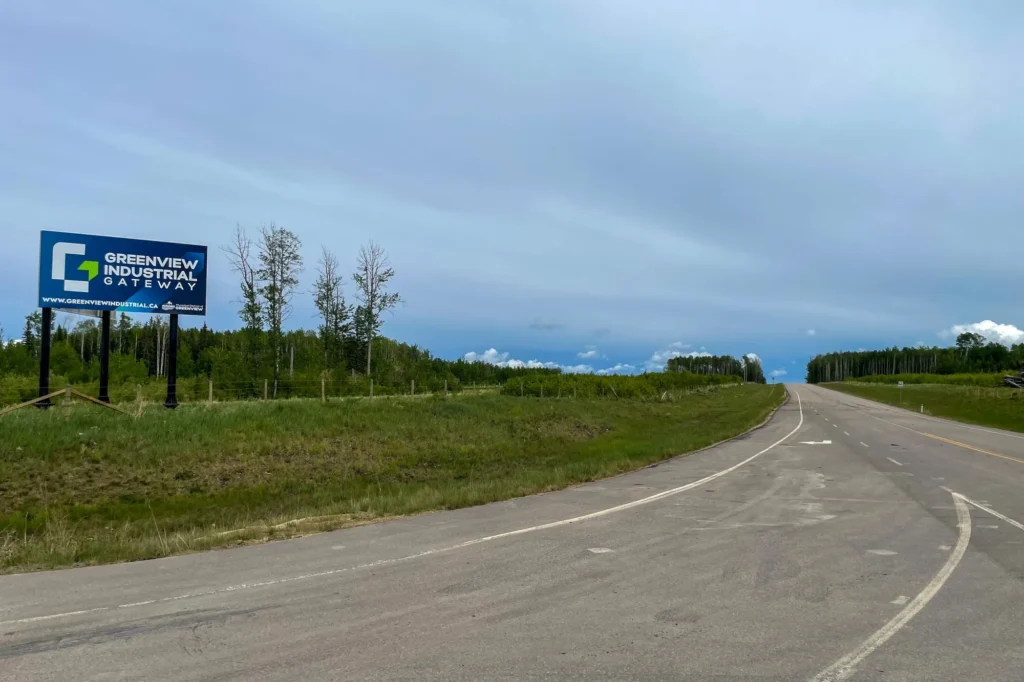
The road to the proposed site of Wonder Valley near Grovedale, Alberta. Photographer: Iain Boekhoff/Bloomberg
The event on Thursday was the first information session open to the public. More than a dozen company-affiliated representatives were on hand to discuss the project and various elements with residents.



Wonder Valley would be located on a site about 19 miles south of Grovedale, in a region that’s home to thousands of natural gas wells and existing industrial plants run by Canadian Natural Resources Ltd. and Arc Resources Ltd. It’s a remote area of boreal forest and Rocky Mountain foothills, with one paved highway passing through and a diverse range of wild animals including deer, moose and bears.
The company said it has rolled back its potential water use from the nearby Smoky River. The municipality had sought a permit to draw 24 million cubic meters a year from the river, but O’Leary Digital says it expects to use less than 6 million cubic meters (about 1.6 billion US gallons) a year.
Chief Executive Officer Paul Palandjian said in an interview the company heard people’s questions about water consumption and is now looking at technologies that use less water. The project also dropped plans for a permanent structure in the Smoky River, instead using a barge to collect water during the four-month high period of the year and store water year-round for use.
But even at the lower level of expected use, residents expressed anxiety about the amount of water needed for the data center because the area has experienced drought and wildfires in recent years.
Sturgeon Lake Cree Nation, one of the First Nations on whose traditional territory the data center would be located, formally requested a federal impact assessment of the proposal and criticized the provincial government’s lack of consultation.
Shannon Chowace, a Sturgeon Lake councilor, said in an interview after the event that water use is a major worry for the nation because the Smoky River feeds into their lake and could affect their traditional way of life. “We’re not just discussing us. We’re discussing our seven generations, our kids, our children’s children. Who’s here to protect them?” he said.
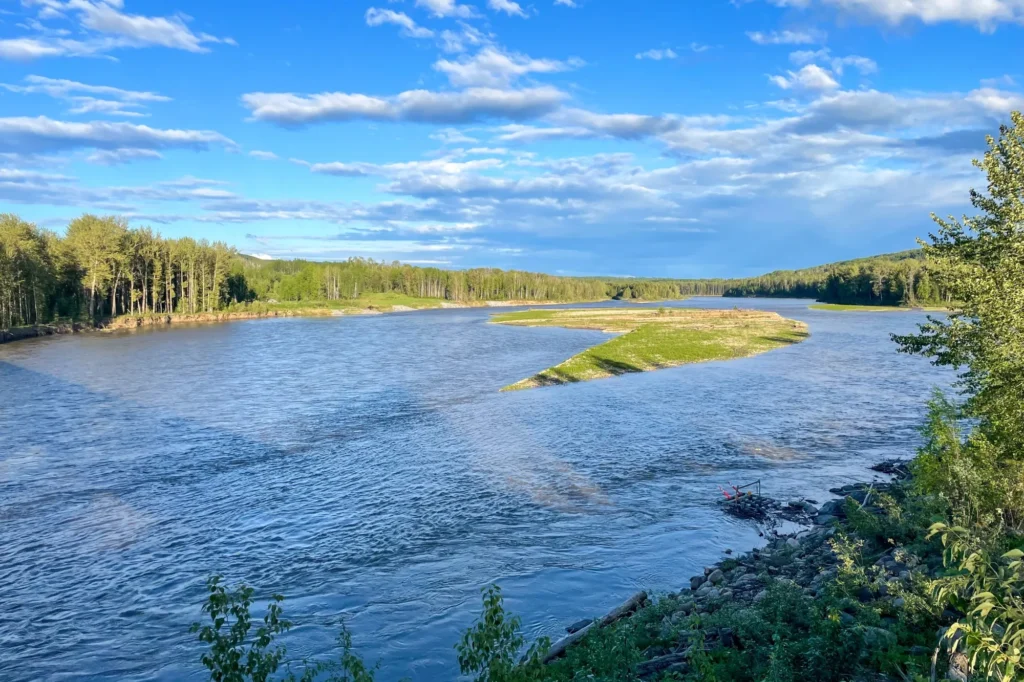
The Smoky River, near where Wonder Valley will be situated. The data center’s water consumption has been a concern for nearby residents and First Nations groups. Photographer: Iain Boekhoff/Bloomberg
Dan Harms, who lives in Grovedale, said he saw the economic benefits of the data center and was in favor of it going ahead, as it would supply its own power and would be “out in the middle of nowhere.”
Palandjian, the CEO, said the project would be entirely off the grid, and therefore wouldn’t impact local ratepayers. He called worries about electricity costs “based on false facts” stemming from US projects that have tapped into existing power grids.
Some residents expressed mistrust in the process the provincial government was undertaking and perceptions it was fast-tracking the project through environmental reviews. Darren Baum said it seemed inevitable the project would get the green light, but he wanted to see more transparency. “I just want to make sure that it’s done properly.”
Others were disappointed with the format of the event, which didn’t feature a formal presentation, though representatives did individually answer questions. That led to doubts the company was being forthright in its plans. “The information that we got inside was very discombobulated,” Carmen Haubrich said.
Ray Andrew, who lives in Grande Prairie, cited concern about the unprecedented scale of the project in Canada after seeing some of the backlash to data centers in the US. “People are worried.”
— With assistance from Julian Lee
Share This:






















COMMENTARY: Ottawa Provides Glimmer of Hope and Streamlines Review Process for Energy Projects