


 CDN NEWS |
  US NEWS







By Jack Mintz
Impact of Carbon Policies on Competitiveness in Oil, Natural Gas, and Electric Power: An Alberta–US Comparison
- This study, based on a newly developed methodology to assess the impact of corporate, royalty, and energy taxes on production, estimates the impact of taxes and carbon policies on marginal cost of production in Alberta, Texas, and New Mexico for oil, gas, and power industries.
- In the absence of carbon policies, the existing tax and royalty system in Alberta is tax competitive except for conventional oil, despite the differences in tax systems among the three jurisdictions.
- US and Canadian capital subsidies encourage carbon, capture, utilization, and storage investments but do not improve cost competitiveness since the subsidies are offset by CCUS costs for marginal investments.
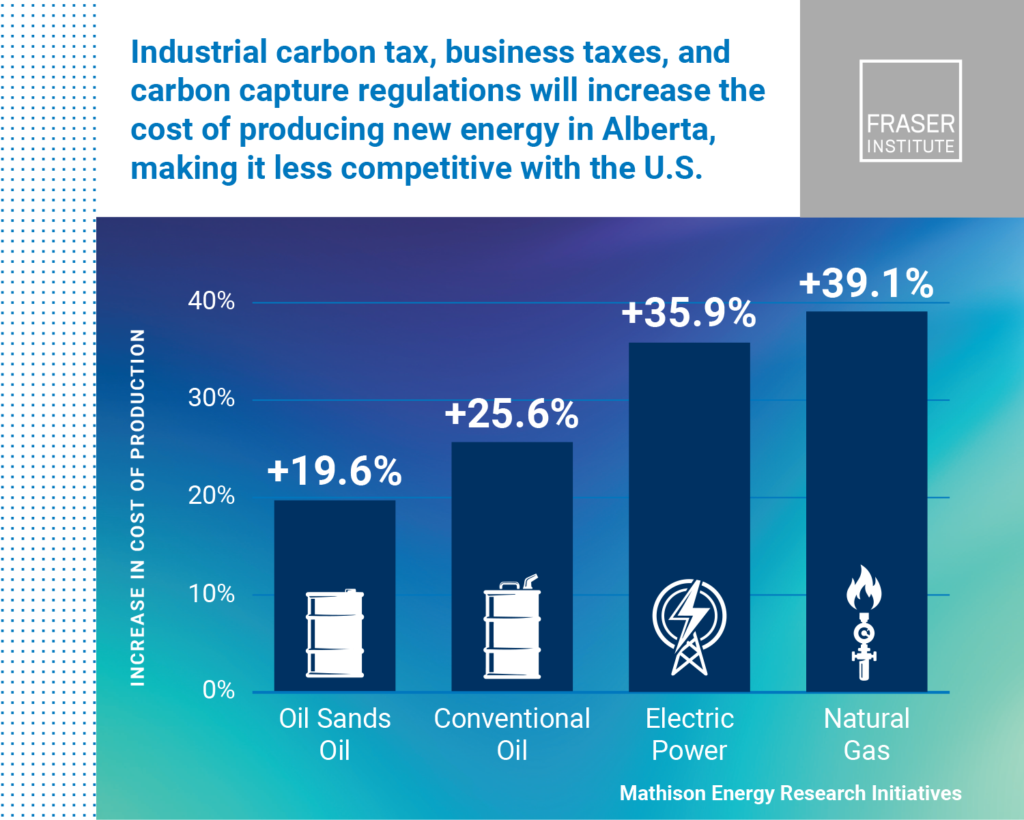
- With the existing Alberta carbon tax at $95, not only is Alberta’s conventional oil tax disadvantaged but the oil sands lose most of its tax advantage compared to projects in New Mexico or Texas (with enhanced oil recovery). Natural gas production remains tax competitive. With a carbon tax at $170, oil sand investments are somewhat tax disadvantaged.
- As Alberta’s effective carbon tax rate is increased by raising the rate and/or limiting allowances, both oil and natural gas production will be heavily disadvantaged compared to Texas.
- While much focus has been paid to the impact of the carbon tax on the oil sands, the biggest impact will be on the electric power industry. The carbon tax will noticeably increase power prices in Alberta which will impact competitiveness of many industries. This illustrates well the competitiveness issue for Alberta when carbon taxes apply in Canada but not the United States.



READ THE FULL STUDY
- Download PDF
- View News Release
- Infographic
Share This:






















On The Verge: Energy Sector Primed for New Wave of Growth – ATB Economics