CDN NEWS |
  US NEWS









While industry insiders talk about economic benefits, concerns around water, electricity and more are leading to opposition from some
By This article and mote by Steven Wilhelm here
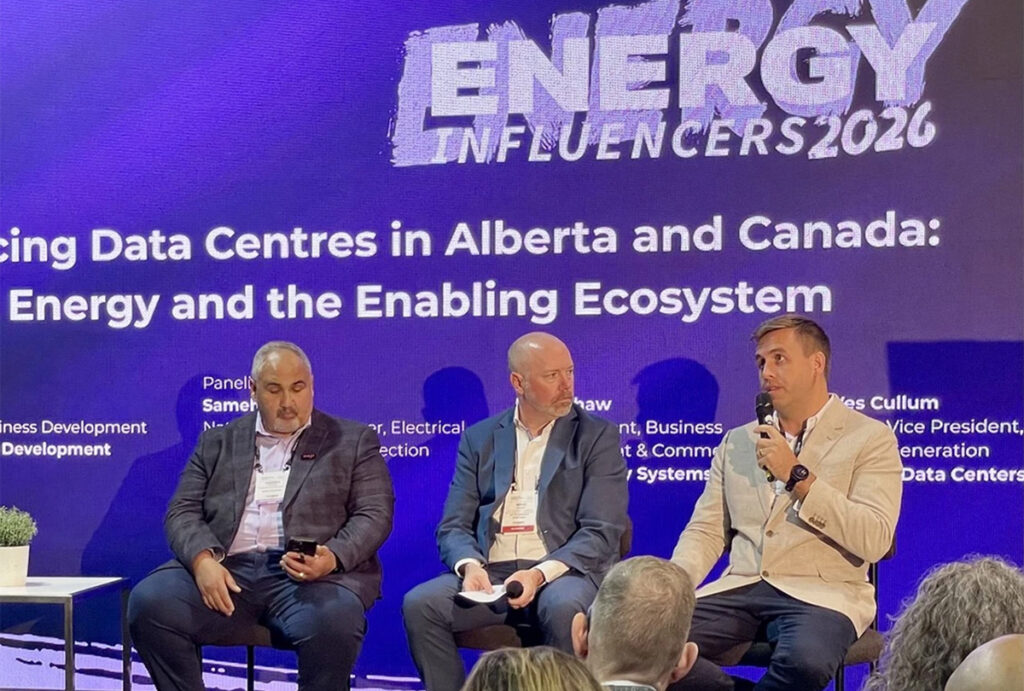
Sameh Kodsi, a manager at WSP Canada, Mike Shaw, a vice-president of business development at ATCO Energy Systems and Wes Cullum, the senior vice-president of power generation at Beacon Data Centers, took part in a panel at the Global Energy Show in Calgary on Wednesday, June 10, 2026. Steven Wilhelm/Postmedia
The Alberta government’s frontman on AI says the province could see shovels in the ground for some large-scale data centres by the end of the summer.
“What you’re going to see later this summer is some gigawatt-scale announcements,” Technology and Innovation Minister Nate Glubish predicted during a panel discussion at the Global Energy Show in Calgary.
“These are shovels in the ground, permits complete, financing in place, and we’re 12 to 18 months away from the first campus being turned on,” Glubish said.
Alberta set an ambitious goal to attract $100 billion worth of data centre investment by 2030, at a time of record growth in the sector, driven by a global artificial intelligence arms race.
Still, serious questions remain about the facilities — which use large amounts of land, water and energy — and what they mean for communities.
In British Columbia, hundreds of protesters recently took to the streets to oppose two planned data centres in Vancouver.
In Alberta, the future of Synapse Data Center Inc.’s proposed data centre in Olds is unclear after the proponent had to resubmit its proposal to regulators. There are also ongoing concerns from some members of the public about the facility.
‘Very, very big numbers’
While Glubish did not specify which projects might get the green light this year, for those in the industry, the economic implications of data centres and the AI infrastructure they support are clear.
Wes Cullum, senior vice-president of power generation with Beacon Data Centers, told a Calgary audience that Meta, Amazon and Alphabet have announced a combined $760 billion of investment in data centres worldwide for this year alone.
Consulting firm McKinsey & Co. also projects close to $7 trillion in data centre investment by 2030, Cullum said.

“Very, very big numbers, and just kind of reflects the amount of demand that they’re seeing,” Cullum said in Calgary.
Beacon is proposing several data centres across Alberta and operates several others across North America. After his remarks during a panel discussion at the Global Energy Show, Cullum wouldn’t comment on the company’s ongoing projects in Alberta, some of which represent billions of dollars of investment.
Community engagement necessary, says executive
One thing that many executives, government officials and industry insiders made clear at the conference on Wednesday is that data centres need proper consultation and engagement with communities.
“Regardless of a data centre or any other kind of development, the ground game and getting that community support and (guiding) public perception should be goal No. 1,” said Mike Shaw, a vice-president of business development at Calgary-based ATCO Ltd.’s energy systems division.
Shaw said that while data centres are big-ticket projects with price tags in the billions, if companies can’t show the benefits and effects to local communities, it’s difficult for projects to move forward.
“That’s going to take a lot of collaboration to get that support,” Shaw said. “Otherwise, a lot of these projects will be stopped in their tracks.”
ATCO’s natural gas infrastructure, along with its electricity distribution infrastructure, will be essential to serving data centres, Shaw said in an interview after speaking on a panel alongside Cullum.
“There are many real, serious, committed developers who have very good projects, who have thought through plans, and those projects will succeed,” Shaw said.
The Alberta government has encouraged data centre proponents to bring their own generation to ease the burden on existing electricity infrastructure from the power-hungry facilities — a move it hopes will prevent electricity prices from rising for ratepayers.
“If you cause the cost on our grid, you’re going to pay for it,” Glubish said.
Aric Carlisle, a director at global oilfield services data centre infrastructure solutions company SLB, believes data centres present an immense opportunity.
“The megaprojects are coming; the gigawatt-scale campuses are coming,” Carlisle said. “That’s a massive undertaking that can’t be underestimated.”
[email protected]
Share This: