CDN NEWS |
  US NEWS









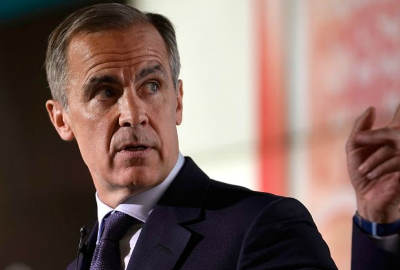
In the space of a single weekend in April 2026, Prime Minister Mark Carney offered Canadians—and Washington—two starkly different visions of the Canada–U.S. relationship.
On Sunday, April 19, in a polished video address styled as a direct “Address to the Nation”—a format more commonly associated with American presidents—Carney declared that close economic and security ties with the United States, long viewed as a cornerstone of Canadian prosperity, had become a strategic weakness that must be corrected. He invoked the War of 1812, brandishing a toy soldier figurine of General Isaac Brock and praising British/Canadian and Indigenous resistance to American expansion. Canada, he suggested, must show similar resolve today by diversifying trade aggressively toward other partners.
Barely 48 hours later, on Tuesday, April 21, Carney’s government announced a new high-level Advisory Committee on Canada–U.S. Economic Relations to prepare for the upcoming review of the Canada–United States–Mexico Agreement (CUSMA/USMCA). Official statements praised Canada’s existing position as delivering “the best deal of any major U.S. trading partner,” noting that roughly 85 percent of bilateral trade remains tariff-free—the lowest average tariff rate in the world. The committee, chaired by Minister Dominic LeBlanc and including business, labour, and cross-party voices, was framed as a forum for defending that advantage.
This rapid pivot captures a deeper dissonance in Carney’s approach since becoming Liberal leader and Prime Minister in spring 2025. It raises a basic question: Is Ottawa pursuing a coherent strategy, or sending mixed signals that could erode credibility at a tense moment in North American relations?
Carney’s critique of U.S. integration has been consistent. In March 2025, he argued that the old model of deepening economic integration and tight military cooperation, was over. In the April 19, 2026 address, he stated plainly: “Many of our former strengths, based on our close ties to America, have become weaknesses. Weaknesses that we must correct.” He pointed to U.S. tariffs under President Donald Trump and warned that Canada cannot base its future on hope that American policy will soon moderate.
Holding up the Brock figurine, Carney drew explicit parallels to 1812. He praised Brock and Chief Tecumseh for building alliances and resisting American invasion, telling Canadians that the situation today requires the same kind of resolve. The broader message was one of “strategic autonomy”: reducing reliance on the U.S. market (which still takes the vast majority of Canadian exports), diversifying toward the European Union, and deepening ties elsewhere—including with China, which Carney has at times described as more reliable than Washington under the current administration.
This rhetoric fits with the broader direction of his government since 2025: new trade corridors, investment in domestic industries, and a narrative of Canada as an “energy superpower” that need not be overly dependent on any single neighbour. Yet, the timing of the address also suggests it may have been shaped by recent U.S. comments. Two days earlier, at a Semafor World Economy event in Washington, D.C., Commerce Secretary Howard Lutnick sharply criticised Canada’s trade strategy and mocked Carney’s approach to China. In his blunt New Yorker way, Lutnick remarked that Carney had “a problem with us” then flew off to China and agreed to take their cars which he said was “nuts”. Lutnick went on to say that Canada’s approach to renegotiating the trade agreement with the U.S. was “the worst strategy I’ve ever heard,” and claimed Canada “sucks” off the U.S. economy. Nevertheless, for supporters, Carney’s address represented a tough posture in a seemingly fragmented world.
Whatever the trigger, the following day’s announcement from Canada struck a markedly different tone. The new advisory committee is explicitly tasked with helping Canada prepare for the CUSMA review, set to intensify this summer. Government messaging highlighted Canada’s privileged position: 85 percent of trade with the U.S. already flows tariff-free, giving Ottawa a strong hand. The panel’s membership—prominent business leaders, former politicians from across the aisle, and sector experts—suggests a government focused less on confrontation than on preserving a highly advantageous relationship.

That contrast is hard to ignore. Sunday’s message evoked historical defiance and the need to move away from American dependence. Tuesday’s emphasized continuity and preserving a uniquely advantageous deal.
The most charitable explanation is that this is negotiating theatre: a classic good-cop/bad-cop routine designed to stiffen Canada’s spine before difficult talks. By sounding tough in public while assembling expertise behind the scenes, Carney may hope to deter aggressive American demands without sacrificing practical leverage. Having secured a majority government, he has political room to manoeuvre.
Sceptics, however, may see something less disciplined. The speed of the reversal suggests either internal tensions within the Liberal government, personal inconsistency from a leader still calibrating his premiership, or a deeper ideological preference for reducing U.S. integration that is being temporarily softened for tactical reasons. If the hawkish rhetoric reflects Carney’s genuine long-term worldview—rooted in climate priorities, globalism, or wariness of American populism—then the advisory panel risks looking like window dressing.
The risk is not simply rhetorical inconsistency. Canadian businesses, many of them heavily exposed to U.S. markets, may wonder which message to believe when making investment decisions. Allies also need to know whether Canada is signalling a durable strategic shift or merely bargaining hard. Washington, meanwhile, may conclude that Ottawa is more interested in performance than policy.
None of these interpretations requires conspiracy. They flow from observable tensions between ideology, economic reality, and the pressures of governing a trade-dependent middle power next to a far larger neighbour.
Canada’s challenge in 2026 is straightforward but difficult: Protect economic security for millions of workers whose livelihoods depend on seamless North American supply chains, safeguarding sovereignty without unnecessary provocation, and maintain credibility in Washington at a time when trust is already strained. A Prime Minister who appears to be speaking in two voices on the same critical file within 48 hours, risks projecting not strategic depth, but confusion.
The danger is not drama for its own sake, but the erosion of the clarity and steadiness Canadians need from their leader when the relationship that still underpins much of the country’s prosperity hangs in the balance. Canadians—and their American counterparts—deserve to know which Mark Carney is steering the ship.
Thanks for reading The Nemeth Report’s Substack! Subscribe for free to receive new posts and support my work.
Pledge your support
Share This: