


 CDN NEWS |
  US NEWS








More prefer permanent daylight saving time to permanent standard time
March 16, 2026 – This month British Columbia became the second province to stop the practice of biannually resetting clocks. B.C. will now be on permanent daylight saving time; most of Saskatchewan, except a few border communities, is on year-round Central Standard Time.
New data from the non-profit Angus Reid Institute finds overwhelming support for ending the practice of clock-changing, but division over whether standard or daylight savings time is preferred.
B.C.’s decision dates back to a 2019 public engagement survey which saw 90 per cent support for year-round DST.
The practice of daylight saving time was first formally adopted across Canada during the First World War to extend daylight hours for factory work. It returned nationwide during the Second World War and afterwards it was left to the provinces and territories to legislate time observance.



For the most part, the provinces have typically synchronized daylight saving time with the United States, including after 2005 when the U.S. added parts of March and November to the DST period. Initially, B.C. was going to wait to move to permanent DST until the states of Washington, Oregon and California did the same. U.S. President Donald Trump has talked about ending clock changes, but congress has yet to pass legislation.
Other provinces have considered ending the practice of changing clocks. A 2021 referendum in Alberta failed by the narrow margin of 0.4 per cent.
Time zones have significant implications for health and safety and there are debates as to whether permanent daylight saving time (later sunsets in the evening) or permanent standard time (earlier sunrises in the morning) is the better practice. Some have argued that permanent DST, as B.C. has adopted, could disrupt the circadian rhythm, the human body’s internal clock. Notably, B.C.’s survey which provided the basis for the province’s new time policy only asked respondents if B.C. should adopt year-round DST and did not ask about year-round standard time.
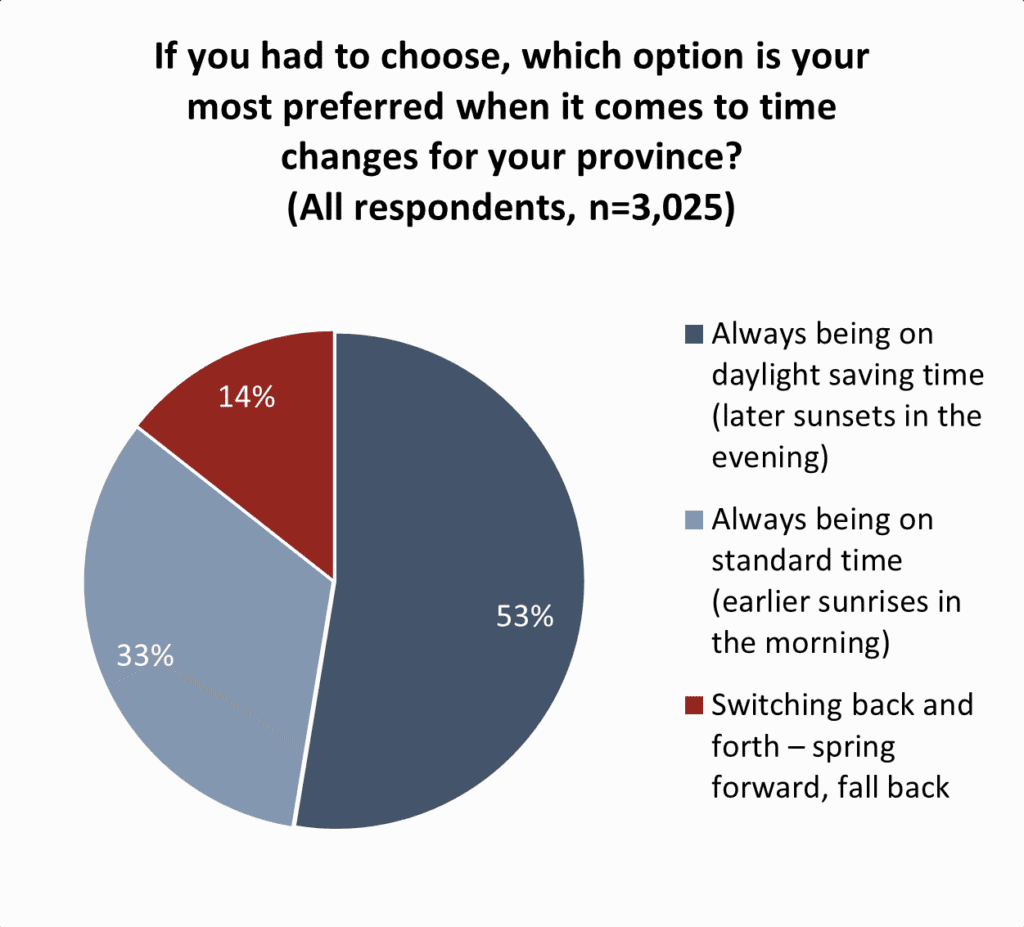
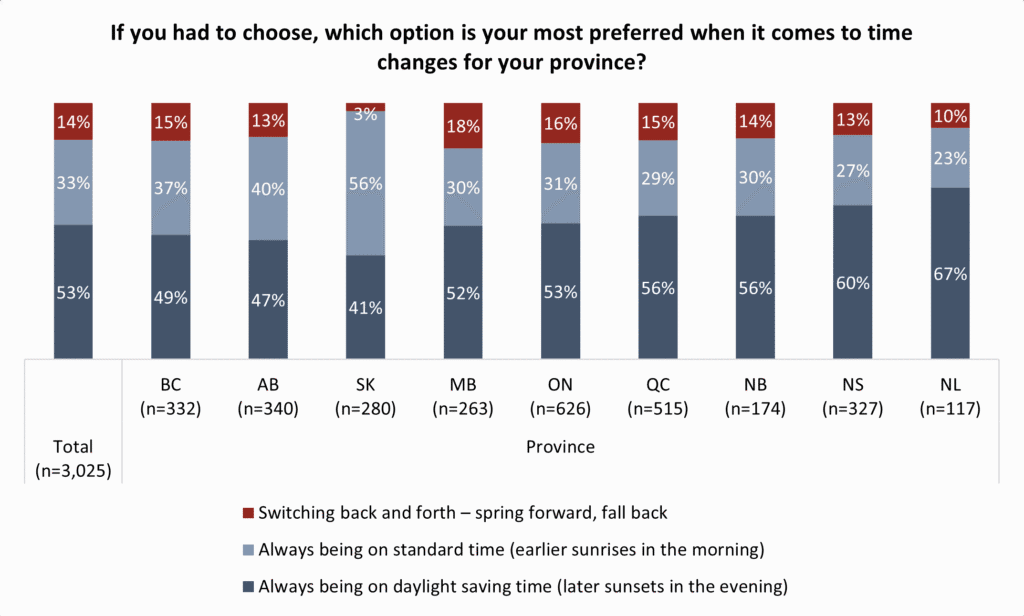
Most Canadians want to stop the springing forward and falling back of clocks. And their preference is to be on year-round DST (53%) rather than year-round standard time (33%). This is the case across the country except in Saskatchewan, where the preference is for permanent standard time as it is now. A majority (56%) in Saskatchewan prefer to be on year-round standard time, while two-in-five (41%) say they would prefer to be on year-round daylight saving time.
Link to the poll here: www.angusreid.org/
Share This:






















On The Verge: Energy Sector Primed for New Wave of Growth – ATB Economics