


 CDN NEWS |
  US NEWS







Gas compression stations play a critical role in moving natural gas across long distances, maintaining pressure and flow throughout transmission networks. While essential to energy infrastructure, these facilities also carry inherent fire risks due to the combination of high-pressure gas, rotating equipment, lubricants, and electrical systems operating continuously in demanding environments.
A single ignition event can escalate quickly, creating risks to personnel, assets, and production continuity. As a result, effective fire detection systems are a critical component of facility safety and reliability strategies.
The Challenge: Rapid Fire Detection in Complex Environments
Compression stations present several challenges for traditional fire detection technologies.
High-pressure gas and hydrocarbons increase the potential for flash fires if leaks occur. Even a small ignition source can rapidly develop into a larger incident.
Rotating machinery and turbine equipment introduce additional hazards. Bearings, lubrication systems, and electrical components can generate high temperatures or sparks under fault conditions.
Outdoor and industrial conditions further complicate detection. Dust, vibration, sunlight, and weather exposure can interfere with conventional detection technologies or cause nuisance alarms.
Because compression stations operate as part of a broader pipeline network, downtime from a fire incident can also disrupt supply and lead to significant operational and financial impacts.
For these reasons, the industry is increasingly focused on fast, accurate flame detection systems that can integrate with facility safety systems to initiate rapid response actions.
The Importance of Early Fire Detection
The time between ignition and response can make the difference between a minor event and a major incident.
Effective fire detection systems help operators:
- Detect fires within milliseconds of ignition
- Trigger alarms and emergency shutdown systems
- Activate fire suppression systems when required
- Protect personnel and critical infrastructure
- Reduce unplanned downtime and equipment damage
For facilities operating continuously with limited on-site personnel, automated detection and response capabilities are particularly important.
Technology Advancements in Flame Detection
Modern flame detection technologies have evolved significantly to address the harsh operating environments typical of energy infrastructure.
Multi-spectrum infrared detection technologies, for example, analyze flame signatures across multiple wavelengths to improve accuracy and reduce false alarms caused by sunlight, hot surfaces, or reflections.
These technologies allow detectors to distinguish between real fire events and environmental conditions that historically triggered nuisance alarms.
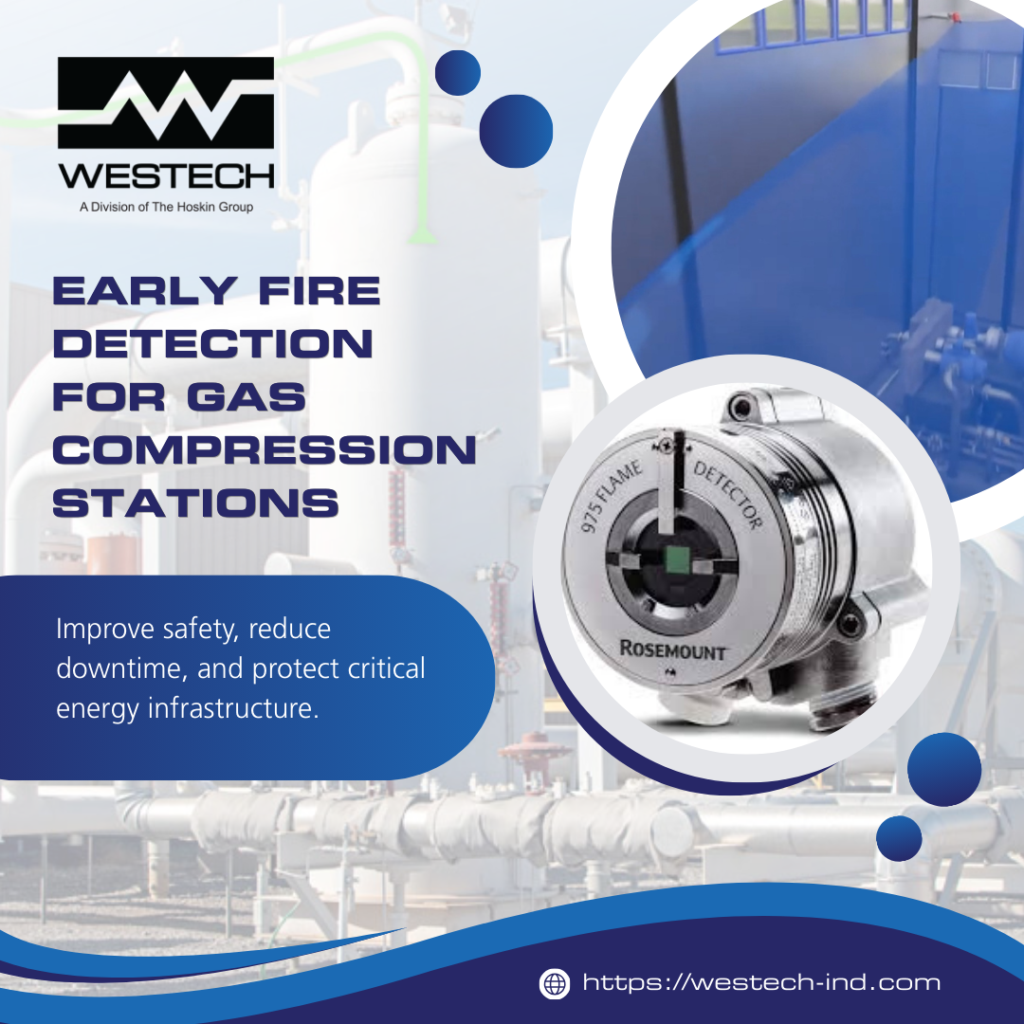
The Rosemount™ 975 Series Fire Detectors from Emerson are designed to address these challenges in industrial environments such as gas compression stations. These detectors use advanced multi-spectrum infrared (MSIR) technology to rapidly identify hydrocarbon fires while maintaining immunity to common false alarm sources.
Their rugged design allows them to operate reliably in outdoor installations where extreme temperatures, vibration, and environmental exposure are common.
Integration with Facility Safety Systems
Detection is only part of the safety equation.
In many facilities, flame detectors are integrated with Fire & Gas (F&G) systems and Emergency Shutdown (ESD) systems to trigger automated safety responses. When a flame event is detected, these systems can initiate alarms, isolate equipment, shut down compressors, or activate suppression systems.
This integration helps ensure that response actions occur immediately, even in remote or unmanned facilities.
Reliable communication between detection devices and safety systems is therefore essential for maintaining a coordinated response strategy.
Supporting Safety in Critical Energy Infrastructure
As pipeline networks expand and compression infrastructure continues to operate under demanding conditions, operators are placing increasing emphasis on risk reduction and operational resilience.
Advanced flame detection technologies provide an important layer of protection, helping facilities detect fires quickly, minimize operational disruptions, and maintain safe working environments.
For Canadian operators, working with experienced instrumentation and safety specialists can help ensure fire detection technologies are properly selected, installed, and integrated into existing safety systems.
Fire Detection Expertise in Canada
Westech Industrial supports energy producers and midstream operators across Canada with fire and gas detection solutions, instrumentation, application expertise, and ongoing technical support. By working closely with technology partners and facility teams, Westech helps identify solutions that align with the safety, reliability, and operational needs of modern energy infrastructure. For more information on the Rosemount 975 Series, visit our product page or contact Westech to speak with one of our technical representatives at 1-800-912-9262.
Share This:





















