CDN NEWS |
  US NEWS







Nitrogen plays a critical role across energy operations—from inerting and purging to blanketing and maintenance support. But the value of nitrogen depends on one thing: delivering it at the right pressure, consistently, across every stage of the compression system.
For OEMs building nitrogen generation and high-pressure compression packages for energy facilities, pressure switching shows up repeatedly—booster inlet, booster outlet, dryer outlet, and more. When the same design decision is repeated across multiple control points, small inefficiencies multiply quickly.
One of the most common (and expensive) pitfalls is over-specifying pressure instrumentation—adding functions that aren’t actually required at each control point. It can look good on paper, but in practice it often introduces higher costs, longer lead times, added wiring and programming work, and more failure points across the system.
This article shares a real-world example of how an OEM simplified its pressure switching approach in a high-pressure nitrogen compression platform—improving reliability and integration without sacrificing control visibility.
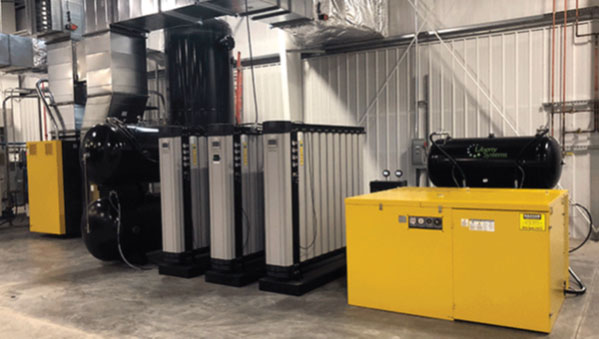
The operating challenge: controlled pressure at multiple stages
A high-pressure nitrogen compression system typically includes several critical pressure-switching locations, such as:
- Booster inlet pressure to prevent unnecessary activation
- Booster outlet pressure to prevent over-pressurization
- Desiccant dryer outlet pressure to protect the moisture removal system
These are not “nice-to-have” measurements—they directly influence performance, equipment protection, and safe operation.
In this OEM’s platform, the switching requirements were clear. The problem was the hardware architecture selected to achieve them.
Where things went wrong: too much device for the job
The OEM’s previous design used a combined pressure transmitter with dual-switch outputs at each control point—despite only needing one pressure switch per location.
That mismatch created several practical issues:
- Unnecessary unit cost due to excess functionality
- Extended lead times that affected production schedules
- Quality concerns, including an observed ~20% device failure rate
- Increased wiring and programming complexity
- More potential failure points in the control architecture
When this kind of over-specification is repeated across a platform, it can snowball into avoidable downtime risk, higher warranty exposure, and longer commissioning cycles—especially when packages are deployed across multiple sites.
The OEM needed a simpler, more robust, more repeatable approach—while still retaining digital indication and adjustable control.
The solution: a fit-for-purpose electronic pressure switch
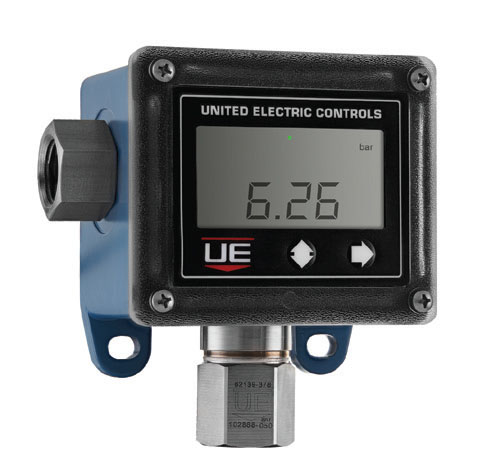
The OEM standardized on the United Electric Controls (UE) Excela™ pressure switch, using the Excela 1GSWLLP17 (0–1000 psig) across the nitrogen compression platform:
- One unit per desiccant dryer
- Two units per booster pump (inlet and outlet monitoring)
The key improvement was not adding more “features,” but removing unnecessary architecture. By moving away from transmitter-plus-dual-switch configurations where they weren’t required, the OEM simplified the system without sacrificing performance.
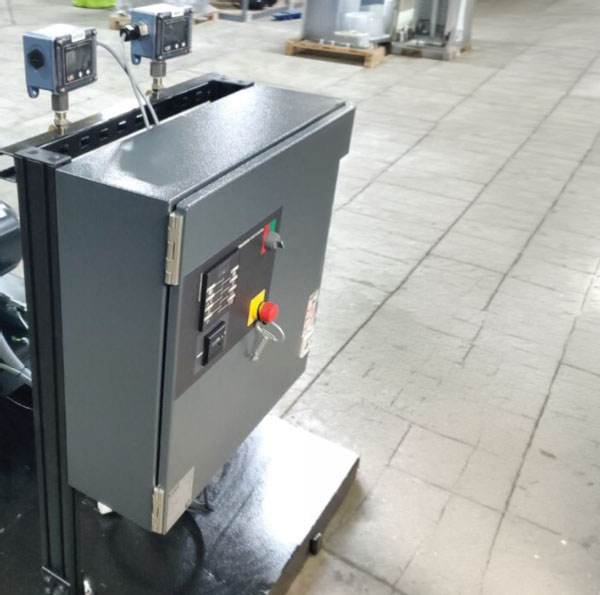
In this application, the selected electronic pressure switch provided:
- Digital display for setpoint visibility
- LED status indication for quick remote confirmation of operation
- Adjustable deadband to support stable control
- Integrated self-diagnostics
- Two-wire configuration, simplifying wiring and eliminating transmitter power requirements
Results: simpler integration, lower cost, improved reliability
By standardizing on a single, fit-for-purpose pressure switching device across the platform, the OEM achieved measurable improvements:
- Lower component cost: reduced by more than 50% compared to the prior device approach
- Simplified wiring and installation: fewer connections, fewer opportunities for wiring errors, faster build time
- Streamlined programming: faster OEM integration and repeatable configuration on the production line
- Reduced field risk: improved build quality and fewer failures helped lower warranty exposure and service interventions
To support long-term lifecycle control, the OEM also developed a proprietary specification number—helping protect aftermarket replacement channels and standardize spares planning over the life of the equipment.
Why this approach matters for energy applications
Energy sites depend on nitrogen systems for safety, maintenance, and process protection—often under tight timelines and harsh operating conditions. In that context, pressure control strategies that look “robust” but introduce complexity can become a liability.
A simplified pressure switching architecture can deliver real operational value by:
- Reducing points of failure across multi-stage systems
- Making commissioning and troubleshooting faster and more consistent
- Improving repeatability when scaling builds across multiple packages
- Supporting easier spares management and lifecycle planning
How Westech Industrial supports OEMs and operators
Choosing the right pressure switching approach is only part of the outcome. The bigger win is ensuring it’s applied correctly, standardized where it makes sense, and supported across the full lifecycle of the package.
Westech Industrial supports OEMs and energy operators by helping with:
- Application review and device selection based on pressure ranges, switching logic, installation constraints, and operating environment
- Standardization strategies to reduce variation across packages and simplify spares
- Commissioning and troubleshooting support to speed startup and reduce downtime risk
- Lifecycle planning for replacements and critical spares—especially where packages are deployed across multiple sites
If you’re looking at a nitrogen compression or inerting package design and want to reduce failures, wiring complexity, and integration effort, Westech can help evaluate where a simpler pressure switching architecture will deliver the strongest long-term results. For more information contact us today at 1-800-912-9262 or visit our website at https://westech-ind.com.
Share This: