


 CDN NEWS |
  US NEWS










Northwest B.C. meeting showcases local First Nations’ role in global trade as Canada strengthens energy ties with Asia
By Ian Biana
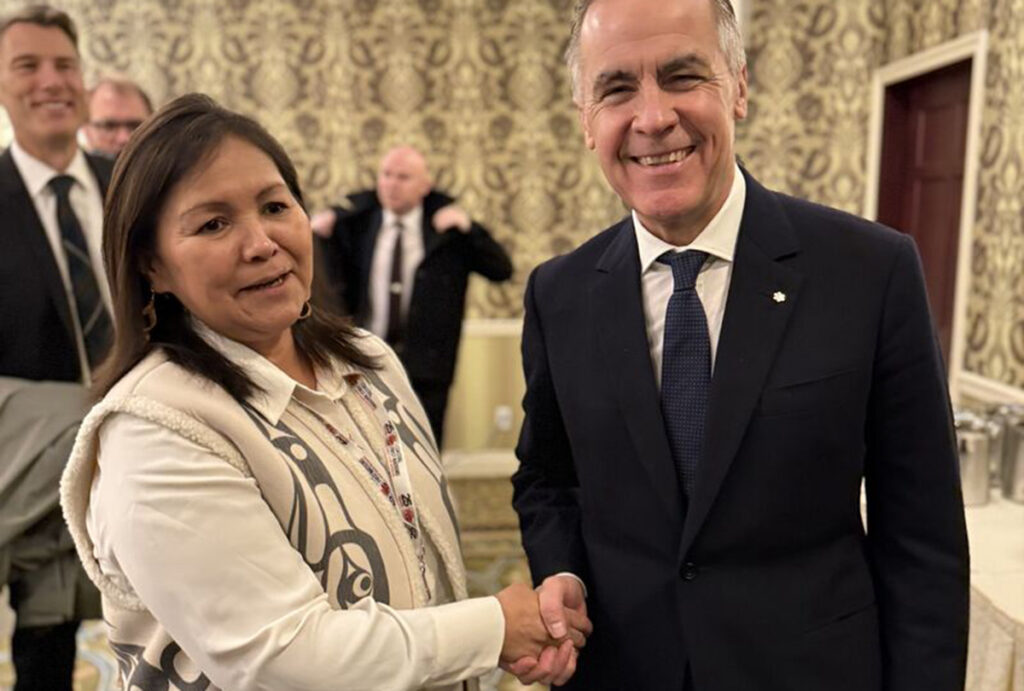
Gitxaała Nation Elected Chief Councillor Linda Innes, whose Nation owns the noted Crest Hotel in Prince Rupert, meets with Prime Minister Mark Carney. The leaders discussed Indigenous title and responsible development as Canada expands trade with China, currently the second-largest importer of Canadian heavy crude. Photo: Linda J. Innes via LinkedIn
By Resource Works
More News and Views From Resource Works Here
In the ongoing dialogue surrounding Canada’s resource future, the voice of Indigenous leadership is moving from the periphery to the centre of the conversation.
This shift was on full display this past week as Linda Innes, Elected Chief Councillor of the Gitxaała Nation, welcomed Prime Minister Mark Carney to the Nation’s traditional territory in Prince Rupert.
The high-profile meeting served as both a local diplomatic reception and a crucial stop on the Prime Minister’s high-stakes international agenda. Carney visited Gitxaała territory while en route to China, where Canada has just signed several landmark trade memoranda and energy cooperation deals aimed at diversifying exports away from a volatile U.S. market.
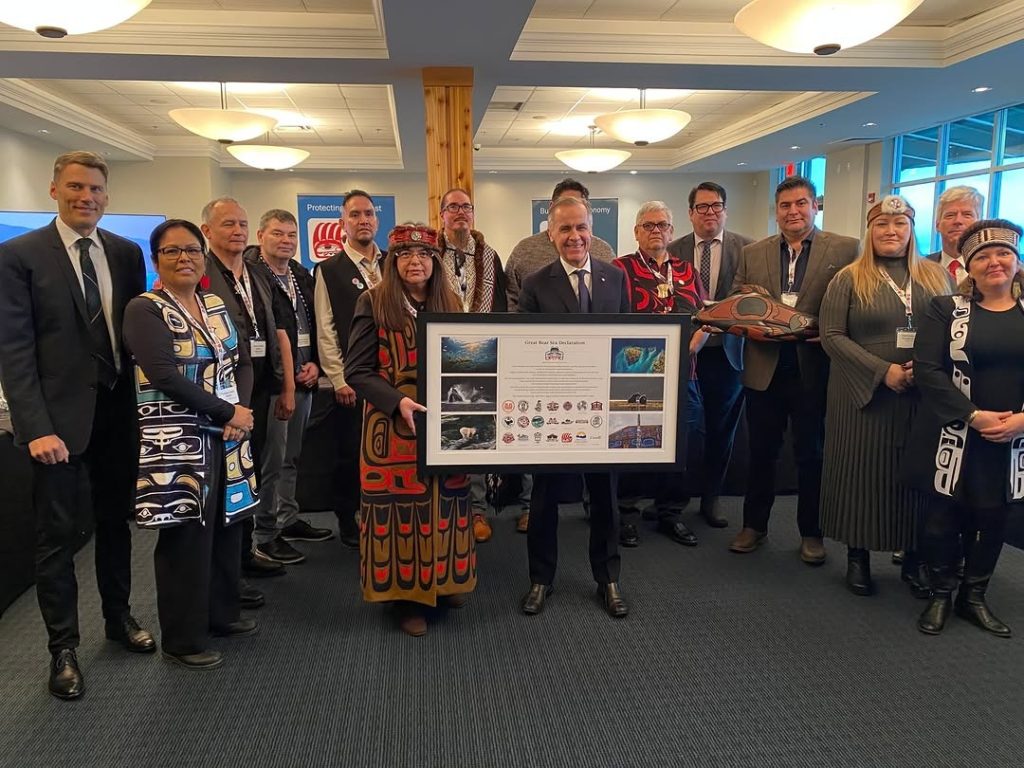
Leaders from Coastal First Nations met in Prince Rupert, B.C., for discussions focused on collaboration and shared priorities. Photo: Coastal First Nations (via Instagram)
A strategic pivot to Asia
The Prime Minister’s trip to Beijing marks a significant recalibration of Canadian trade policy. China has solidified its position as the number two importer of Canadian heavy crude oil after the United States and remains a vital growth market for everything from agriculture to clean tech.
For the Gitxaała, whose territory encompasses critical coastal shipping lanes and the major port hub of Prince Rupert, this national push to diversify trade “east and west” is more than just a headline. It is a lived reality that brings both immense opportunity and significant responsibility to their doorstep.
A commitment to rights and governance
In a statement shared on LinkedIn, Chief Innes expressed gratitude for the Prime Minister’s commitment to upholding the United Nations Declaration on the Rights of Indigenous Peoples (UNDRIP). For the Gitxaała, UNDRIP is a recognition of the vital role Indigenous governance plays in the national landscape.
“Conversations like this move us closer to the kind of future we all want to see,” Innes noted, “one guided by the leadership of Indigenous Nations.”

Navigating the challenges
The visit was not without its difficult topics. Chief Innes raised the “legitimate concerns” held by the Gitxaała regarding the movement of bitumen through Nłuut’iksm Laxyuubm Gitxaała—their traditional lands and waters.
As Canada seeks to fulfill new trade deals and supply an energy-hungry Asian market, the Nation’s history remains one of fierce protection over its ecosystem. Innes was firm in reiterating that the Gitxaała remain opposed to any activities that threaten the integrity of their territory.
Open for business, on Indigenous terms
However, Chief Innes was quick to dispel the notion that protectionism equals an opposition to growth. Her message to the Prime Minister—and to the international markets he is engaging—was one of partnership and participation.
The Nation is already a major player in the regional economy. Notably, the Gitxaała are the owners of the iconic Crest Hotel in Prince Rupert, a cornerstone of the local hospitality and tourism sector. This investment, managed through Gitxaała Enterprises Corporation (GECO), demonstrates the Nation’s capacity to lead and sustain complex commercial operations.

A warm welcome at the Crest Hotel. Photo: Crest Hotel via Facebook
“It would be a mistake to assume that we are closed to development,” Innes stated. “Gitxaała is not opposed to development. In fact, we are engaged in many areas of economic opportunity across our lands and waters.”
The caveat, however, is non-negotiable: development must be responsible, grounded in environmental respect and strictly aligned with Gitxaała laws, values and long-term stewardship responsibilities.
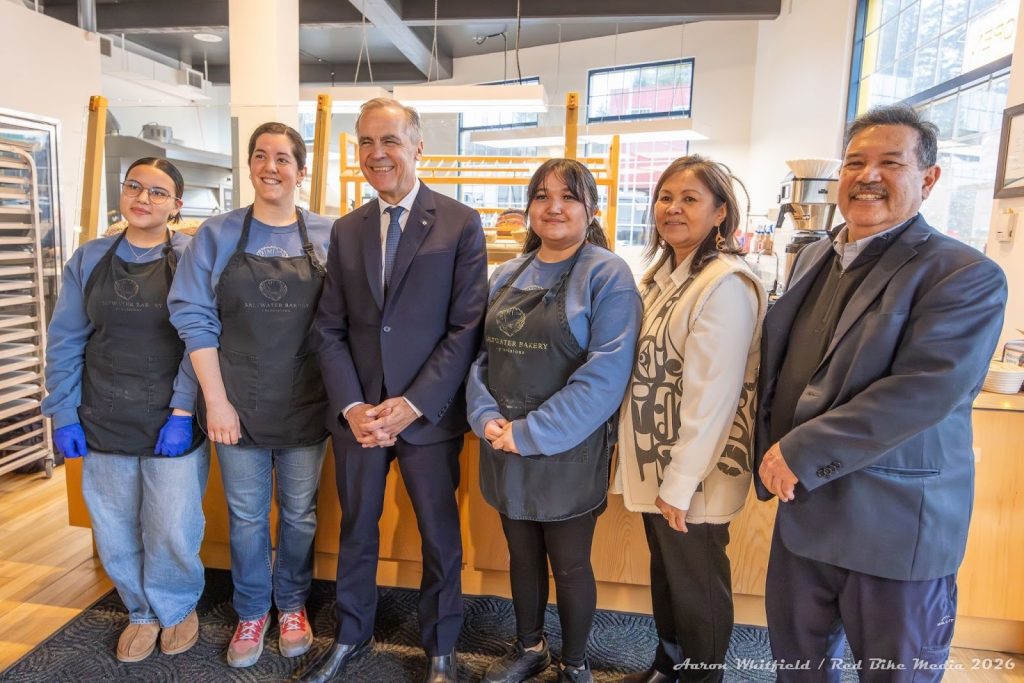
Welcoming leadership to Prince Rupert at Saltwater Bakery & Provisions during a recent visit highlighting Indigenous hospitality and local business. Photo: Aaron Whitfield / Red Bike Media 2026
Beyond the ‘afterthought’
Chief Innes echoed a recurring theme in the B.C. resource sector: the necessity of early and meaningful Indigenous involvement. She made it clear that the Gitxaała intend to be “meaningful participants and beneficiaries” rather than “afterthoughts” in the projects that impact their home.
As Prime Minister Carney returns from China with new trade commitments in hand, the dialogue in Gitxaała territory provides a necessary roadmap. It is a future where Canada can succeed as a global trading partner—not in spite of Indigenous title, but through the strength and leadership of it.
Expanded resources and relevant links:
- Gitxaała Enterprises Corporation (GECO) Portfolio: Explore the Nation’s diverse business arm, which manages ventures in forestry, marine services, and industrial electrical work.
- Gitxaała Acquisition of the Crest Hotel: Details on the strategic 2023 acquisition of Prince Rupert’s landmark hospitality destination.
- Prime Minister Carney’s Strategic Partnership with China: Official 2026 release regarding the new trade agreements and energy cooperation MOUs.
- The Banks Marine Refuge Partnership: Information on the Nation-to-Nation collaboration establishing a new 435 km2 protected marine area.
Share This:





















COMMENTARY: Hot Air and Fires in Ontario Mean its Climate Panic Time in Central Canada: That’s Never Good News for Supporters of Conventional Energy Production – Jim Warren