CDN NEWS |
  US NEWS







Across Canada’s energy sector—upstream production, gas processing, refining, power generation, LNG, and emerging low-carbon operations—emissions compliance isn’t just a reporting obligation. It’s a daily operational requirement that impacts reliability, safety, and profitability. As environmental expectations tighten and facilities pursue efficiency improvements, accurate, continuous emissions measurement becomes one of the most practical tools available for reducing risk and improving performance.
That’s where Continuous Emission Monitoring Systems (CEMS) come in. When specified correctly, a CEMS provides dependable, real-time insight into what’s leaving the stack or vent, helps operators respond quickly to process upsets, and supports confident reporting—without creating unnecessary downtime or maintenance burden.
Westech Industrial Ltd. supports Canadian energy operators with complete CEMS solutions—leveraging the well-known SICK Ltd (Endress+Hauser) emissions monitoring portfolio and Westech’s deep experience in analytical systems integration, custom fabrication, and long-term service support.
Why continuous emissions monitoring matters in Canadian energy
Facilities in the energy industry operate under a mix of federal, provincial, and site-specific requirements. Whether emissions are tied to combustion sources, process vents, thermal oxidizers, boilers, turbines, heaters, or emerging applications like carbon capture and renewable gas operations, the core need is the same: measure accurately, continuously, and reliably—then report with confidence.
In many operations, it’s not just the regulated gases that matter. It’s also the reference parameters (like oxygen, moisture, temperature, pressure, and flow) that ensure measurements are normalized properly and remain defensible.
For example, emissions monitoring in combustion-based operations commonly involves continuous measurement of CO, NOx, SO₂, and dust, along with flow rate, temperature, O₂, and in some cases H₂O, depending on the applicable requirements.
Choosing the right CEMS is a lifecycle decision, not a purchase order
A CEMS is a long-term asset. The operational lifetime is typically more than 10 years, and total operating costs over the life of the system can be more than triple the acquisition cost, depending on technology selection, service intervals, consumables, and the measurement mix.
That’s why selection needs to consider the full operating reality:
- What components must be measured, at what ranges and tolerances?
- What reference parameters must be included?
- Are there harsh conditions—high moisture, corrosives, dust loading, vibration, or cold weather?
- What access limitations exist (remote sites, compressor stations, extreme climates)?
- Can diagnostics or maintenance be supported remotely to minimize specialist travel?
- What availability targets must be met? (Many programs expect >95% availability, including maintenance and testing cycles.)
In practical terms: a “lower-cost” system that’s hard to maintain, frequently offline, or difficult to keep within spec can become the expensive option over time.
In-situ vs. extractive: selecting the right measurement approach
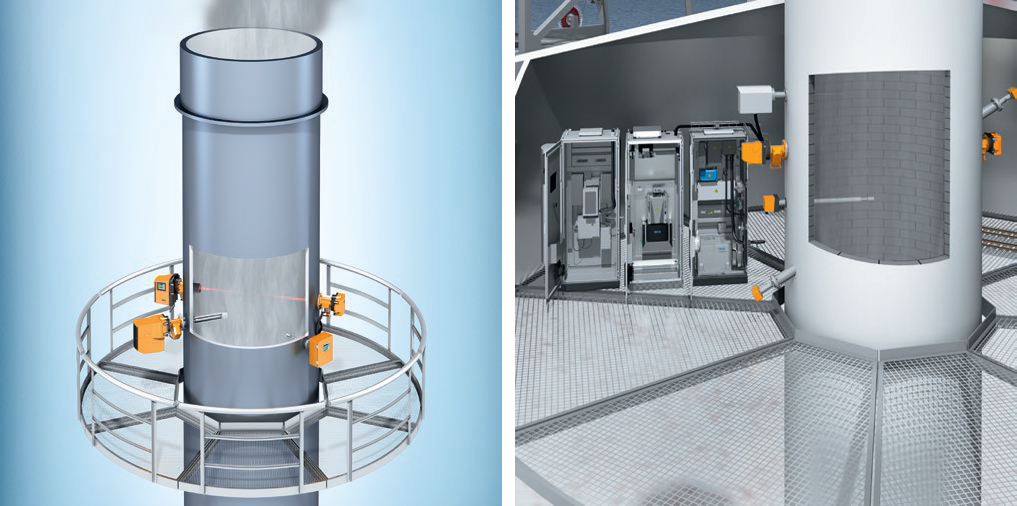
A strong CEMS design starts by matching the measurement method to the application conditions. SICK Ltd (Endress+Hauser) offers solutions across the main approaches commonly used in emissions monitoring:
In-situ gas analysis
In-situ analyzers measure directly in the duct or stack—supporting fast response and reduced sample handling. Depending on site conditions, options can include cross-duct configurations for representative measurement across the full duct, or probe-style configurations that simplify installation and suit challenging process conditions.
Extractive gas analysis
Extractive systems pull a sample from the process, condition it, and analyze it under controlled conditions. This is often the preferred route when multiple components are required, when gases are aggressive or corrosive, or when conditioning is needed for moisture and dewpoint control.
As part of modern selection guidance, Endress+Hauser highlights practical risks that influence extractive system design—such as condensate/acid-forming components, downtime from filters, and the need for robust sample conditioning strategies.
The measurement principles behind reliable results
A complete emissions monitoring strategy often uses multiple measurement principles—because no single technology is perfect for every gas, concentration range, or process condition.
Solutions within the SICK Ltd (Endress+Hauser) portfolio can include proven methods such as UV-based techniques for selective gas absorption, laser-based dust measurement, and other analyzer technologies suited to multi-component gas measurement, corrosive streams, and demanding environments.
The key is selecting technologies that remain stable under real operating conditions—not just during commissioning.
From stand-alone instruments to complete systems—and purpose-built analyzer shelters
Emissions monitoring systems range from instrument-only installations to complete packaged systems that include:
- Gas analyzers and dust monitors
- Sample probes and conditioning (heated or cooled configurations)
- Data acquisition and reporting infrastructure
- Communications for remote visibility and support
- Enclosures engineered for the operating environment
For Canadian energy sites—especially those dealing with cold weather, remote access, and high uptime expectations—packaging is often where success is won or lost.
That’s why Westech supports complete CEMS builds through custom fabrication, including analyzer cabinets, wall-mounted enclosures, engineered skids, and ready-to-use analyzer shelters/containers designed around the project requirements. These packages can be built to house analyzers, sample conditioning, power distribution, control hardware, and data acquisition—delivered as a cohesive system for smoother installation and commissioning.
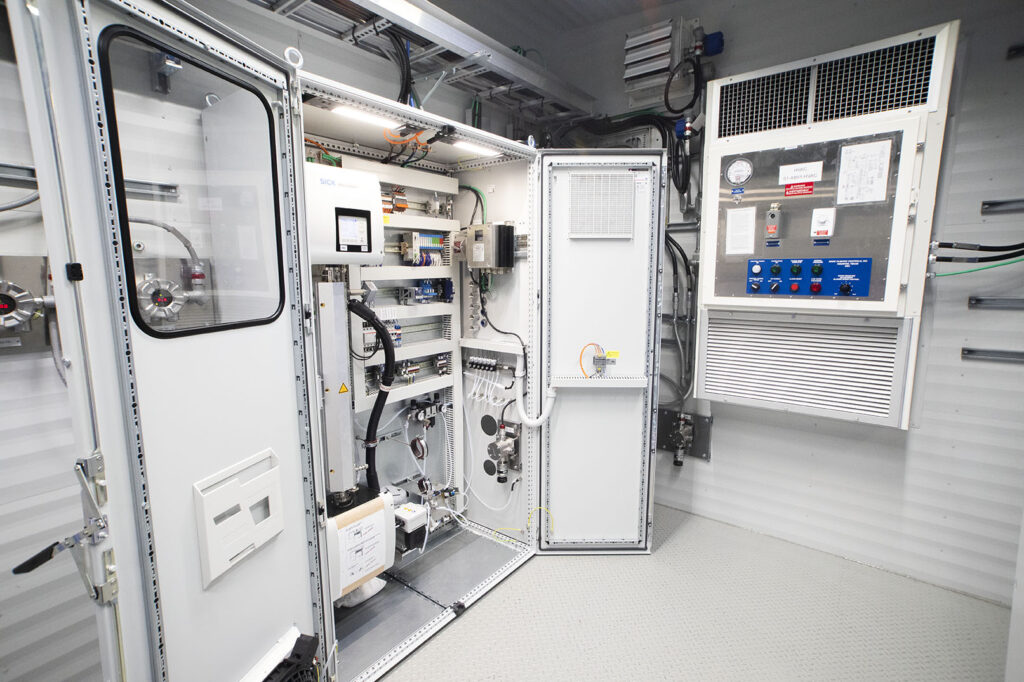
CEMS Analyzer Shelter – Custom Solution designed and built by Westech Industrial Ltd.
Adding digital visibility: from reactive maintenance to predictive planning
Modern CEMS programs increasingly rely on real-time visibility—not only for emissions values, but also for instrument health, device status, and service planning.
Endress+Hauser describes the Monitoring Box as a digital solution that supports continuous monitoring of device and plant status, combining historical and real-time data to provide insight into exceeded limit values and status changes. The system analyzes data to generate diagnostics, statistics, and prognoses that support predictive, needs-based maintenance and more efficient service deployments.
It also supports practical field outcomes—early fault detection, improved uptime, and better preparation for service visits (including arriving with the right spare parts).
For energy operators balancing compliance, uptime, and staffing constraints, this type of visibility can be the difference between planned maintenance and costly, unplanned downtime.
Why Westech for CEMS in Canada’s energy sector
Westech Industrial Ltd. supports emissions monitoring projects as a long-term partner—not just an equipment supplier.
What Westech brings to your CEMS program
- Consultation and customization to align measurement requirements with site realities
- Installation support and integration to fit your facility infrastructure and controls
- Calibration and certification support to maintain measurement integrity
- Maintenance programs and 24/7 service support to keep systems running
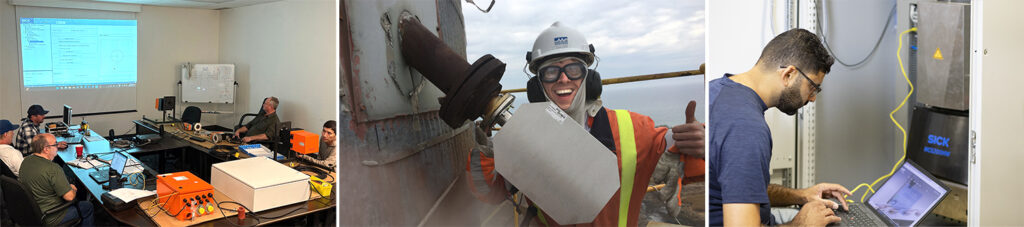
- Training and education to build site confidence and reduce operational risk
Experience that matters
Westech’s Analytical Technical Support Team has extensive experience supporting the SICK Ltd (Endress+Hauser) emissions monitoring line in real-world applications—helping customers troubleshoot issues, maintain uptime, and keep measurement performance stable over time.
And with Westech’s custom fabrication capabilities, you can take advantage of engineered packaging that’s built for Canadian conditions—reducing install complexity and improving long-term maintainability.
Final thought: compliance is the baseline—operational insight is the advantage
A well-designed CEMS does more than meet a requirement. It supports smarter operations: faster response to process changes, clearer performance tracking, and better planning for maintenance and reliability.
If your organization is reviewing an aging CEMS, planning a new installation, or trying to reduce downtime and compliance risk, Westech can help you evaluate options and build a solution based on your site’s realities—powered by SICK Ltd (Endress+Hauser) technology and supported by Westech’s experienced team.
Learn more about Westech Industrial’s CEMS solutions and the SICK Ltd (Endress+Hauser) emissions monitoring portfolio available in Eastern Canada by visiting our website or calling 1-800-775-6129 to speak with a technical representative
Share This: