


 CDN NEWS |
  US NEWS







Tackling Crude Unit Overhead Corrosion with Inline pH Control
In crude distillation, some of the most expensive corrosion doesn’t happen in the radiant section or the bottom of the tower – it happens quietly in the “cool end” of the unit: the overhead condenser and accumulator. For Canadian refineries and upgraders processing blends with residual salts and high-water content, that corrosion can mean leaking bundles, unplanned outages, and rising maintenance budgets.
Mettler Toledo has developed a proven approach to managing this risk using robust inline pH measurement in the crude unit overhead system. Westech Industrial works with refineries across Canada to implement this approach using Mettler Toledo’s Ingold and Thornton Process Analytics portfolio.
Why the overhead system is such a “bad actor”
Before crude reaches the atmospheric tower, it passes through a desalter to remove sand and salt. When desalter performance isn’t ideal, residual chloride and sulfide salts remain in the crude. When exposed to water and heat, these salts hydrolyze and form strong acids – particularly hydrochloric acid.
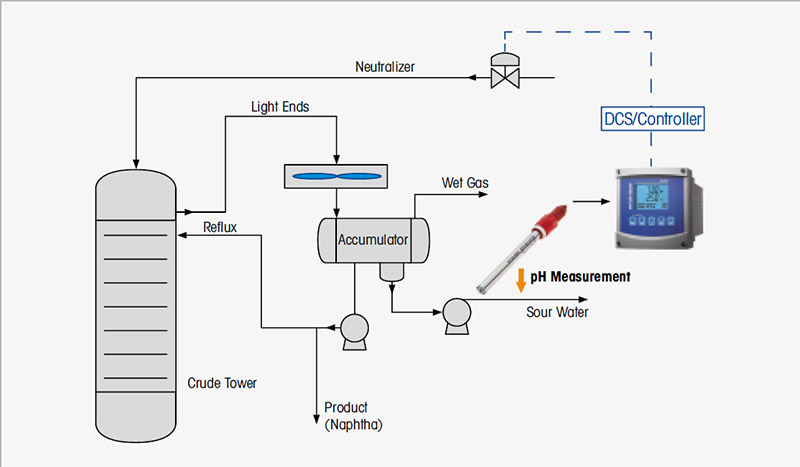
Inside the tower, water exists as steam, but at the top of the column and in the overhead condenser, both hydrocarbons and steam condense. It’s in this colder section that acidic overhead water contacts the condenser tubes and accumulator internals, driving:
- Rapid corrosion of carbon steel
- Fouling and plugging from corrosion products
- Risk of leaks and unplanned shutdowns
To combat this, refineries inject neutralizers such as ammonia or amine-based chemicals into the overhead system to push the pH of the sour water into a safer range. Done well, this dramatically reduces corrosion; done poorly, it can actually make things worse.
The narrow pH window – and why lab samples aren’t enough
The overhead sour water has a surprisingly tight “sweet spot”:
- If pH is too low (below roughly 5.5), hydrochloric and other acids aggressively attack steel surfaces.
- If pH is too high, neutralizer reactions create heat-stable salts and species like ammonium bisulfide that are also highly corrosive, especially above about pH 7.6.
Randomly dosing more neutralizer is not a solution; it’s easy to overshoot and move from acid corrosion to alkaline corrosion and salt deposition.
Traditional control strategies often rely on grab samples and lab analysis of the overhead boot water. By the time a sample reaches the lab and is analyzed, the actual process pH may have shifted significantly, making timely control difficult. For a system with a small pH safety window and rapidly changing conditions, that delay can be expensive.
Inline, real-time pH measurement gives operations a direct view of how the neutralizer program is behaving and whether the system is sitting in a corrosive zone or in the desired operating band.
Why overhead pH is hard to measure
The sour overhead water is a demanding environment for any sensor:
- High levels of sulfides, which can poison reference electrodes
- Hydrocarbons that can foul and plug traditional ceramic junctions
- Elevated temperatures and, in some locations, higher pressures
In a stream like this, a conventional pH probe may last only weeks before the diaphragm is plugged or the reference is compromised.
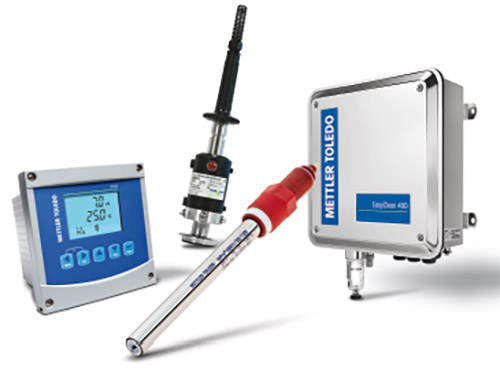
Mettler Toledo developed the InPro® 4800i pH/ORP sensor specifically for these kinds of harsh refining applications. It uses:
- A double reference chamber to resist sulfide poisoning
- A large PTFE annular junction that repels hydrocarbon fouling and keeps the reference flowing
- Combined pH/ORP/temperature measurement in one sensor
- ISM® (Intelligent Sensor Management) digital technology for predictive diagnostics and reliable signal transmission
For Canadian sites where access can be difficult in winter and shutdown windows are tight, a sensor that can survive and stay accurate in sour overhead water is a significant advantage.
Reducing manual work with automated cleaning and safe retraction
Even a robust sensor performs best when it’s cleaned and calibrated regularly – but nobody wants technicians standing under hot overhead lines in January doing manual maintenance.
To address this, Mettler Toledo pairs the InPro 4800i with:
- InTrac® 777 retractable housing – allows the sensor to be safely retracted from the process without shutting down, using a triple-seal “Tri-Lock™” safety system to prevent product release.
- EasyClean™ 400 – an automated cleaning and calibration system that can periodically retract the sensor, run cleaning and calibration cycles, then return it to service without operator intervention.
The result is an overhead pH measurement that is not only more reliable but also far less labour-intensive, with maintenance planned based on sensor diagnostics rather than emergency response to failed probes.
What this means for Canadian refineries
For refineries and upgraders across Canada, tighter control of crude unit overhead pH can deliver:
- Reduced corrosion in condensers, accumulators and overhead systems
- Longer run lengths between bundle repairs and replacements
- More stable neutralizer dosing, with less risk of over-treating
- Better visibility into desalter performance and crude blend impacts
Because the measurement is on the sour boot water, it also gives operations a clearer picture of what’s actually happening in the overhead system, rather than relying on lagging lab results.
For those who want to dive deeper into the chemistry and case examples behind this approach, Mettler Toledo’s application note on crude unit overhead condenser water and pH control is a useful technical reference.
Working with Westech Industrial
Westech Industrial is an exclusive distributor for Mettler Toledo Process Analytics across most of Canada, including British Columbia, Alberta, Saskatchewan, Manitoba, Ontario and Quebec. We support refineries, upgraders and petrochemical facilities with:
- Application review and sensor / housing selection for challenging liquids like sour overhead water
- Integration support for ISM-based transmitters and diagnostics
- Startup assistance and training for automated cleaning and calibration systems
- Local service and replacement parts to keep measurements online
If your facility is elsewhere in Canada or outside our core territory, we’re still happy to discuss your application and can help direct you to the appropriate local channel partner.
Ready to de-risk your overhead system?
If overhead corrosion, neutralizer spend, or pH measurement reliability are ongoing headaches in your crude unit, it may be time to revisit how you’re measuring and controlling overhead sour water pH.
To discuss how Mettler Toledo’s InPro 4800i and associated hardware can fit into your refinery’s corrosion strategy – and how Westech can help implement it – contact our team:
Westech Industrial Ltd.
T: 1-800-912-9262
E: [email protected]
We’ll be glad to review your current setup and explore options to improve overhead reliability in your Canadian operations.
Share This:





















INSIGHT: Canada’s Natural Resource Sector is at the Heart of the Government’s ‘Export & Diversification’ Plan