CDN NEWS |
  US NEWS







By Alex Whalen
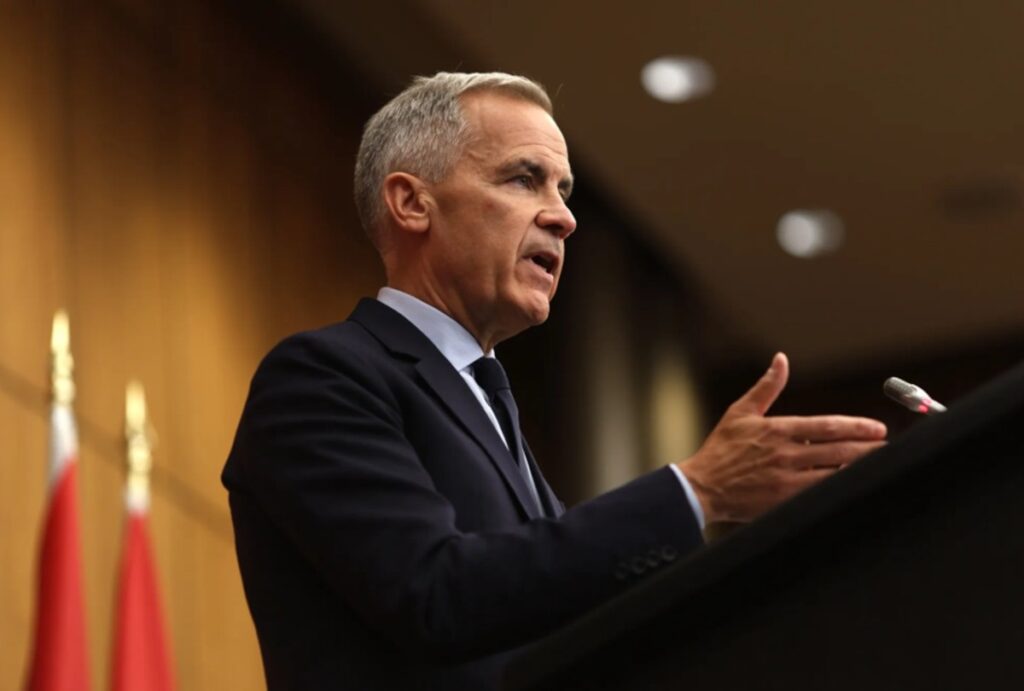
Early in his term, Prime Minister Mark Carney placed great emphasis on the need to think big and move quickly, to make Canada the “world’s leading energy superpower.” Recently, the government announced the first group of projects to be championed by its new Major Projects Office (MPO), which was also recently created to circumvent existing rules and regulations to speed up approvals. Unfortunately, the list of projects is decidedly underwhelming, which highlights the need for a true course correction when it comes to fixing Canada’s investment crisis.
According to the government, the purpose of the MPO is to fast-track “nation building” projects, with a focus on regulatory approvals and financing. Yet, of the first five projects referred to the MPO, regulatory approvals have largely already been secured and the projects were likely to proceed without any intervention or assistance from Ottawa.
For example, many of the regulatory approvals required for the Darlington Small Nuclear Reactor are already in place, and construction has already begun. The McIlvenna Bay copper mine in Saskatchewan is already half-built.
Other projects, such as LNG Phase 2 and the Red Chris Copper Mine, both in British Columbia, are expansions of existing facilities and are backed by industry-leading firms such as Shell and Rio Tinto, respectively. In general, these projects do not need government assistance or financing since they’re already largely approved.
A further six projects being referred to the MPO are at an earlier stage of development, and for the most part do not yet require regulatory approvals. Carney has referred this list—which includes projects ranging from carbon capture to high speed rail to offshore wind—to the MPO to be matched with government “business development teams” to “advance these concepts.”

These initiatives parallel the approach by the Trudeau government to rely on government-directed projects to foster economic growth, which failed miserably. The Trudeau government’s economic policies featured a much larger role for government in the economy, including a general increase in the size and scope of the federal government, as measured by increased spending and regulation. The result? Under Trudeau, annual growth of per-person GDP (an indicator of living standards) was just 0.3 per cent, the worst track record of any recent prime minister. Net business investment (foreign direct investment in Canada minus Canadian direct investment abroad) declined by $388 billion between 2015 and 2023 (the latest year of available data).
To set Canada on a course to reverse the investment crisis, Carney must abandon the notion of government-directed economic growth. Approving projects already largely approved, while sending other less-certain projects to government business development bureaucrats, will not fix Canada’s problem. Simply put, the government should craft policy to create the right conditions for investment and entrepreneurship for all firms in all sectors of the economy, not simply its chosen winners.
To attract the kinds of major projects that will meaningfully improve Canada’s investment crisis, the Carney government should eliminate a host of regulations and reform those that survive. As other analysts have noted, the list of regulatory hurdles in Canada is long. Canada’s total regulatory load has increased substantially over time and across a wide range of industries including energy, autos, child care, supermarkets and more.
Nowhere is this more evident than the energy industry, which is one of the largest drivers of investment in Canada. Federal Bills C-69 and C-48 (which govern the project approval process and ban oil tankers on the west cost, respectively), alongside the federal greenhouse gas emissions cap, net-zero policies, and a host of other regulation such as new fuel standard have significantly constrained this industry, which is vital to Canada’s economic success.
Canada’s regulatory explosion has effectively decimated the country’s investment climate. While Bill C-5 allows cabinet to circumvent these regulations, it places the cabinet, and more specifically the prime minister, in the position of picking winners and losers. Broad-based tax and regulatory reduction and reform would be a much more effective approach.
Canada continues to struggle amid an investment crisis that’s holding back economic growth and living standards. Our country needs bold changes to the policy environment conducive to attracting more investment. The government’s response to date, through Bill C-5 and the MPO, involves making the government more, not less, involved in the economy. The government should reverse course.
Share This: