


 CDN NEWS |
  US NEWS







By Jake Fuss, Tegan Hill and William Dunstan
The Growing Debt Burden for Canadians: 2025 Edition
- Budget deficits and increasing debt have become serious fiscal challenges facing the federal and many provincial governments. Since 2007/08, combined federal and provincial net debt (inflation-adjusted) has nearly doubled from $1.21 trillion to a projected $2.30 trillion in 2024/25.
- Between 2019/20 (last year before COVID) and 2024/25 the combined federal-provincial debt-to-GDP ratio is expected to grow from 65.9 percent to 74.8 percent. Moreover, the federal and provincial governments are on track to have collectively accumulated $493.2 billion (inflation-adjusted) in total net debt between 2019/20 and 2024/25, an increase of 27.4 percent.
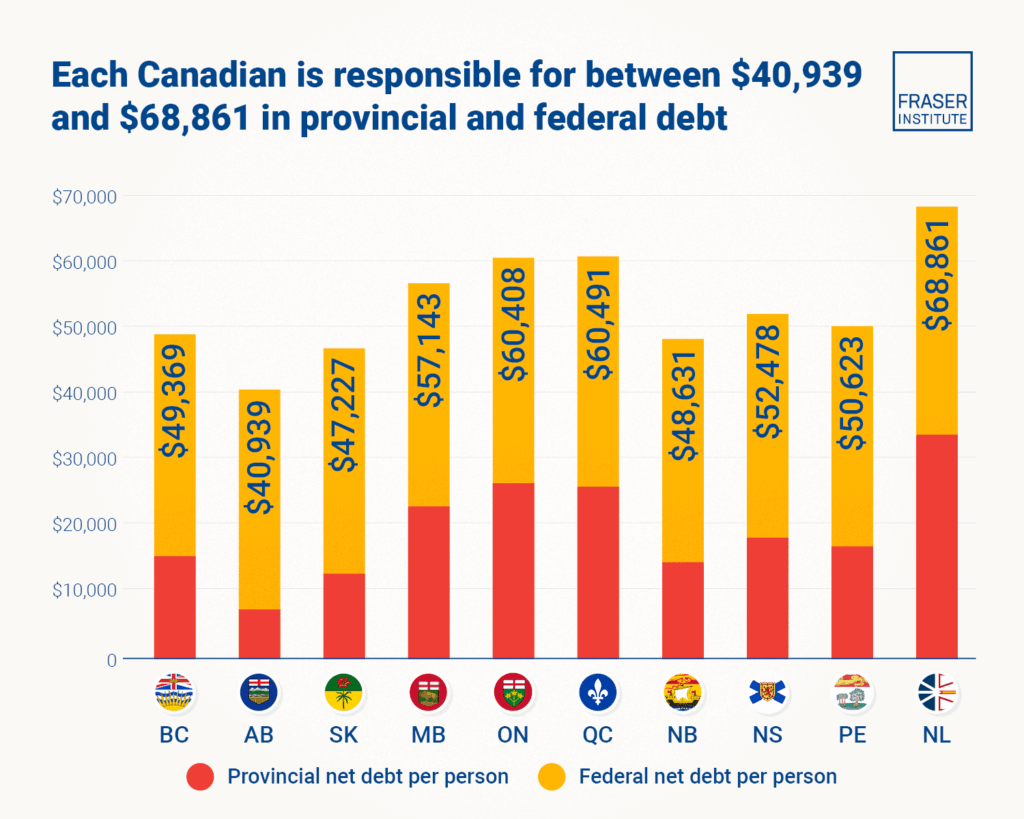
- Among the provinces, Newfoundland & Labrador has the highest combined federal-provincial debt-to-GDP ratio (88.4 percent), while Alberta has the lowest (40.8 percent). Newfoundland & Labrador has the highest combined debt per person ($68,861), followed by Quebec ($60,491) and Ontario ($60,408). In contrast, Alberta has the lowest debt per person in the country with $40,939.
- Interest payments are a major consequence of debt accumulation. Governments must make interest payments on their debt similar to households that must pay interest on borrowing related to mortgages, vehicles, or credit card spending. Revenues directed towards interest payments mean that in the future there will be less money available for tax cuts or government programs such as health care, education, and social services.
- The federal and provincial governments must develop long-term plans to meaningfully address the growing debt problem in Canada.



Share This:






















On The Verge: Energy Sector Primed for New Wave of Growth – ATB Economics