


 CDN NEWS |
  US NEWS







By: Elmira Aliakbari and Julio Mejía
Exporting Canadian LNG to the World: A Practical Solution for Reducing GHG Emissions
- Coal, a major source of greenhouse gas (GHG) emissions, remains a leading energy source in many Asian countries, especially China and India. Some European countries have also turned back to coal as sanctions on Russian energy intensified following the invasion of Ukraine.
- As the world seeks practical solutions for reducing greenhouse-gas emissions, natural gas, with its lower carbon footprint, offers a promising alternative to coal.
- With abundant reserve, Canada is well positioned to help reduce global reliance on coal. By exporting Canadian liquified natural gas (LNG) and helping Asian and European countries reduce their reliance on coal, Canada can lower net global GHG emissions.
- Exporting LNG from Canada to China and substituting LNG for coal in the generation of power there can eliminate between 291 and 687 gCO₂eq per kWh of power generated, a reduction of between 34% and 62%.
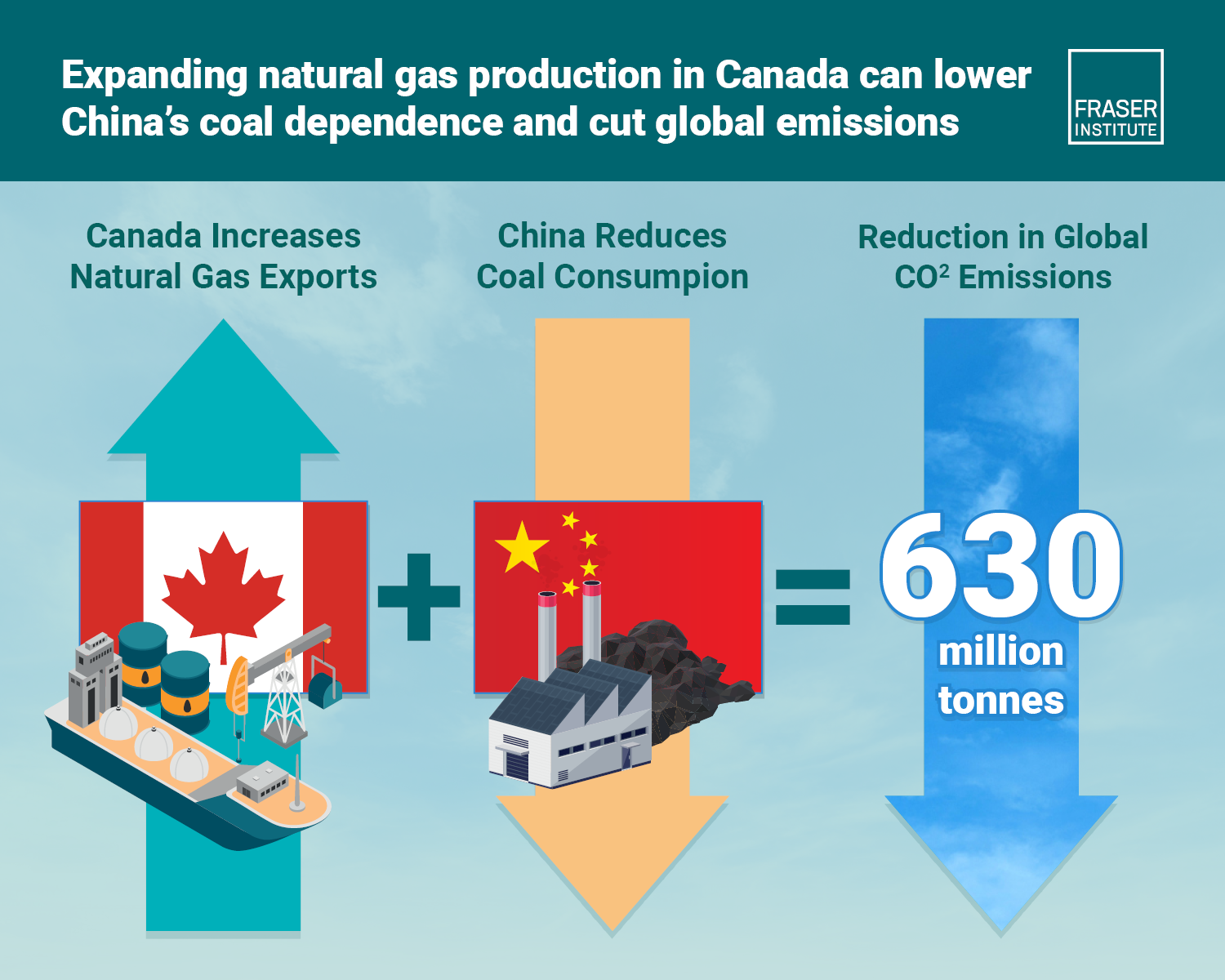
- If Canada were to double its current natural gas production and export the additional supply to Asia as LNG to displace an equivalent amount of coal used to generate power, global GHG emissions could be reduced by up to 630 million tonnes annually, a significant reduction equivalent to 89% of Canada’s total GHG emissions.
- Canada enjoys several competitive advantages, including cooler temperatures that reduce liquefaction energy costs and a strategic location that offers shorter shipping routes to Europe and Asia compared to many other suppliers.
- Regulatory challenges and a mix of federal and provincial policies, however, have slowed or blocked LNG developments in Canada.



Share This:






















INSIGHT: The Northern Shield Energy Corridor Provides Energy Security for All Canadians – Yogi Schulz