CDN NEWS |
  US NEWS







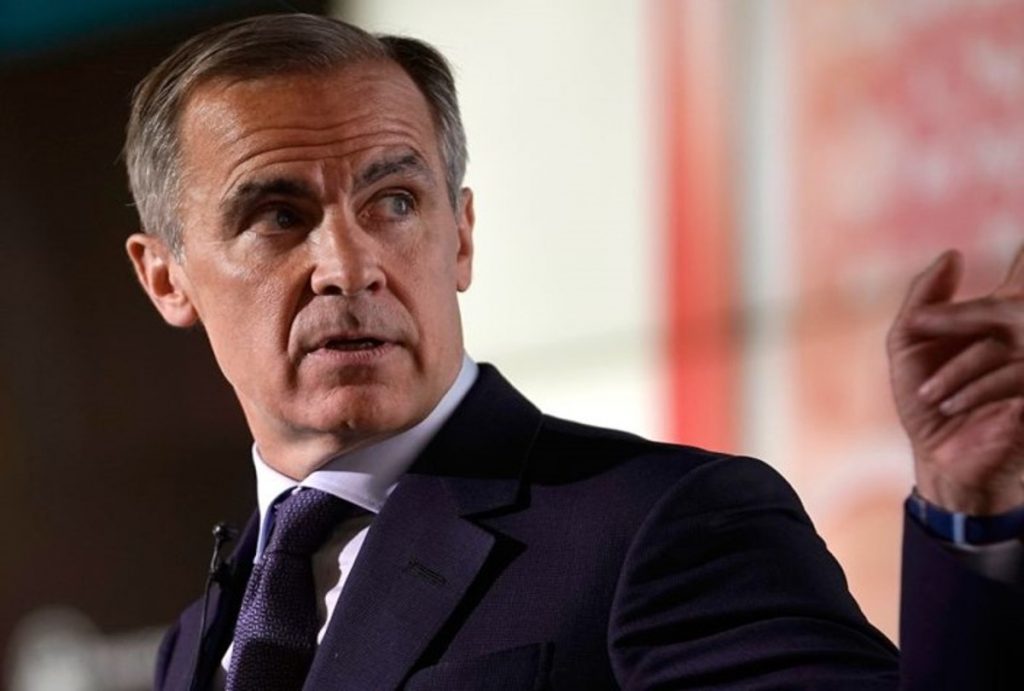
Mark Carney’s history before officially being elected Prime Minister in April is marked by a significant career in finance and central banking, culminating in roles as Governor of the Bank of Canada and then the Bank of England. While these roles are ostensibly about monetary policy and financial stability, in recent years, particularly leading up to his entry into politics, Carney became a prominent figure in the movement to align the global financial system with “net zero” goals. This involvement constitutes a clear history of advocating for policies that are fundamentally anti-oil and gas and detrimental to human flourishing.
The core of this history lies in his leadership and promotion of initiatives aimed at redirecting capital away from fossil fuels. A prime example is his role in co-chairing the Glasgow Financial Alliance for Net Zero (GFANZ), launched at COP26 in 2021. GFANZ is a global coalition of financial institutions committed to accelerating the transition to a net-zero economy. On the surface, this might sound like a positive step towards addressing human climate impact, but when examined through a clear-thinking lens, it reveals a deep-seated hostility to the energy sources that power modern civilization.
The goal of “net zero” is, in practice, the rapid elimination of fossil fuel use within a few decades. Initiatives like GFANZ aim to achieve this by using the power of finance to choke off investment in oil, gas, and coal projects. This is a deliberate strategy employed by the anti-fossil fuel movement. Unable to convince the public or voters to abandon the energy sources that provide 80% of the world’s needs and have lifted billions out of poverty, activists have increasingly targeted corporations and the financial sector. Activists have discovered it is easier to manipulate corporations and financial institutions, which are often more susceptible to public shaming and less accountable to the immediate needs of energy consumers than politicians should be.
Carney’s advocacy for a voluntary global carbon offset market in 2021 and his advisory role for a climate tech company further underscore this commitment to the anti-fossil fuel agenda. These actions are not about promoting cost-effective, reliable energy; they are about constructing a financial and technological ecosystem designed to penalize and ultimately eliminate the use of fossil fuels, regardless of the devastating consequences for global energy supply and affordability.
The problem with this approach is profound and dangerous. Fossil fuels are not just one energy source among many; they are the uniquely cost-effective sources that enable billions of people to live long, healthy, opportunity-filled lives. They provide the affordable, reliable, versatile, and scalable energy needed for everything from agriculture and manufacturing to transportation and temperature control. Restricting investment and development in fossil fuels, as initiatives like GFANZ explicitly aim to do, artificially constrains supply. This doesn’t magically conjure cost-effective alternatives; it simply makes the energy the world relies on scarcer and more expensive.
We have seen the consequences of just a sliver of this “net zero” agenda being implemented. The global energy crisis of recent years, exacerbated by restrictions on fossil fuel investment and transport, has led to skyrocketing energy prices, economic hardship, and even energy deprivation in poorer nations. Fertilizer factories shut down, food prices triple, and people in places like Bangladesh lose power because richer nations are outbidding them for scarce natural gas supplies. This is not a theoretical problem; it is a life-and-death issue for billions.



Carney’s history shows a clear alignment with the philosophy that views human impact on our environment, particularly through energy use, as inherently negative and something to be minimized or eliminated, rather than managed and improved for human benefit.
The focus on “net zero” and divesting from fossil fuels ignores the immense benefits these energy sources provide, including their crucial role in climate mastery. It is fossil fuel-powered machines that build resilient infrastructure, power irrigation systems, enable heating and air conditioning, and fuel the transportation and communication networks that warn us of and protect us from climate-related dangers. Thanks to the energy provided overwhelmingly by fossil fuels, climate-related disaster deaths have plummeted by 98% over the last century. Advocating for policies that undermine the very energy foundation of climate mastery is not only anti-fossil fuel; it is anti-human flourishing.
Mark Carney’s pre-political history, particularly his leadership in initiatives like GFANZ, demonstrates a commitment to the anti-fossil fuel agenda that prioritizes an abstract goal of “net zero” over the concrete, life-sustaining need for affordable, reliable energy. This approach, rooted in the flawed philosophy of the “green” movement, seeks to dismantle the energy system that has made modern life possible, based on the false promise that unreliable solar and wind can somehow replace it. This history is not merely one of policy preference; it is one of actively working to restrict the energy freedom that is essential for human progress and prosperity. The world needs leaders who understand that human flourishing requires more cost-effective energy, not less, and who will champion energy freedom instead of pursuing destructive “net zero” fantasies.
In Mark Carney’s new role as Prime Minister of Canada he will have to demonstrate, sooner than later, what is more important to him. For the good of Canada as a whole, scrapping a lot of the anti-oil and gas development policies of the Trudeau government to create his so-called “energy superpower”, which can only be done when fossil fuels are part of the mix…or, hang on to his well documented ideologies and continue to intentially move Canada along at a snail’s pace when it comes to oil and gas development all the while continuing his anti-oil and gas agenda.
As Canada lags further and behind other oil and gas producing countries in terms of developing their resources, voters are anxiously waiting to see which version of Mark Carney shows up for work.
Share This: