CDN NEWS |
  US NEWS







by Connor O’Shea
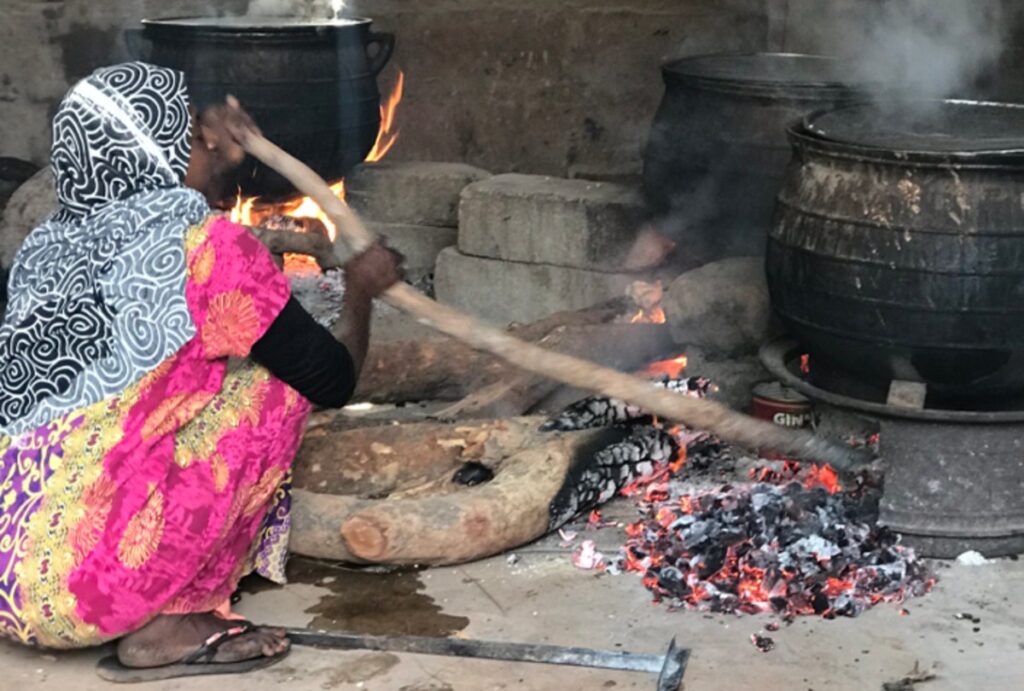
I still remember standing in that small Ghanaian kitchen in late 2016, on a trip to Africa for my MBA capstone project, my eyes watering from the smoky haze drifting up from a wood-fueled cookstove. The woman preparing the meal paused to wipe her face, while a child coughed nearby, already used to the sting in the air. Here, at the bottom of the energy ladder, families had no choice but to cook with wood—spending scarce income and precious time on a fuel that harmed their health and stunted their opportunities.
Just a few years earlier, I’d been working as a completion engineer at Shell, helping unlock vast reservoirs of natural gas and oil from shale rock through hydraulic fracturing in North America. That engineering feat had unleashed a torrent of affordable energy, making liquid fuels like propane cheaper and more accessible worldwide. The contrast between the scene back home and this village could not have been sharper. Yet it was precisely that work and the resulting global energy tide that offered a chance to help families move up the energy ladder—from smoky wood fires to cleaner, more efficient fuels.
It was Envirofit, a company specializing in clean cookstoves, that had engaged us for this project. They recognized that falling propane prices, courtesy of the shale gas revolution, could transform the lives of millions who were spending on average a third of their total wages on firewood for cooking. Our MBA team’s challenge: find a place where this transition could take root. After extensive research, we chose Ghana. There, families aspired to cook without smoke, enjoy a warm cup of tea without burning half a day’s wages, and lift themselves out of energy poverty. Working with Envirofit, we helped to launch a pilot project that evolved into “SmartGas,” enabling people in Ghana and beyond to save precious money by trading out wood for propane.
There is a stark contrast between what I witnessed in Ghana and the prevailing narrative about fossil fuels in the West —a disconnect requiring a shift in mindset. Fossil fuels are not obstacles to progress but powerful enablers of human prosperity. Acknowledging this allows us to embrace an ‘intelligent energy expansion’—a strategy that refuses to settle for scarcity and decline. Instead of ‘phasing out’ the very foundation of our modern world, we could “phase up” our capabilities, using fossil fuels more strategically while we continue to develop renewables and other low-carbon technologies.
The need for this approach becomes clear when we consider the broader picture. Despite impressive advances in renewables, billions of people remain in energy poverty. In 2023, 750 million people lacked electricity, and countless more relied on biomass fuels—wood, charcoal, and dung—that cause nearly 4 million premature deaths annually. Without clean, affordable energy, clinics cannot power equipment, farmers cannot irrigate efficiently, and students cannot study after dark. The cycle of poverty and hardship continues.
Historically, fossil fuels have propelled societies out of poverty and into modernity. They sparked the Industrial Revolution, lit streets, heated homes, and powered global trade. As global energy consumption rose, so did prosperity —life expectancy, literacy, and GDP per capita soared in tandem. Today, many of us take this abundance for granted, flicking our light switches, adjusting our thermostats, traveling freely, and enjoying around-the-clock connectivity.



If all 8 billion people on Earth today were to enjoy the standard of living we take for granted, the world’s primary energy supply would need to grow by a factor of five. Currently, about 80% of this energy comes from fossil fuels. If we cling to the idea of phasing out fossil fuels, we are choosing a path that cements energy poverty rather than alleviating it. Such a choice would be a conscious decision to deny billions the opportunities to escape poverty and suffering.
I witnessed the disconnect in my MBA cohort—a diverse group of professionals from banking, tech, and pharmaceuticals. When I talked about working in the oil and gas industry, I felt the weight of judgment—an implicit assumption that my industry was one of reckless damage, akin to selling cigarettes rather than enabling modern life. This judgment, born of incomplete narratives, overlooks the complexity of our global energy system and reality of our physical world. Everything we do leaves a footprint. Agriculture, for instance, produces emissions on par with the energy sector, yet we don’t consider eating a moral failing. The more we consume and prosper, the greater our impact on the planet. Fossil fuels provide the foundation that gives us the capacity to innovate cleaner technologies, adapt to environmental challenges, and steadily refine our methods.
This is where the concept of ‘intelligent energy expansion’ comes into play. It rejects the idea that our energy future will be defined by contraction and forced substitution. Instead, it recognizes that as we raise global living standards, the only real path is to draw on every energy resource at our disposal, including fossil fuels, while managing them more strategically than we have before. Instead of phasing out fossil fuels, we prioritize using them more efficiently, applying responsible extraction techniques, reducing emissions, and prioritizing these fuels for the hard-to-replace sectors—like certain industrial processes, advanced materials, and aviation. Simultaneously, we accelerate renewables, carbon capture, and low-carbon solutions. This isn’t about turning back the clock. It’s about building on centuries of energy expertise and tens of trillions of dollars of existing energy infrastructure—leveraging those resources and all others available to lift billions of people out of poverty.
Any scenario in the near term where global oil and gas demand decreases wouldn’t be a result of natural human choice or improved technologies—it would be driven by policy-induced scarcity and artificial constraints, and it would only mean one thing: we have placed artificial limits on human potential. Such a world, shaped by misguided policies and constraining ideologies, would force people to remain trapped at lower rungs of the energy ladder. It would be a world of deep regret, defined by unnecessary hardship and stifled potential. We have seen what energy abundance can do—how it fuels innovation, improves health, lifts entire societies out of poverty, and enables individuals to pursue their dreams. Denying that abundance is not just a missed opportunity; it is a moral failing.
It’s time to stop repeating the hollow refrain of ‘energy transition’ and instead embrace ‘intelligent energy expansion’. We must be honest about our physical reality, have difficult conversations, accept trade-offs, and stand firm in the understanding that human prosperity is—and must remain—our guiding star.
Returning metaphorically to that Ghanaian kitchen—with the right perspective and courage, that smoke can clear for good—replaced by a flame that illuminates not just a single room, but a path toward prosperity for all.
Connor O’Shea is the President of Benpro Technologies Corporation (formerly Triple D Bending), a leading provider of precision-engineered pipe bending solutions, recognized for its technical expertise and commitment to quality. A Mechanical Engineer by training, Connor has over 15 years of experience in the Western Canadian oil and gas industry. He is also a Principal at 3Fold Capital Inc., an investment firm focused on building on the success of established businesses.
Share This: