


 CDN NEWS |
  US NEWS







Rail infrastructure often operates behind the scenes, yet for remote and rural communities, it’s a lifeline that can make the difference between isolation and connection. Rail lines provide access to essential goods, healthcare and economic opportunities that might otherwise be limited. Moreover, they support local communities, ensuring food security and bolstering quality of life. In places like Churchill, Manitoba, the Hudson Bay rail line has connected the community to the rest of Canada since 1929, bridging the gap between the challenging northern conditions and critical resources.
Project Overview
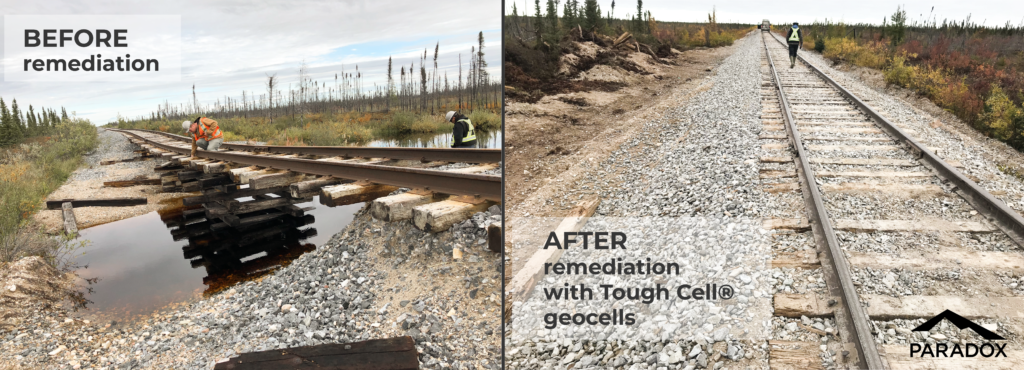
When catastrophic floods struck in 2017, the devastation went beyond property- it severed a lifeline. As the rail line is the sole point of entry and exit into Churchill, this natural disaster created a major disruption in the lives of the main town and about 40 surrounding Indigenous communities. The railbed of the Hudson Bay rail line was left impassable, isolating residents and disrupting supply chains with approximately 1.25km of the rail line in dire need of repair. Having no other option than to rely on helicopters for transport, residents faced not only restricted movement but incurred inflated costs including food, medical supplies and other essential items. The distress caused underscored how indispensable this infrastructure truly is to Churchill.
The Challenge of Rebuilding in Canada’s North
The northern climate coupled with the sensitive ground conditions presented unique challenges for traditional reconstruction. Churchill’s remote location meant that conventional ground reinforcement and repair would be costly, time-intensive and would require frequent maintenance.
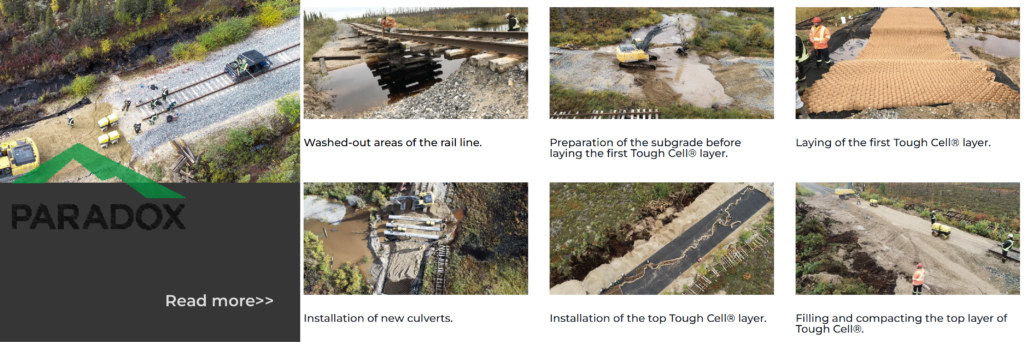
Paradox’s Tough Cell® NPA geocell technology offered a groundbreaking alternative, providing a time-sensitive solution that could be deployed rapidly over the existing permafrost and offer the long-term structural stability the rail bed required. Additionally, reconstructing the damaged areas along the railway with Tough Cell® allowed for the use of locally sourced, cheaper aggregates, while minimally disrupting the sensitive environment.
The Solution
Paradox and their engineering partner Stratum Logics designed and implemented a Tough Cell® geocell solution to remediate the washed-out areas of the rail line within two months. Moreover, the remediation work provided a long-term solution that could withstand the harsh environmental conditions of Northern Manitoba and included additional erosion control measures to mitigate future flood damage. Read the full case study here:
Significant Wins from the Remediation done with Tough Cell® NPA Geocells
The client, Artic Gateway Group benefitted from significant cost savings, both in upfront capital expenditure and for ongoing long-term maintenance costs. Additionally, access was restored in 60 days due to the rapid deployment of Tough Cell®. Moreover, the sensitive and challenging environment was protected. This included:
- 50,000m3 of peat left undisturbed
- 25,000m2 of permafrost protected and
- only 15,000m3 of marginal material used as infill
Lasting Impact and Broader Applications
The success of the restoration of the Hudson Bay rail line demonstrates the transformative power of Tough Cell® for challenging infrastructure projects. It showcases an approach to sustainable engineering that balances resilience, efficiency, and environmental stewardship. Ideal for building over soft soils, muskeg, and in harsh environments, Paradox uses Tough Cell® to build durable infrastructure that meets the needs of communities, providing long-term solutions.
Interested in learning more about using Tough Cell® for your next project? Contact Paradox at 1.877.MUD.UGLY or [email protected] today.

Share This:






















REALITY: Tariffs, Trade, Integration and Productivity—the Canadian Conundrum