


 CDN NEWS |
  US NEWS







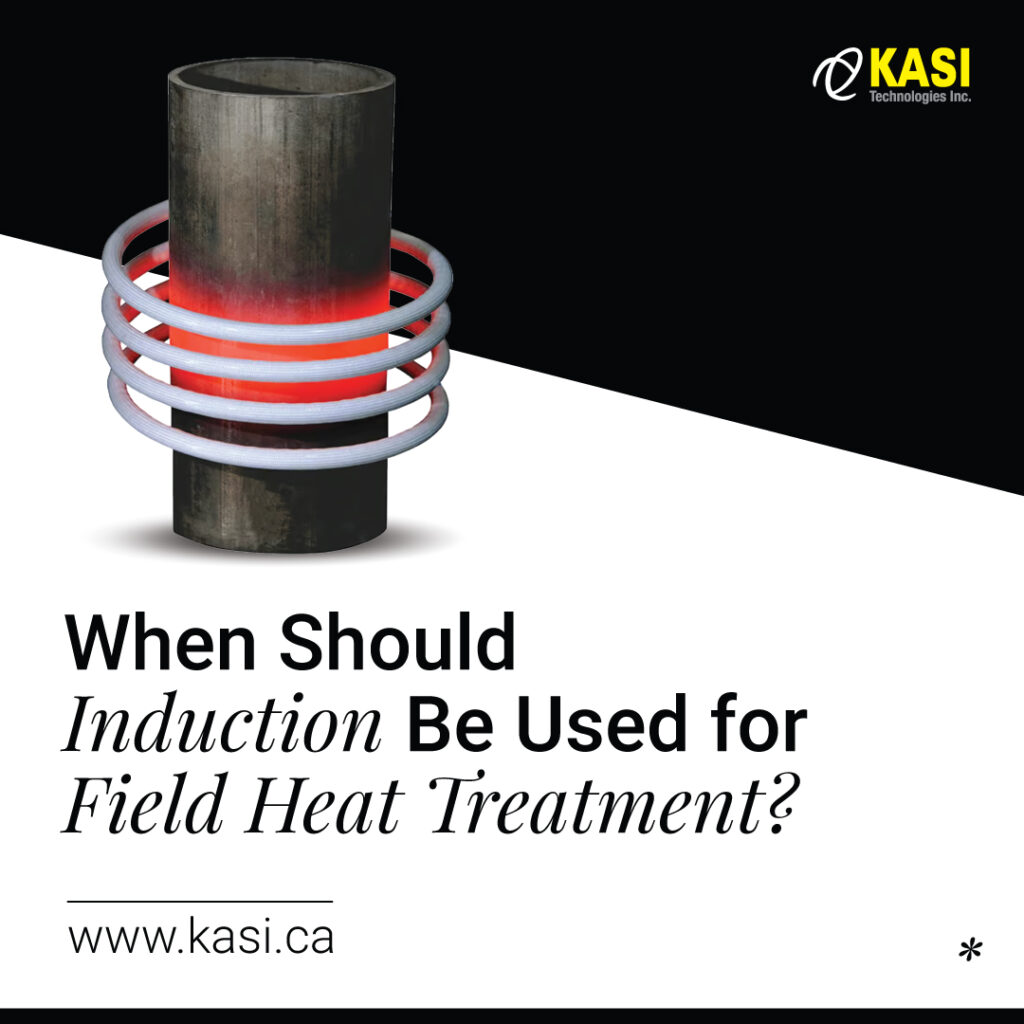
Field Heat treatment is an indispensable process in the metalworking industry, often carried out to alter the physical and sometimes chemical properties of a material. While induction heating has grown more popular in recent years, the technology has been long used by field heat treatment technicians. However, the question remains: when should induction be used for field heat treatment? In this article, we’ll explore the instances where induction can prove to be the best choice for your heat treatment needs.
Understanding the Basics of Induction Heating
Before we delve deeper into the subject, it’s essential to understand the fundamental principles of induction heating. It is a process that uses the principle of electromagnetic induction to generate heat within a workpiece. The material is subjected to a high-frequency alternating magnetic field, which induces electric currents, known as eddy currents. These currents generate heat due to the material’s electrical resistance, thereby achieving the desired heat treatment effect.
Although some smaller welding machine-style induction equipment may struggle to heat non-ferrous metals, the induction heating equipment that Field Heat Treatment Technicians use doesn’t have the same limitations.
Why Choose Induction for Field Heat Treatment?
Choosing the right heat treatment method is critical in achieving the desired outcome. While there is no “One Size Fits All” approach, Induction heating does offer advantages over Electrical Resistance Heating (Cooperheating) under certain circumstances.
- Speed and Efficiency: Induction heating is faster than conventional methods, as heat is generated directly within the workpiece. This enables rapid heating of the workpiece, which can increase production if time-to-temperature is a major bottleneck in your fabrication sequence or project work plan.
- Precision and Control: Induction allows for precise control over the heat’s intensity and location. This targeted approach reduces the risk of warping or distortion and ensures uniform heating.
- Higher Power Output: Induction heat allows for more concentrated power output into a more localized area and can also heat metals to higher temperatures than those that can be achieved by electrical resistance.
Ideal Scenarios for Using Induction in Field Heat Treatment
Having explored the advantages of induction heating, let’s delve into the scenarios where this method is ideally suited.
- Interference Fitting: Induction’s ability to concentrate heat in a localized area very quickly makes it a great solution for expanding couplings on turbines and pumps for removal. It’s also common to see them used for installing hubs, and impellers on shafts where they can quickly heat a fitting. Induction stud tensioning and nut removal are also examples of interference fitting.
- Solution Annealing: Induction is an excellent choice for high-temperature annealing, where non-ferrous materials need to be heated above 1800 Degrees Fahrenheit. Although it lacks some uniformity when dealing with complex geometries in the workpiece, it can be coupled with electrical resistance to overcome these concerns. Induction in this instance will offer significant time-to-temperature savings.
- Preheating for Welding: Induction can be effectively used for preheating before welding for very thick, and uniform steel structures where interpass temperatures are not critical. Although induction heats very quickly, its ability to heat uniformly can be drastically impacted by the workpiece geometry.
Whether it’s Nut Removal, annealing, or preheating for welding, induction has proven to be a valuable choice. However, the decision to use induction should be based on various factors, including the nature of the material, the desired outcome, and the specific requirements of the project.
Still not sure which method makes more sense for your project?
Team KASI has an extensive range of knowledge in all the field heat treating processes and is Backed by Field Experience.
Get in contact with one of our Trusted Solutions Providers to have professional advice and support for your applications. We are more than happy to help guide you along the way to provide the best equipment and feedback.
Summarized by Jason Taylor, Technical Sales Representative, KASI Technologies Inc.
Share This:






















Cash-Rich Oil Majors Face Post-Iran Strategy Rethink: Bousso