CDN NEWS |
  US NEWS









Approximately 200,000 Canadians are not connected to the national electric grid or natural gas distribution system
By James Snell
Follow CEC on Linkedin CEC Linkedin
Follow CEC on Facebook CEC Facebook
Follow CEC on Twitter CEC Twitter
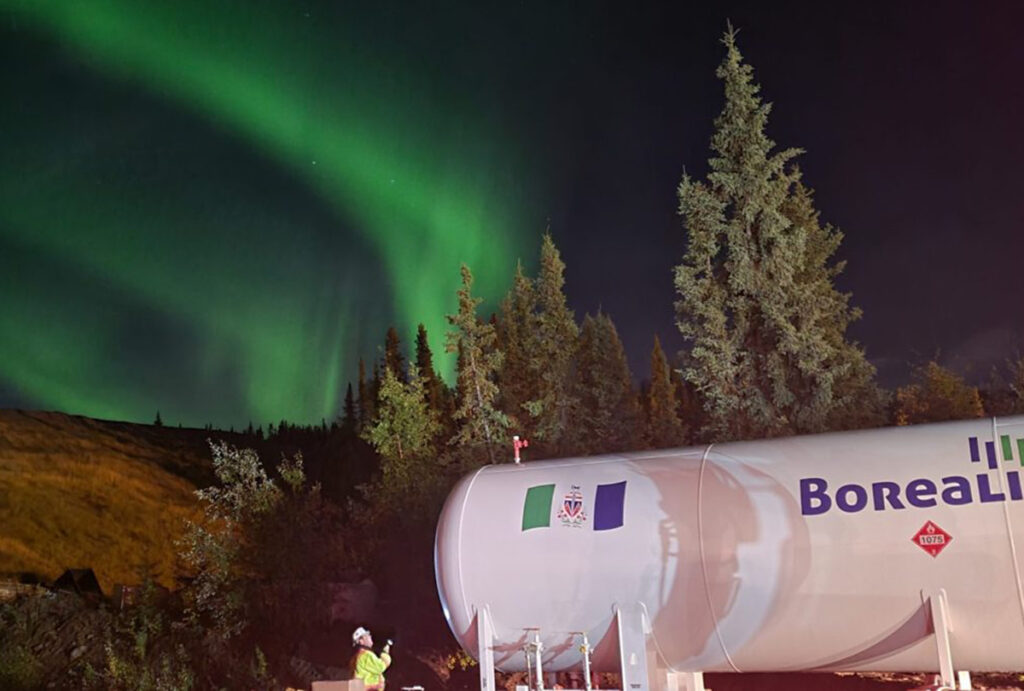
A propane installation in the Yukon Territory. Photo courtesy Borealis Fuels & Logistics
March 21 is National Propane Day, and it should be said there’s more to this fuel than firing up the barbeque and kicking back under outdoor heaters.
Propane is an affordable, versatile, low-emissions energy source that has an important role in Canada’s evolving energy mix. It’s also a primary and backup power source for a growing number of remote communities that have traditionally used diesel for heat and electricity.
“A benefit of switching to a gaseous power system from diesel generation, beyond the cost, is a reduction in emissions,” said Ben Tobber, CEO of Borealis Fuels & Logistics, a company providing propane systems to remote communities and industrial sites.
“There’s a significant reduction in C02 emissions with liquid propane and up to 100 per cent reduction in heavy particulates. On top of that you have no risk of spills with propane.”

Ben Tobber is the CEO of Borealis Fuels & Logistics. Photo courtesy Borealis Fuels & Logistics

In Canada, around 200,000 people are not connected to the national electric grid and natural gas distribution systems, according to the Canadian Propane Association (CPA). Approximately one-third of these off-grid communities, accounting for over 100,000 people, are in Canada’s northern territories.
Tobber and the CPA have resolved to do something about it by replacing diesel engines and fuel tanks with propane engines and storage tanks. Most of the other infrastructure is already in place, he said. Great news for communities with aging and unreliable generators that expose residents to winter safety risk.
Propane, produced as a byproduct of natural gas processing and petroleum refining, could also support remote communities using solar and wind power, creating hybrid power with low-emissions energy that’s reliable – even when the sun doesn’t shine, says the CPA.
For example, due to its extreme latitude, Resolute Bay in Nunavut experiences “polar day,” also known as the midnight sun, during the summer and polar night during the winter when the sun does not shine at all.
“This means that during the summer months solar would work well but would be useless in the winter months. Propane is an excellent backup energy,” the CPA said. Propane can also be stored for extended periods.
Off-grid mines and industrial sites can also benefit from propane power, said Tobber. As with residential communities, it’s cleaner and less expensive than diesel. Borealis Fuels & Logistics is currently installing a large propane power system at a mine in the Yukon with limited road access.
“Which is really the proof in the pudding, that this can be done in some of these communities that have road constraints,” he said. “This has really sparked a lot more conversation.”
According to the Canadian Association of Petroleum Producers, propane is also used for cooking, refrigeration, dryers and fuel for buses, vans, and fleet vehicles. It’s also used widely in agriculture for barn and shop heat, irrigation power and grain drying.
The unaltered reproduction of this content is free of charge with attribution to Canadian Energy Centre Ltd.
Share This: