


 CDN NEWS |
  US NEWS







HOW OIL-IN-WATER MONITORING WORKS
Oil-in-water monitoring is a process used to measure the concentration of oil in water, typically in the oil and gas industry. It is used to monitor and control the discharge of water that contains oil into the environment. There are a few different techniques that can be used to monitor oil-in-water.
One common method is based on ultraviolet fluorescence technology. In this method, a sample of water is illuminated with ultraviolet light, and the fluorescence emitted by the oil is measured. This method is very sensitive and can detect oil in water at very low concentrations.
Another method for monitoring is turbidity measurement. Turbidity is a measure of the clarity of water, and oil in water causes the water to appear cloudy. By measuring the turbidity of the water, it’s possible to determine the concentration of oil in the water.
Taking the mystery out of measuring trace oil in water
What is Fluorescence
When a substance absorbs light, the electrons within it become excited and transition to a higher energy state. This process is known as fluorescence. In order to release the absorbed energy and return to their ground state, the excited electrons emit light at a longer wavelength, which causes a change in color from the absorbed light to the emitted light. The fluorescence occurs when the electrons in a fluorophore release their absorbed energy.
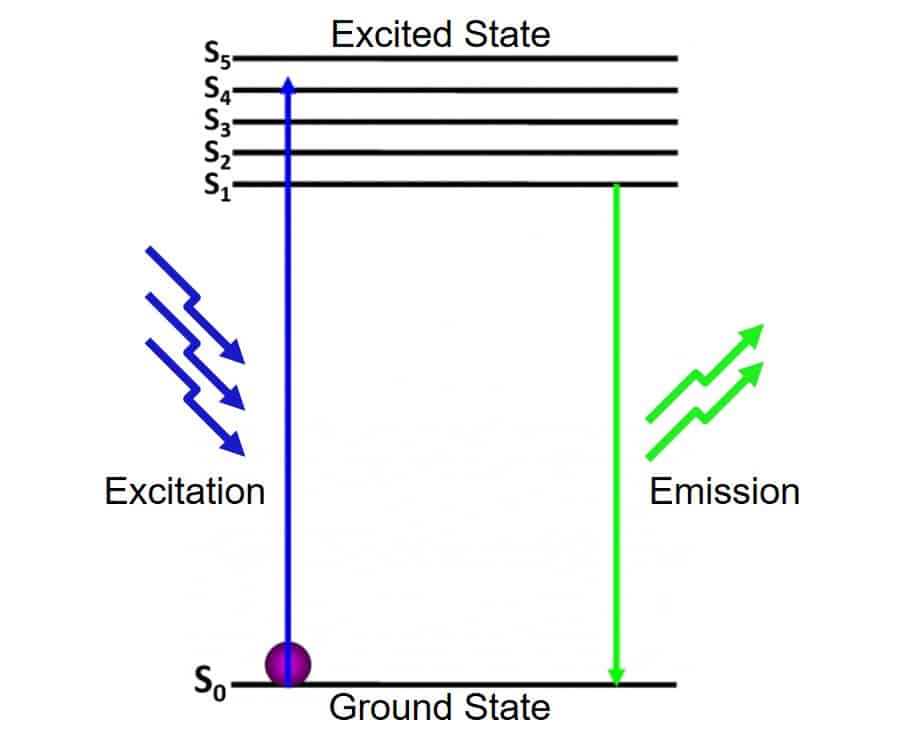
Fluorescein is a commonly used substance in fluorescence applications. It is a powdered orange dye that emits a yellow-green glow when excited by light at a wavelength of 498nm. Aromatic oils also exhibit fluorescence and can be used in oil-in-water and hydrocarbon contamination monitoring. When exposed to UV light, these materials fluoresce, and the emitted light can be measured to detect trace amounts of oil and hydrocarbons in water.
Fluorescence can be used for oil measurement purposes in several ways, one of the most common is by using a technique called Fluorescence Spectroscopy.
How is fluorescence used for oil measurement purposes?
In Fluorescence Spectroscopy, a sample of oil is excited with a beam of light at a specific wavelength. When the light is absorbed by the oil, it causes certain molecules within the oil to become excited and emit light at a longer wavelength, this is known as Fluorescence. By measuring the intensity and wavelength of the fluorescence emitted, it’s possible to determine the properties of the oil and even identify the specific hydrocarbons present.
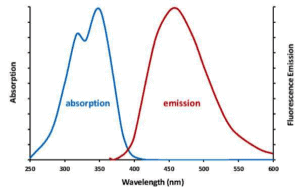
This method is highly sensitive and can detect even small amounts of oil in a sample, making it an effective tool for measuring oil concentration in water and soil samples, in oil spills, and in oil and gas production, transportation, and refining process. Additionally, it can also be used for real-time monitoring of oil in a pipeline or well, which can provide valuable information on the performance of the well or the condition of the pipeline.
It’s important to note that fluorescence spectroscopy is a powerful technique that can provide accurate and reliable results, but also require a good understanding of the sample and the equipment used, to ensure the best results.
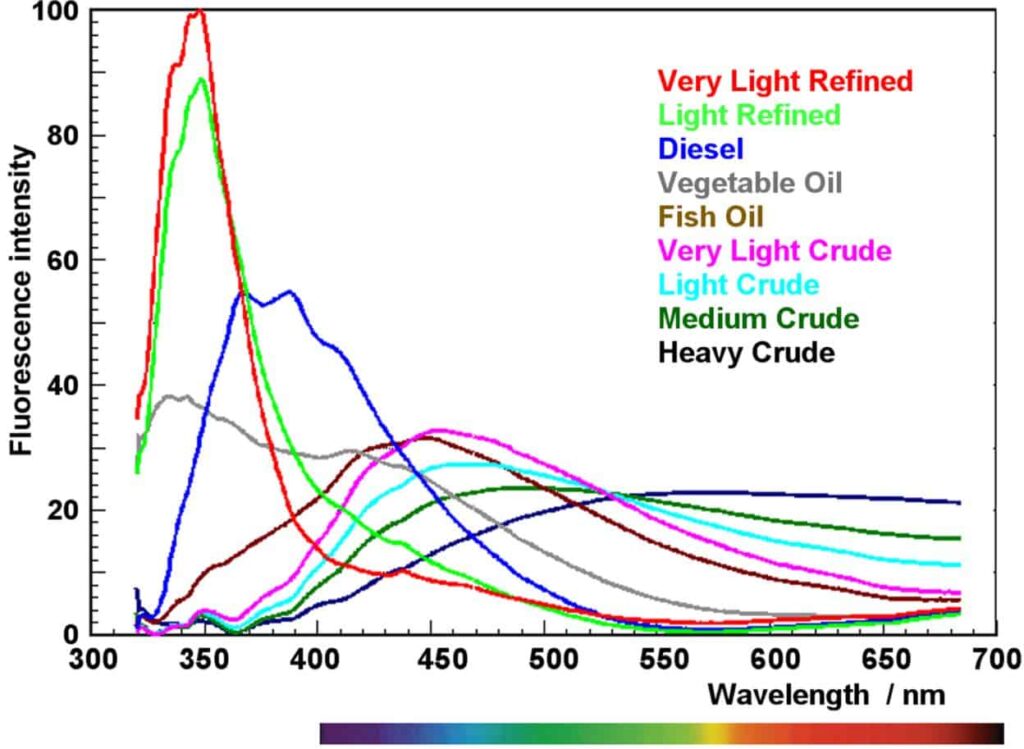
Fluorescence intensity is unique to each oil type. Exciting the oil with ultraviolet (UV) radiation causes it to fluoresce in the UV-visible wavelength range, as shown in the diagram below.
Because fluorescence energy is emitted in all directions from poly-aromatic molecules, the simplest measurement method is to use a single optical window arrangement through which both excitation and emitted light passes.

Emitted light intensity is very low in comparison to excitation light intensity. To combat this, the use of a fiber optic cable to deliver the excitation light and a fiber optic bundle to collect emitted light allows for better signal levels and creates a more reliable measurement.
Key features of an oil-in-water fluorescence sensor are:
- Probe style with a single-window format
- Large gathering area for emitted energy to improve signal levels and measurement reliability.
KEMTRAK FL007
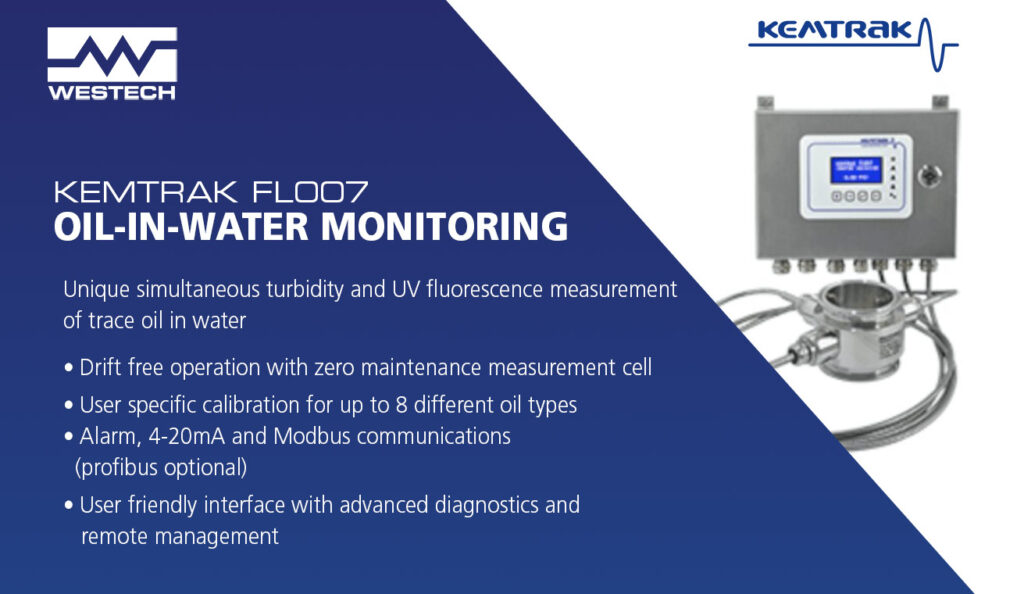
The FL007 can be calibrated for up to 8 specific oil types/ grades. Robust inline measurement cells with scratch resistant sapphire optics have no on-board electronics or moving parts and are suitable for hazardous area use. A native graphical network-based interface allows remote operation, calibration, validation and data trending through standard web browsers.
Learn more about Westech Industrial’s monitoring trace oil in water and our Kemtrak FL007 Photometer by visiting our website at or calling us at 1-800-912-9262.
Share This:






















COMMENTARY: Varcoe: ‘Do No Harm’: Should Alberta Step in to Fix Gas System Constraints, Given Past Energy Interventions?