


 CDN NEWS |
  US NEWS







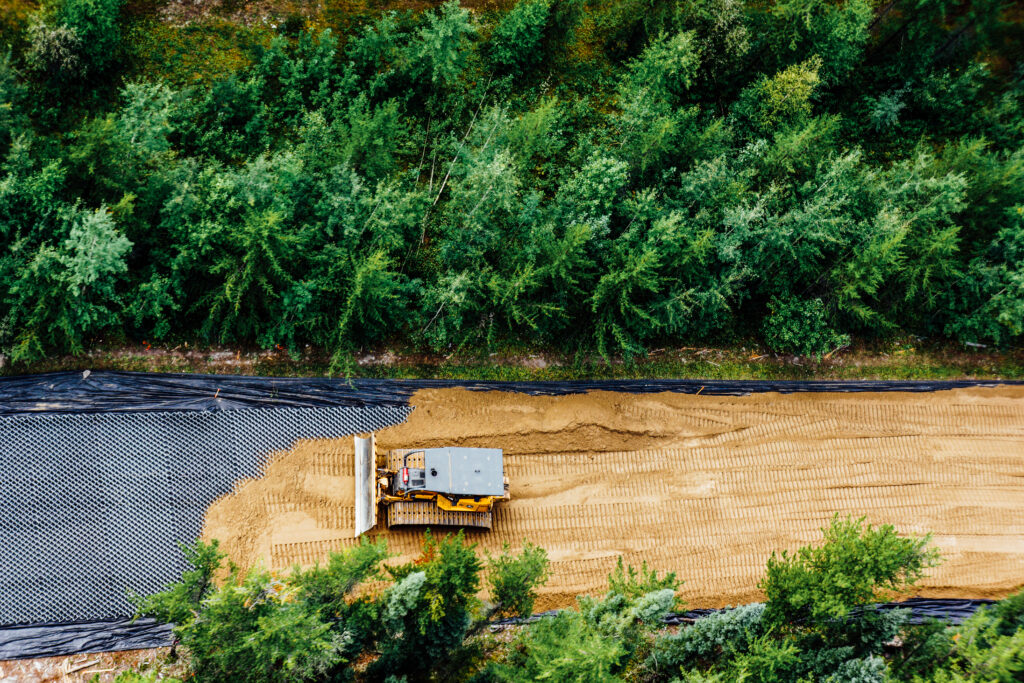
Geocells, specifically Tough Cell® geocells, are increasingly being used in the construction of roads and other infrastructure projects. This innovative product, which is made from Neoloy®, a unique polymer, has the potential to significantly reduce the carbon emissions associated with road building, while also reducing the environmental impact of these projects.
One of the key benefits of using Tough Cell® geocells in road construction is that they allow for the use of low-grade local aggregate. In standard road building techniques, large volumes of crushed gravel are often trucked in from distant locations, which can be a significant source of carbon emissions. By using Tough Cell® geocells, it is possible to use lower-grade aggregate that is readily available locally, reducing the need for long-distance trucking and the associated carbon emissions.
In addition to reducing carbon emissions, Tough Cell® geocells also have unique properties that make them an attractive option for road building. Unlike traditional HDPE-based geocells, Tough Cell® geocells are highly flexible and durable, making them able to withstand the rigors of road construction and vehicle traffic. This allows for the construction of roads with a smaller footprint, which can help preserve natural habitats and ecosystems. Furthermore, the unique design of Tough Cell® geocells allows for effective water drainage, which can help prevent erosion and protect against flooding.
From an engineering standpoint, a Neoloy® based geocell like Tough Cell® has several benefits over conventional HDPE geocells. Neoloy® is a highly advanced nanocomposite material that can resist a variety of environmental conditions and offers superior strength compared to conventional HDPE materials. This allows Tough Cell® to provide superior structural stability and uniformity when used in geocell applications, resulting in greater load-bearing capacity, and improved compressive strength. Additionally, Neoloy® is highly resistant to UV radiation and chemicals, which makes it ideal for use in areas where aggressive environmental conditions are present. Furthermore, Neoloy® is less prone to cracking, buckling and abrasion, which helps to ensure that the geocell will remain structurally sound over time. Finally, Neoloy® is a lighter-weight material than HDPE, making it much easier to transport and install.
Another key benefit of Tough Cell® geocells is that they can be easily removed after the completion of a project. This allows for easy and effective land reclamation, making it possible to restore the land to its natural state once the road is no longer needed. This is a significant advantage over traditional road building techniques, which can leave a lasting impact on the land and the surrounding environment.
Overall, the use of Tough Cell® geocells in road building offers a number of unique benefits compared to alternatives. By allowing for the use of low-grade local aggregate, reducing the footprint of the road, and facilitating easy land reclamation, Tough Cell® geocells can help reduce the carbon emissions and environmental impact of road construction. As awareness of the environmental and practical benefits of Tough Cell® geocells continues to grow, Paradox is confident that more and more governments and infrastructure companies will adopt this innovative material in their road building projects.

Share This:






















COMMENTARY: Newfoundland Government Should Use Hydroelectric Deal to Help Repair its Finances