CDN NEWS |
  US NEWS







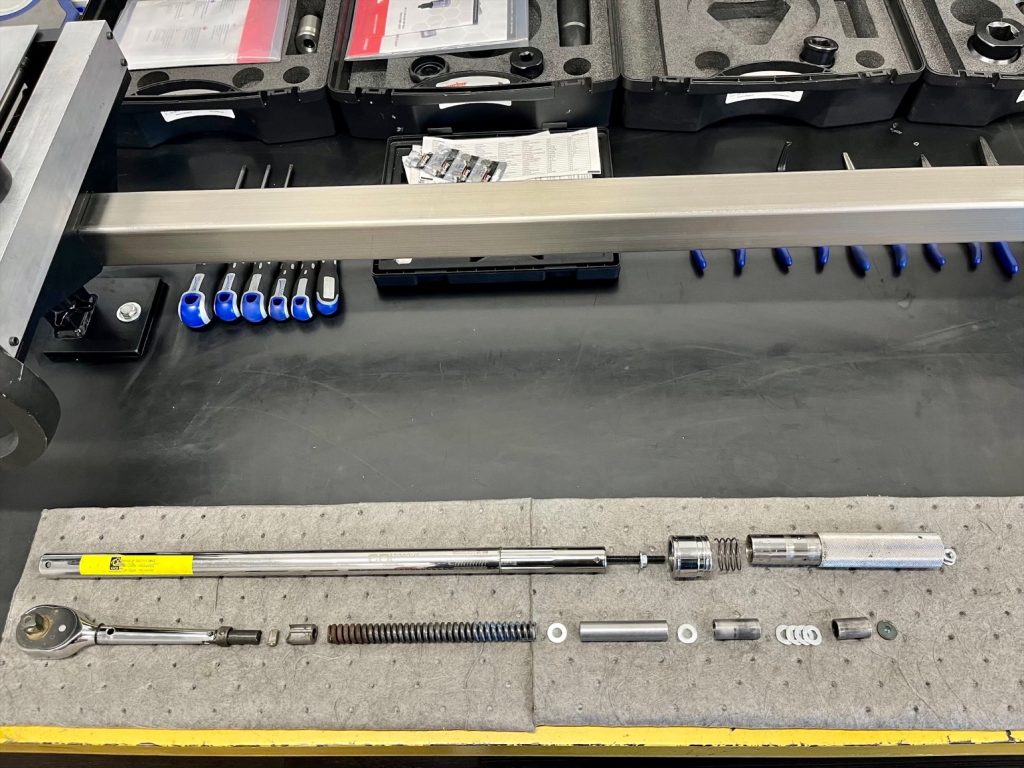
Photo: Mechanical Torque Wrench stripped down for cleaning and calibration
Many factors go into making sure your torque wrench is accurate. Besides, the basic rules on tool handling there are two important methods to doing this: calibration and validation. This article will discuss the differences between these two methods and help you understand how both are very important.
For this discussion, we will be considering tools classified under ISO 6789 as Type II Classes A, B & C which are most commonly used in the Energy and Mining sectors. The accuracy of these tools should be +/- 4% for tools over 88.5 in-lbs (10 N-m).
We all know that torque wrenches have certain inherent inaccuracies because they are measuring torque indirectly. The main source of error is in the friction between the stud and nut or the surface that the nut binds against. These inaccuracies make it all the more important that your wrench is accurate before use.
This is where validation comes into play. For mechanical torque wrenches, validation is a process for ensuring that the tool is operating within the required specifications. Using a device such as a Digital Torque Tester before putting your wrench into daily service is a quick and easy way to ensure the tool is operating the way it was intended.
A survey of mechanical torque wrenches on a major turnaround in the USA, a couple of years ago found that 17% of clicker-type mechanical torque wrenches failed their daily checks. With so many things impacting the accuracy of applied bolt load, using a torque tester daily is a no-brainer.
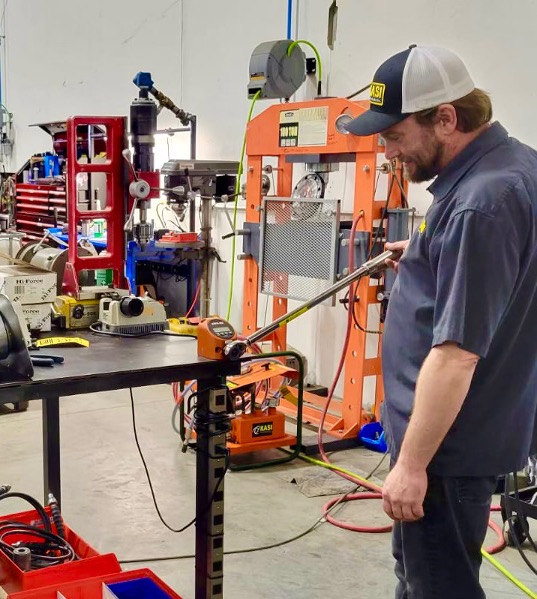
Photo: Torque Wrench Tester mounted in a shop for daily checks
So what do you do when your mechanical torque wrench fails its daily check on the Torque Tester? You send it out for calibration.
Calibration is a much more time-consuming process than using a torque tester. Proper calibration will involve dismantling the wrench, removing, cleaning and inspecting the parts. Once that is complete the wrench will be reassembled and tested for accuracy. Many times during the calibration process parts will need to be replaced or repaired.
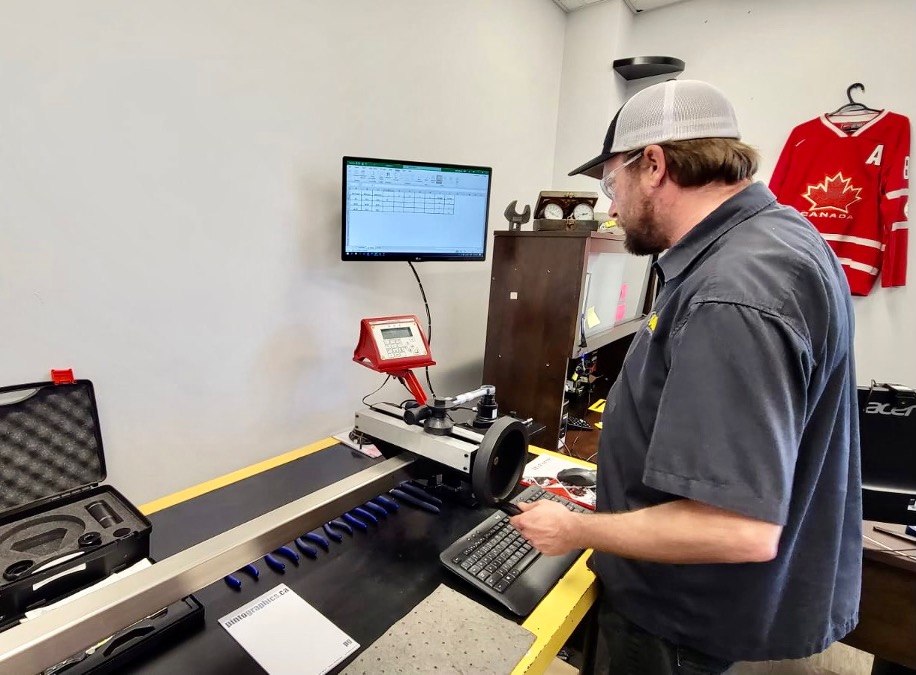
Photo: Mechanical Torque Wrench Loader and Bench in a Calibration Lab
In a calibration lab the testing conditions, temperature, and humidity are all controlled. The transducers used for calibration are also more accurate than those used in Torque Tester. Loading a mechanical torque wrench in a lab is done at a constant speed, and proper angle to ensure consistency. Rather than just determining that the wrench is within the specified limits, the wrench will be adjusted to ensure that it is at accurate as possible.
While validation should be completed daily, proper calibration should be performed on a mechanical torque wrench any time it fails its daily check, and the lesser of every 5000 cycles or 12 months, unless specified differently by the manufacturer, or the governing quality program.
To summarize, both calibration and validation are important processes to ensure accuracy and they should be used in conjunction with one another, rather than one instead of the other.
Learn more: kasi.ca

Summarized by Mark MacNeil, Product Line Specialist Bolting and Hydraulics, KASI Technologies Inc.
Share This: