CDN NEWS |
  US NEWS








A CRITICAL STEP TOWARD A HEALTHY ENVIRONMENT
Global warming and the emergence of the greenhouse effect make it necessary to act. Around the world, industries, and regions that impact emissions are being prompted to reduce or, ideally, to prevent their generation of hazardous substances and environmental pollution. Here the focus is particularly on areas with intensive energy consumption and major urban industrial centers. They are all united by a common goal: to support effective climate protection and to preserve and restore a clean environment.
In many countries there is a legislative basis for a sustainable, environmentally compatible reduction of greenhouse gas emissions as well as laws and regulations relating to the emission of pollutants. These regulations include specifications for technology and modes of operation for systems as well as specifications detailing the permissible pollutant limits. Moreover, provisions are being established that allow measurement technology to be used for monitoring.
The key lies in forward-looking planning of industrial facilities and in continuous monitoring of their emissions. Targeted minimization of emissions requires them to be reliably determined and analyzed both quantitatively and qualitatively.
Thanks to decades of experience, Westech Industrial’s partner SICK is the only manufacturer worldwide in this area with a complete portfolio for emission measurement technology. SICK uses innovative technologies and proven measurement principles to ensure future-oriented solutions – even when subjected to ever increasing environmental and safety-related requirements.
Chemicals, oil and gas
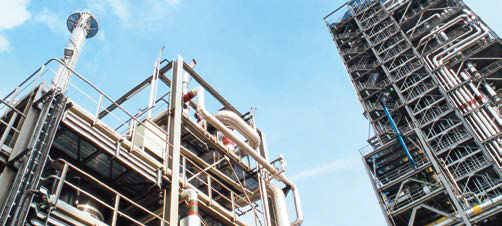
Chemical parks generally include a fossil fuel-fired power plant, which generates both electricity and steam.
Gases produced during the process are exploited thermally and must be monitored accordingly. Parts of the plant may include explosion-proof areas.
TECHNOLOGIES AND MEASUREMENT PRINCIPLES
In-situ gas analysis
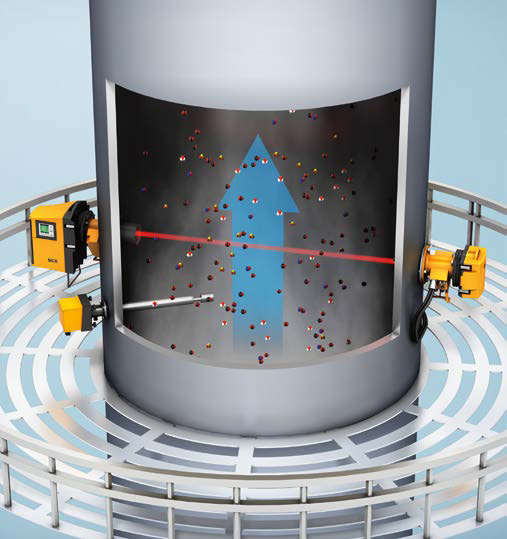
Thanks to SICK’s innovative in-situ measurement technology, the measuring devices can be mounted at the measurement location directly in the duct through which the gas flows. This device solution features minimal maintenance requirements and very short response times.
SICK provides two in-situ versions
- Cross-duct version
- for representative measurement results across the entire duct cross-section
- Measuring probe versions
- optimized for single-sided installation allowing simple integration into an extremely varied range of system conditions. For example, overpressure, wet gases or very high-test gas concentrations and dust loads.
Advantages
- Continuous and direct measurement, no sampling
- Cross-duct version for representative measurement results
- or measuring probe version for simple installation
- GMP measuring probe with open measuring gap or GPP gas
- diffusion probe
Extractive gas analysis
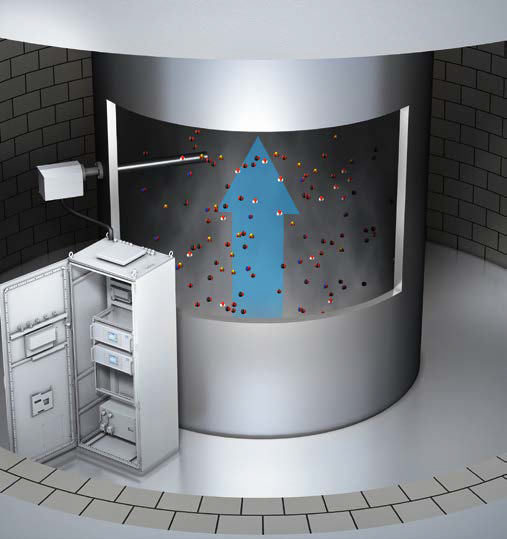
SICK’s extractive gas analyzers can be used in a broad range of applications. A partial gas flow is extracted from the gas duct through selected probes, prepared and fed to the analyzer module under constant conditions. The entire gas treatment from the extraction and processing to the analysis is optimally designed for the measurement task.
Two variants of measurement technology are available
- Hot-extractive measurement technology
- All components that come into contact with the test gas are heated and kept above the dew point. The analysis is done under constantly hot measurement conditions and yields accurate results, even with very narrow measuring ranges. Ideal for detection of multiple gas components as well as water-soluble components such as HCl, HF or NH3.
- Cold-extractive measurement technology
- The gas sampling is optionally designed with a heated or unheated test gas line. Gas drying is achieved with a high-performance gas cooler. The “cold” measurement is handled by the analyzer.
Advantages
- Configurable analyzer modules for a wide range of applications
- Customized solutions designed for numerous possible measuring components
- Accurate and reliable measurement results
- Detection of aggressive, corrosive or combustible gases
MEASUREMENT PRINCIPLES
Scattered light backward
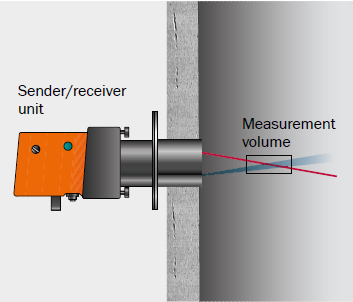
Dust measurement via laser-based Backscattering
Even if the dust concentrations are very low, the measurement principle of SICK’s laser-based backscattering detects the relevant values with great accuracy. A laser diode irradiates the dust particles in the measurement medium with modulated light in the visible spectrum. A highly sensitive detector detects the light scattered by the particles and transmits the measurement signal to an evaluation unit. The compensation for background radiation and ambient light, automatic checking of the zero point and reference point, as well as a check for contamination mean the system yields stable and reproducible measurement results.
UV spectroscopy
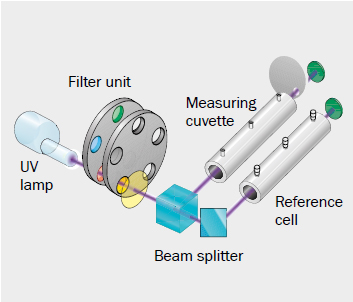
UV resonance absorption spectroscopy (UVRAS) SICK equips cold-extractive process photometers with the measurement principle of UV resonance absorption spectroscopy (UVRAS). The system makes use of the fact that certain gases exhibit specific absorption characteristics in the ultraviolet spectrum. In order to achieve this, the test gas is irradiated with ultraviolet light. The concentration of a gas component can then be determined through selective use of the wavelength and measurement of the absorption. In this manner, the analyzer is able to measure gas concentrations of, for example, NO2, NH3, SO2 and H2S, by means of interference filter correlation (IFC).
ZAAS – Zeeman atomic absorption spectroscopy
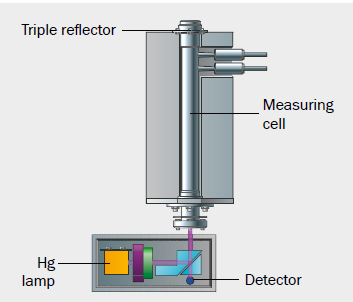
An Hg-discharge lamp emits an element- specific spectrum, which enables an extremely sensitive level of mercury measurement. A magnetic field applied around the discharge lamp creates an additional reference wavelength (the Zeeman effect), which lies outside of the absorption range of Hg atoms. This compensates perfectly for cross sensitivities and lamp aging or contamination. A high-temperature converter converts the bound Hg at approximately 1000 °C into elemental Hg. The advantages of this are that no chemicals or catalyzers are required; maintenance is minimal and there are no moving parts. The patented direct Hg measurement system makes, for example, the MERCEM300Z into a reference device for continuous mercury analysis.
Overview of all measurement principles and evaluation methods
- Tunable diode laser spectroscopy (TDLS)
- Electrochemical cell
- Flame ionization detection (FID)
- FTIR spectroscopy
- Gas filter correlation
- Gravimetric analysis
- Interference filter correlation
- Scattered light backward
- Scattered light forward
- NDIR spectroscopy
- NDUV spectroscopy
- Paramagnetic dumbbell principle
- Temperature: PT1000, pressure: piezoresistive
- Transmittance measurement
- Ultrasonic transit time difference measurement
- UV spectroscopy
- Thermal conductivity measurement
- Zeeman atomic absorption spectroscopy
- Zirconium dioxide sensor
EVERYTHING FROM STAND-ALONE DEVICES TO COMPLETE ANALYZER SYSTEMS
Whether cost-optimized standard systems or customized designs, SICK provides application-related solutions and, upon request, will design complete gas analysis systems.
Measuring devices
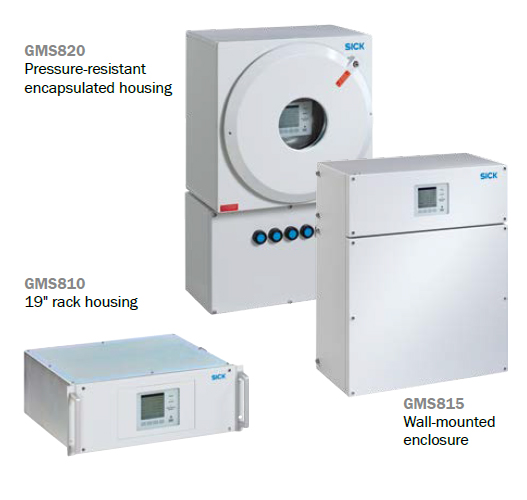
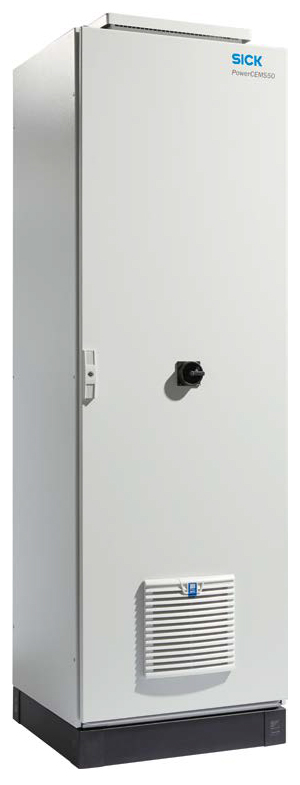
For efficient and cost-effective system integration, the GMS800 product family has a standardized 19″ housing or optimized system housing available for cabinet installation.
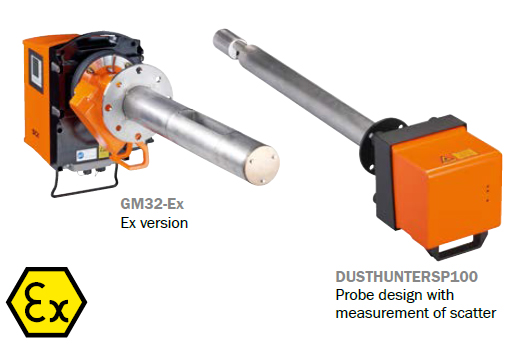
To measure aggressive gases, in-situ analyzers such as the GM32 can be used even in Ex areas and can be linked to analysis systems. The DUSTHUNTER family of dust measuring devices is also easy to connect to analysis systems. In-situ gas analyzers such as GM32 or GM700 measure directly in the process.
Wall-mounted enclosure and pressure- resistant encapsulated housing are optimized for use in Ex zones.
Multi-component analyzer systems
Compact analyzer systems with extremely straightforward handling, trouble-free installation and commissioning on site with very low maintenance requirements. Additionally equipped with state-of-the art communication options, such as Ethernet, Modbus or Meeting Point Router MPR, these systems are suitable for remote monitoring of the entire emission monitoring system – and are thereby pre-equipped for future requirements.
Complete analyzer systems with high-quality serial modules and components that can be optimally tailored to the specific requirements thanks to their configurable design.
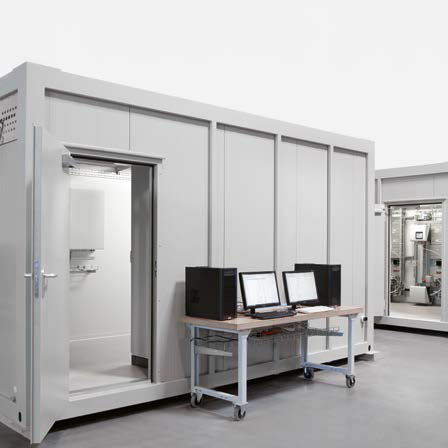
Ready-to-use analyzer containers
Tailor-made designs including the complete range of peripheral equipment with expert application consulting and comprehensive project management. Multiple analyzers or complete analyzer systems can be housed in containers along with the required control devices and power supply units. In addition, a data acquisition system can be included, such as the MEAC from SICK for acquiring, processing and evaluating measurement data. Climate-controlled containers are also available upon request of the customer.
Custom engineering
Planning and engineering at Westech Industrial and SICK is based on long-time experience with all kinds of emissions monitoring. Regardless of whether the applications are in power plants or subjected to difficult conditions of explosive environments in a refinery, SICK’s engineers plan and design tailor-made solutions suitable for your specific requirements using state-of-the-art CAD systems. All products are designed in accordance with the applicable international and national standards. An experienced project management team and global service organization support the customer to ensure reliable and sustained operation of the systems.
REQUIREMENTS OF EMISSION MEASUREMENT SYSTEMS
The selection of a continuous emission measurement system (CEMS) is complex; after all, decisions regarding significant investments and operating costs must be made in these cases.
If you take into account the entire service life of a system, a low initial investment may turn out to be the most expensive solution in the end. Additionally, individual requirements of the respective industrial facility influence the suitability and costs of the CEMS technology in question.
10 steps to a suitable emission measurement system
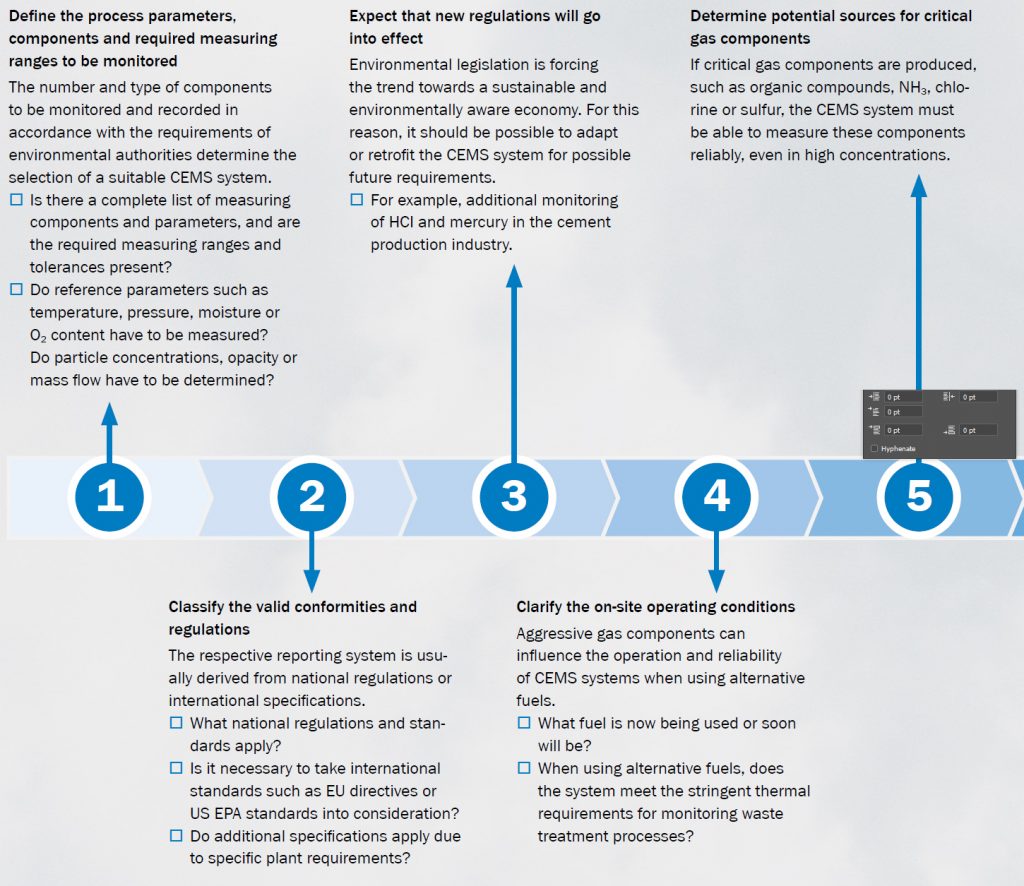
The reason for this is that production industries such as the power-supply industry or the cement industry are generally subject to defined regulations and laws governing the reduction of emissions. In the end, the operating costs over the entire service life can amount to up to three times the cost of the initial investment, depending on the selected measurement technology (in-situ, cold or hot extractive) and the mix of various measurement principles used.

Download this guide to continue reading.

Learn More about Westech Industrial’s SICK Emission Measurement Technologies by visiting our website at or calling to speak to one of our technical representatives in Eastern Canada at 1-800-775-6129.
Share This: