A collaboration between Pembina Pipeline Corporation and TC Energy, the Alberta Carbon Grid is designed to be the backbone of carbon capture, utilization, and storage (CCUS) in Alberta by connecting regions of large concentrations of emissions to key storage locations. We have submitted an application to the Government of Alberta to build and operate a carbon storage hub and gathering lines in the industrial heartland near Edmonton.
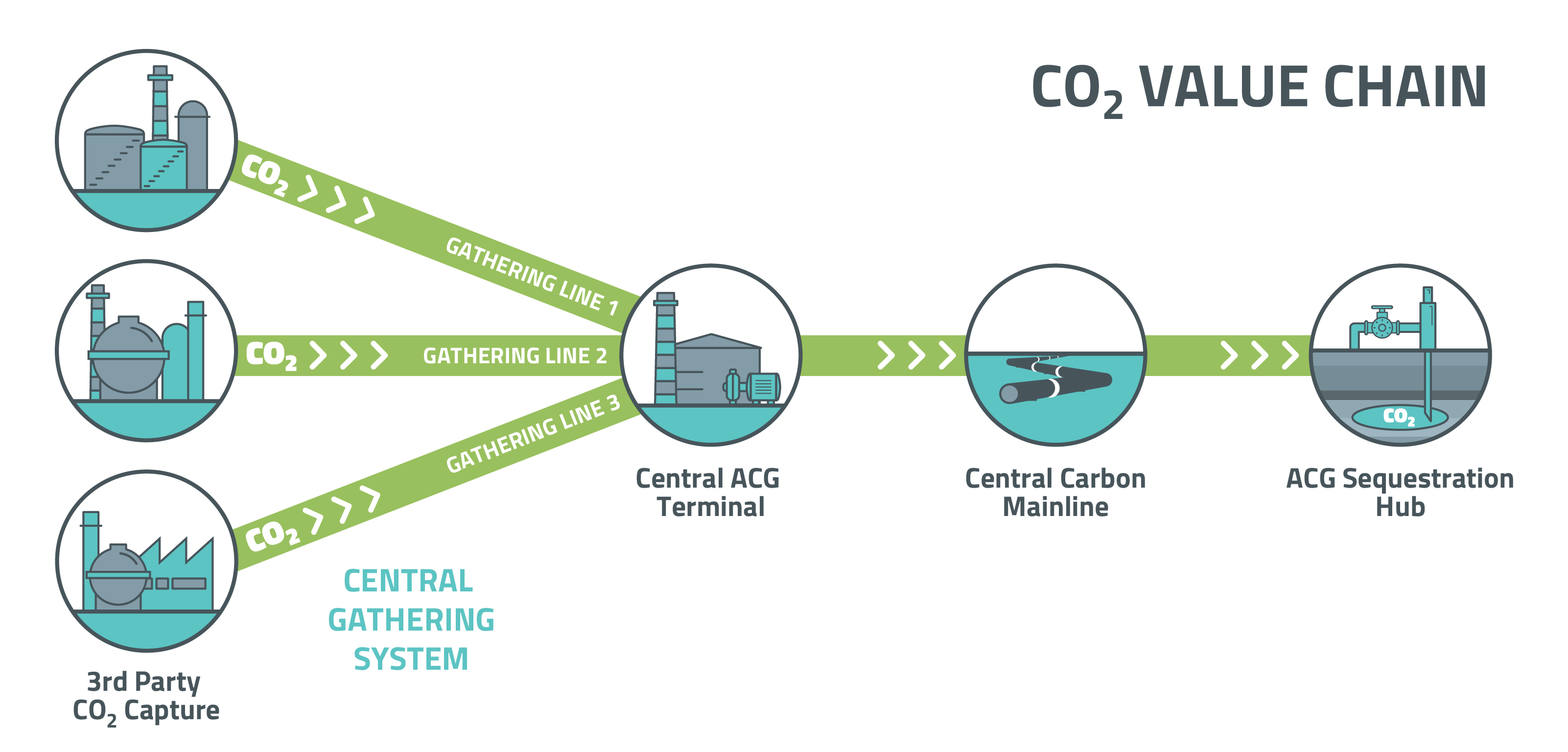
The Alberta Carbon Grid would transport emissions from multiple industries in the industrial heartland using several gathering lines to feed a central carbon storage hub through a central terminal and pipeline.
The project is designed to be built in phases to help reduce initial costs to customers while keeping pace with CCUS development. When fully built out, the Alberta Carbon Grid will be able to transport and store 20 million tonnes of carbon emissions per year at our sequestration hub.

Environment
- Critical to meeting Canada’s climate objectives
- Reduced environmental impacts resulting from existing infrastructure and right-of-ways
- 20 million tonnes of carbon sequestration capacity annually; about 10 per cent of Alberta’s industrial emissions
- Facilitating Alberta’s plans for a clean hydrogen economy and petrochemical diversification
- Advancing Pembina’s and TC Energy’s emissions-reduction goals toward a lower-carbon future

Safety and Reliability
- More than 130 years of experience leading the safe and reliable operation of North American energy infrastructure that leverages the most advanced technology
- Best-in-class safety programs and performance, including industry safety awards
- Ongoing work and consultation with government regulators through all project stages
- Consulting with world-leading CO2 transportation and sequestration experts
- Monitoring, measurement, and verification plans for ongoing safety and emergency response

Economy
- High-value jobs to support economic growth across Alberta
- Business opportunities in local communities to meet the demand for goods and services, particularly during construction
- Once operational, annual revenue to support local services, including schools and hospitals, through tax payments to municipal, provincial and federal governments
- Funding to build stronger and more vibrant communities through initiatives with community partnerships in the areas of safety, community and environment

Indigenous Involvement
- Building mutually beneficial long-term relationships through understanding local Indigenous group interests and responding to concerns
- Opportunities to explore Indigenous interests in ACG participation such as education and training, community legacy, scholarships and engagement with Indigenous contractors and businesses during various stages of the project

Customer Focused and Expertise
- Multiple inlets and outlets for customers to have flexibility for CO2 end-uses, including industrial processes and sequestration
- A multi-sector solution with interconnectivity between multiple key hubs for expanded emissions reductions
- Fees are targeted to be less than the price of carbon in Alberta, ensuring the ACG’s long-term competitive viability
- Commercial framework of long-term fee-for-service contracts providing customers with long-term certainty
Carbon capture, utilization, and storage 101
For many, carbon (CO2) capture, utilization, and storage (CCUS) is a new concept, but CCUS has been around since the 1970s using similar technology and operations to oil and gas pipelines. Learn about some of the most asked CCUS questions below:
What is CCUS?
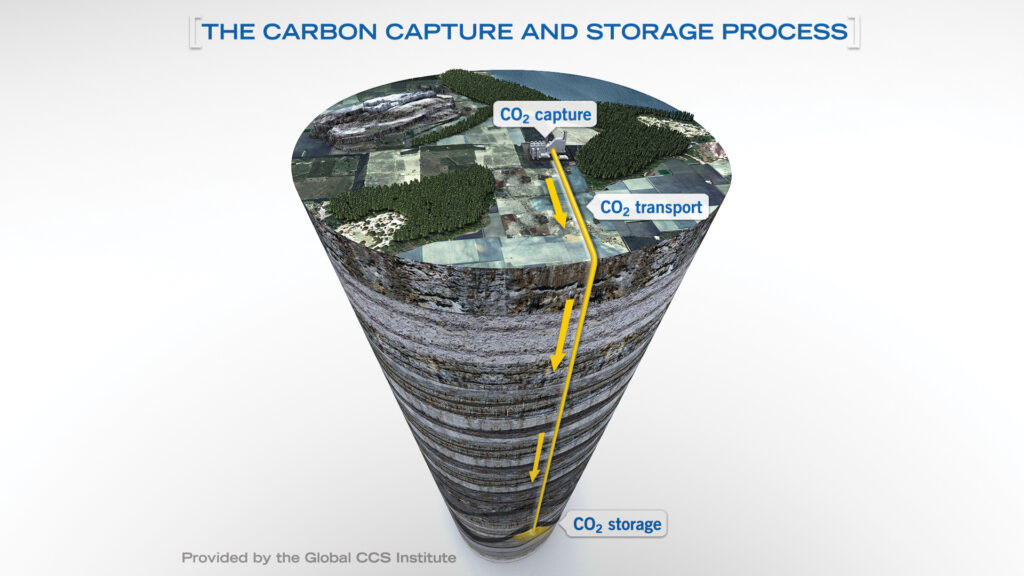
CCUS is the process of capturing CO2 from industrial emissions so that it isn’t released into the atmosphere. CO2 can be moved to an underground storage (sequestration) area or can be ‘utilized’ to help make fuels, chemicals, or materials such as concrete and fertilizer, or in processes like enhanced oil recovery.
Why is CCUS important?
CO2 is a greenhouse gas linked to global climate change and removing it from the atmosphere can help slow climate change. CCUS will play a vital role in helping Canada achieve its enhanced climate targets, including a 40 – 45 per cent reduction in greenhouse gas emissions, based on 2005 levels, by 2030.
Can CO2 that is stored be utilized later?
No, once stored underground, CO2 will remain there permanently. Sequestration is located in large geological formations deep underground. In Alberta’s case, the formation is over two kilometres beneath the surface.

How is CO2 captured?
There are several ways that CO2 can be captured, including solvent based technologies, physical membranes/filters, and absorbents. Alberta Carbon Grid (ACG) industrial customers will capture CO2 from their facilities before being transported by ACG pipelines to a sequestration reservoir. The CO2 will be converted from a gas into a liquid before being transported because more CO2 can be transported in liquid form than in a gas form.

Where can CO2 be stored?
CO2 can be stored in any location with the right geological conditions. Currently, the Government of Alberta will only grant permission for CO2 storage within crown land.
Can stored CO2 be released accidentally?
CO2 storage reservoirs are deep underground and geologically stable – meaning the reservoir formation has strong containment characteristics to prevent CO2 from escaping. Additionally, safety and environmental considerations drive both Pembina’s and TC Energy’s technical due diligence to support our current and proposed operations. All sequestration project regulatory approvals require that sequestration operators have an active and effective monitoring, measurement, and verification plan that ensures the CO2 is stored as intended.
Can stored CO2 impact groundwater sources?
No, underground storage for CO2 is much deeper than groundwater sources.
What role does ACG have in CCUS?
The ACG is designed to collect CO2 from multiple emitters and transport it to a sequestration hub(s) or utilization points. ACG is considering new assets, existing infrastructure, and a newly developed carbon sequestration hub to connect the province’s largest regions of industrial emissions – the Alberta Industrial Heartland, Edmonton-area, and the Drayton Valley region – to key sequestration locations. The ACG’s proposed sequestration reservoir can accept 20 million tonnes of CO2 in liquid form per year for decades.
The Partnership
Pembina Pipeline Corporation (Pembina) and TC Energy Corporation (TC Energy) are working together to develop an open-access carbon transportation and sequestration system. Both companies have decades of experience in safe and reliable development, construction, and operations of infrastructure solutions with, and on behalf of, customers, investors, communities and employees. The ACG is part of Pembina’s and TC Energy’s ongoing commitment to energy diversification, industry collaboration, and a lower-carbon future that benefits the environment and the Alberta economy. We are excited about the potential to create an effective and strategic solution with and for these key stakeholders.
Share This:



CDN NEWS |
US NEWS


PERSPECTIVE: Why Youth Awareness and Education About Energy Are So Important to Canada