


 CDN NEWS |
  US NEWS







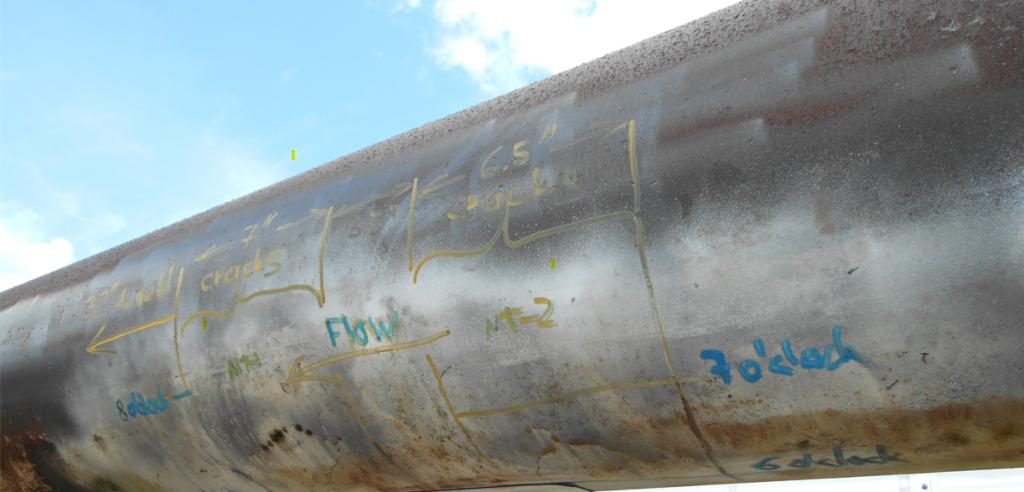
As outlined in a recently released Bulletin 2021-36 from the Alberta Energy Regulator (AER), several pipeline incidents over recent years have resulted from a form of stress corrosion cracking (SCC) on high-temperature steel pipelines. The commonality between these incidents is that the pipelines had mineral wool insulation and aluminum cladding, but no external corrosion barrier under insulation due to required high operating temperatures. The SCC mechanism was driven by moisture entering through gaps in the cladding, saturating the insulation, and thus producing leachate causing the exposed pipe to crack.
During this same period, SESC has been assisting operators with high temperature SCC-related engineering assessments by providing inspection and mitigation recommendations based on CSA Z662 Clause 10.10 and API 579-1/ASME FFS-1 Part 9 Fitness for Service guidance. Through this extensive work, SESC has developed considerable experience and industry leading expertise in addressing this emerging issue. Our team-based approach, open collaboration, and deep understanding of SCC places us in a position to successfully assist your organization with these engineering assessments, as required by the AER.
For more information about Stress Engineering, please visit www.stress.com or contact Dr. Farrow at [email protected] or Tom Raptis at [email protected]
Share This:




















NEW EPISODE #14: WATCH: 3 MINUTE HISTORY CANADA – The National Energy Program – Trudeau’s Energy Bomb on Alberta