


 CDN NEWS |
  US NEWS







Will Kennedy and Javier Blas
The loss of Abqaiq, which handles 5.7 million barrels of oil a day, or about half of Saudi production, is the single worst sudden disruption to the oil market. Saudi Aramco is firing up idle offshore oil fields — part of their cushion of spare capacity — to replace some of the lost production, the person said. Aramco customers are being supplied using stockpiles, though some buyers are being asked to accept different grades of crude oil.
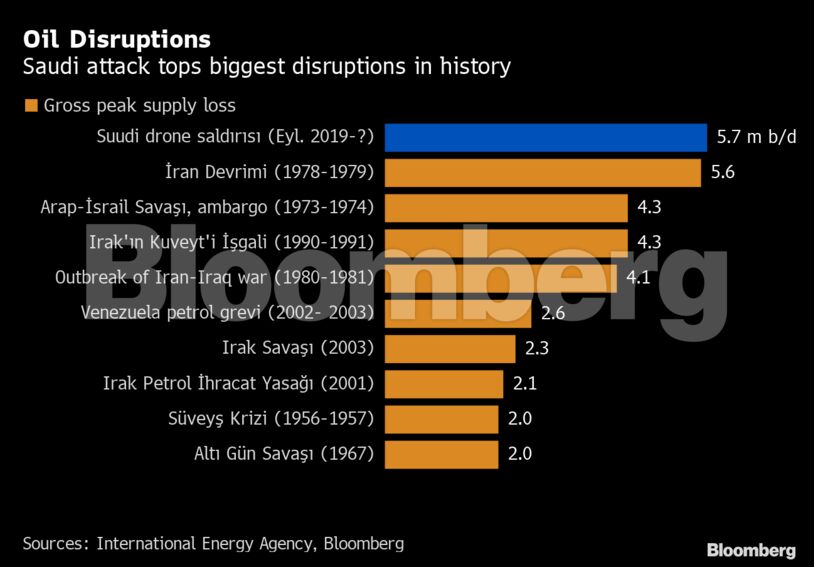
In an extraordinary start to trading on Monday, London’s Brent futures leaped almost $12 in the seconds after the open, the most in dollar terms since their launch in 1988. Prices have since pulled back about half of that initial gain of almost 20%, trading at $66.66 a barrel as of 12:48 p.m. in London, but are still heading for the biggest advance in more than three years.
In addition to the immediate loss of supply, the attack raised the specter of U.S. retaliation against Iran, which it blamed for the strike. While Iran-backed Houthi rebels in Yemen claimed responsibility for the strike, which they said was carried out by a swarm of 10 drones, several administration officials Sunday said they had substantial evidence Iran was directly responsible. President Donald Trump tweeted the U.S. is “locked and loaded depending on verification” that Iran was the real source.
To see the photos that show how the attack crippled Saudi Arabia’ output, click here.



Responsible for almost a 10th of global crude output, Saudi Arabia has been under siege this year — targeted by air, sea and land — as tensions with Iran flare. The Houthi rebels said on Monday that oil installations in the kingdom will remain among their targets. The Iranian-backed rebel group, cited by the Houthi’s television station, said its weapons can reach anywhere in the country.
“No matter whether it takes Saudi Arabia five days or a lot longer to get oil back into production, there is but one rational takeaway from this weekend’s drone attacks on the Kingdom’s infrastructure — that infrastructure is highly vulnerable to attack, and the market has been persistently mispricing oil,” Citigroup Inc.’s Ed Morse wrote in a research note.
Trump authorized the release of oil from the U.S. Strategic Petroleum Reserve, while the International Energy Agency, which helps coordinate industrialized countries’ emergency fuel stockpiles, said it was monitoring the situation.
The Organization of Petroleum Exporting Countries is in regular contact with the Saudi authorities, who have risen to the challenge by keeping oil flowing, the group’s Secretary-General Mohammad Barkindo said in a Bloomberg TV interview. It’s premature to talk about reversing the oil-production cuts implemented by OPEC and its allies, he said.
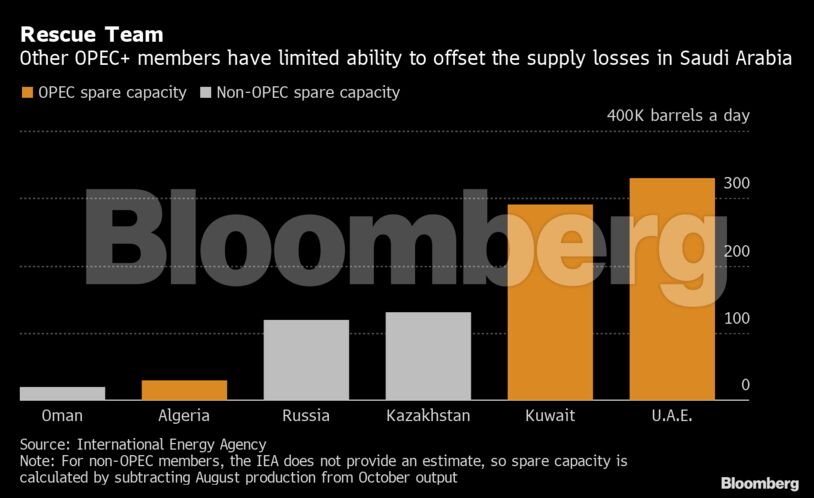
Even if OPEC+ did decide to roll back their cuts, they would only be able to add about 900,000 barrels a day to the market, just a fraction of the Saudi losses, according to Bloomberg calculations based on IEA data.
Share This:






















COMMENTARY: Here’s How to Help Secure Canada’s Energy Sovereignty – Fraser Institute