


 CDN NEWS |
  US NEWS







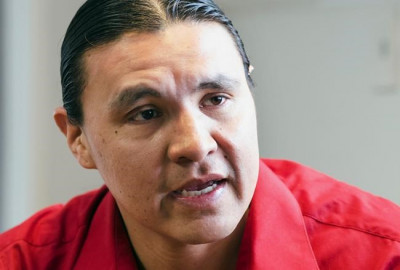
BISMARCK, N.D. — An American Indian activist and former U.S. congressional candidate in North Dakota accused of inciting a riot during protests against the Dakota Access oil pipeline says he'll seek to present a "necessity
Chase Iron Eyes has pleaded not guilty to inciting a riot and criminal trespassing. He could face more than five years in prison if convicted at trial in February. The pipeline has since begun carrying oil from North Dakota through South Dakota and Iowa to Illinois.
Pipeline protesters who try the necessity
WHAT IS THE NECESSITY
People who use it are trying to show the harm they caused is justified because a greater harm was avoided as a result.
It dates to the late 1800s in England, when two sailors were charged with murder after they stayed alive by killing and eating a third sailor marooned with them in a lifeboat.
IS IT RECOGNIZED BY THE COURTS?
The U.S. Supreme Court has said it's an "open question" whether federal courts have the authority to recognize a necessity
Whether the
The main argument against the
The main argument in its
HOW IS IT USED NOW?
It is used most frequently in criminal cases — such as drunk driving and marijuana use — in which people argue that what they did was necessary to prevent some greater harm.
In one such case, the Minnesota Supreme Court in 2014 ruled against a woman who challenged the revocation of her driver's license after she drove while intoxicated to escape her abusive husband.
The
It was first attempted in a U.S. environmental case in 2009 when a climate change activist cited necessity in Utah. Alice Cherry, co-founder of the Climate
With pipeline protests, demonstrators often point to climate change and environmental damage as the greater harms. Oil pipelines carry fossil fuels, including oil, which release gases that trap heat and contribute to climate change, they argue.
Iron Eyes' arguments are more complex. He cites an "imminent threat" to his tribe's water supply because the Dakota Access pipeline goes beneath the Lake Oahe reservoir on the Missouri River, from which the tribe draws its drinking water. He also contends there was an effort by industry, private security and public law enforcement to conduct "an anti-terrorist campaign against Native Americans."
WHAT MUST BE PROVEN?
Legal experts agree the necessity
To succeed, the defendant generally has to persuade the judge or jury that they had no legal alternative to breaking the law. They also must prove they were trying to prevent some imminent harm, and there must be a direct connection between their breaking the law and preventing the harm. Finally, they must prove that breaking the law is less harmful than what would have happened.
HAS IT SUCCEEDED IN ENVIRONMENTAL CASES?
Not often.
In a Minnesota case, Judge Robert Tiffany is allowing four pipeline protesters to use the
A judge in Spokane, Washington, is allowing a 77-year-old Lutheran pastor to use a necessity
Judges in recent pipeline protest trials in North Dakota, Montana and Washington state have rejected the
The Montana case is pending. In the Washington and North Dakota cases, the protesters on trial were allowed to tell jurors of their "state of mind" during the
___
Follow Blake Nicholson on Twitter at: http://twitter.com/NicholsonBlake .
Follow Steve Karnowski at: https://twitter.com/skarnowski .
___
Sign up for the AP's weekly newsletter showcasing our best reporting from the Midwest and Texas: http://apne.ws/2u1RMfv
Blake Nicholson And Steve Karnowski, The Associated Press
Share This:






















INSIGHT: Canada’s Economy Falling Behind Despite Misleading Headlines – Fraser Insitute