


 CDN NEWS |
  US NEWS







At Get It Done B.C., First Nations leaders and energy researchers spelled out what LNG has brought to northern communities, and what would be lost if it disappeared.
By Ian Biana
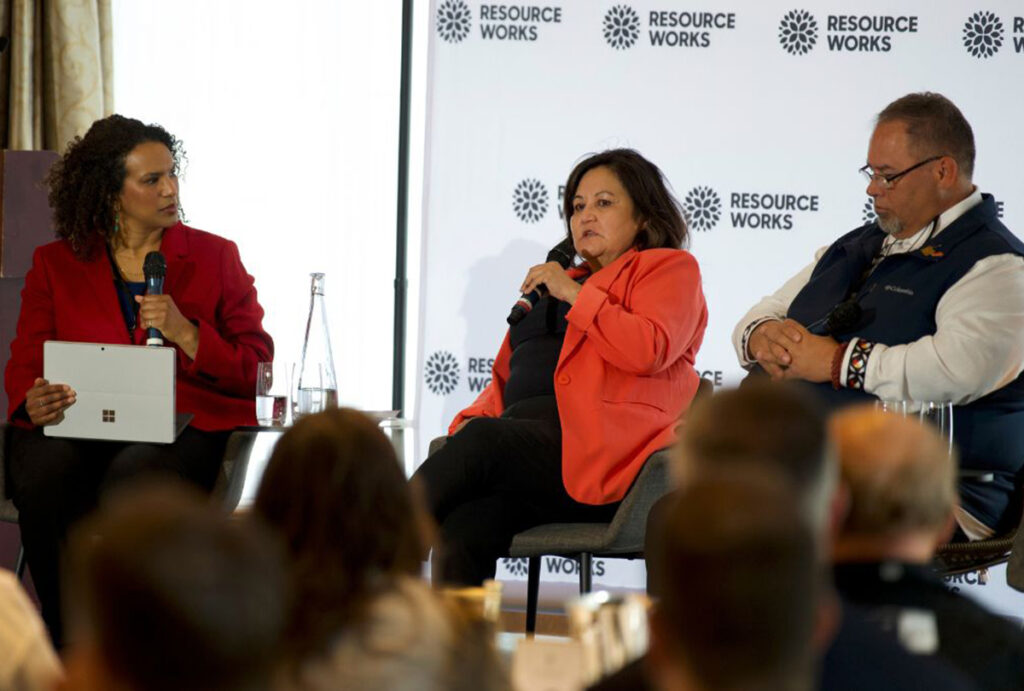
From left, Shannon Joseph of Energy for a Secure Future; Karen Ogen, CEO of the First Nations Natural Gas Alliance; and Chief Roland Wilson of West Moberly First Nations take part in “The Power of Yes: Local Benefits and Community Voices” panel at Get It Done B.C.
Ask a typical British Columbian what liquefied natural gas has accomplished for the north, and you might get a blank stare. Debates over resource extraction usually unfold far from Kitimat, Burns Lake, or Moberly Lake, dominated by voices with little connection to the region.
That disconnect set the stage for one of the sharper sessions at Get It Done B.C. on Sept. 14, 2026. The Resource Works event took place just before the Union of B.C. Municipalities convention, drawing many elected leaders.
Shannon Joseph, chair of Energy for a Secure Future, opened with new data assessing LNG Canada Phase 1 and the Coastal GasLink pipeline. She then led a discussion featuring Chief Roland Wilson of the West Moberly First Nations and Karen Ogen, former chief of the Wet’suwet’en First Nation near Burns Lake.
Their message was clear. The benefits are real, measurable and local.
Mapping the economic corridor
To evaluate both projects against the provincial government’s five conditions for LNG development, Energy for a Secure Future partnered with Itotem Analytics. The study tracked key metrics across 20 municipalities and 21 First Nations along the infrastructure corridor.
The starting point was tough. Household incomes were about $6,000 below the provincial average. More homes needed major repairs. Post-secondary attainment, including trades, was 15 per cent below the B.C. average.
Once construction started, Joseph said the two projects created more than 75,500 jobs. Of the $18.4 billion spent, about $6 billion went to B.C. businesses. Local and Indigenous businesses secured $5 billion.
Community numbers improved as well. After-tax household income in the corridor rose 34 per cent, from $78,000 to $105,000. The number of registered nurses increased from 609 to 727 per 100,000 people. High school completion rates climbed, and more than 750 scholarships went to young people.
Joseph illustrated the human impact through the story of Rob Campbell. Raised in Kitimat, Campbell had left the area when industrial jobs dried up. The final approval of LNG Canada allowed his family to move back. Beyond gaining stable employment, Campbell spent five years living near his mother before her passing.
Money that answers to the nation
Coastal GasLink signed benefit agreements with all 21 First Nations along its route. Sixteen secured equity options, which they are now exercising. The Haisla Nation negotiated pipeline capacity that allowed it to pursue Cedar LNG. Joseph called it the world’s first majority Indigenous-owned LNG project.
The research found First Nations’ own-source revenues rose 159 per cent. That money now covers more than a third of their operating budgets. From 2019 to 2023, nations increased spending on education, housing, economic development and community programs.
Wilson explained why that matters. West Moberly has 335 members, with two-thirds living off reserve. Federal funding mostly covers on-reserve needs, so resource revenue fills the gap. The nation now funds its own day care.
Wilson described the shift in plain terms. “We’ve done things that we’ve wanted to do, not things that we were told we had to do.”
He added that West Moberly’s partnerships on Coastal GasLink finished under budget and ahead of schedule. According to Wilson, the company told the nation it had never seen work go so smoothly.
Ogen summed up the years before in three words. “We managed poverty.”



Her nation saw railways, highways, transmission lines and pipelines cross their land with nothing in return. Today, she said, the community has paved roads, more housing and resources to address intergenerational trauma.
Language is part of that work. Ogen’s community has one fluent speaker left, her aunt. Joseph pointed to the Haisla Nation, where project revenue now supports language recovery. Former chief councillor Crystal Smith’s twin sister teaches Haisla to their grandsons.
“They don’t speak for us”
Joseph didn’t shy away from the opposition. She noted the blockades that tried to shut these projects down. If they’d worked, the jobs, income gains and Cedar LNG wouldn’t exist.
She named Greenpeace, CAPE and Dogwood, which frame their campaigns around people and planet. Joseph questioned who those people are. “I don’t know if they know which people they are talking about.”
Ogen was blunt. “Number one, they don’t speak for us.”
She said outside groups tried to align with her community but ended up dividing it. Her council responded by doing its own homework. It commissioned cumulative impact, land use and socio-economic studies. The council reported to members every month and answered every concern in the community.
That work paid off. Ogen recalled an elder answering a question about pipeline ruptures himself. He explained that shut-off valves on each end contain a leak. She said she was impressed that he had been paying attention.
Wilson offered a more layered view. He admitted West Moberly has occasionally used activists when nobody else would listen. “When you’re drowning, you grab whatever you can to stay afloat.”
But he drew a firm line on who’s in charge. The nation sets its own goals, and outside groups either help or move on. “Nobody speaks for us. We speak for ourselves.”
Neighbours at the same table
With UBCM starting, Joseph asked how municipalities and First Nations can build opportunity together.
Wilson pointed to a leadership table in northeastern B.C. Mayors, councils and chiefs meet there quarterly. He said hospital diversions, clinic closures and the opioid crisis hit everyone. Not everyone attends, but those who do keep talking.
Ogen called for an end to working in silos. She remembered homes in her community burning down with no fire protection available. Now the nation has an agreement with the Village of Burns Lake to respond to fires.
She also recalled a bitter past dispute with the village over the band’s right to tax a local mill. The band’s taxing authority was upheld, but the relationship had to be rebuilt. Her advice to local governments was simple. “You can fight with us or work with us. Make your choice.”
Ogen shared early findings from a lessons-learned study with the 21 corridor nations. Communities want careers and trades, not just security, housekeeping and kitchen jobs. Many members still travel south for weeks to earn a Red Seal. She is pushing for training centres in the north.
What comes next
LNG Canada Phase 2, Ksi Lisims LNG and Cedar LNG are all on the table. Joseph expects renewed calls to stop them. She hopes the research gives local leaders confidence that the first round brought real benefits.
Wilson offered the long view. Resources will eventually run out, and many workers will leave. His people won’t.
“We were living there before everybody showed up. We’re going to live there after everybody’s gone.”
Ian Biana writes for the Resource Works Accelerate team and can be reached at [email protected].
Share This:






















BEYOND THE DEAL: What Comes Next for Energy Entrepreneurs? – Reece Tomlinson