CDN NEWS |
  US NEWS









Suncor more than tripled profits to $3.7 billion, which allowed it to boost shareholder rewards and more than double royalty payments to governments
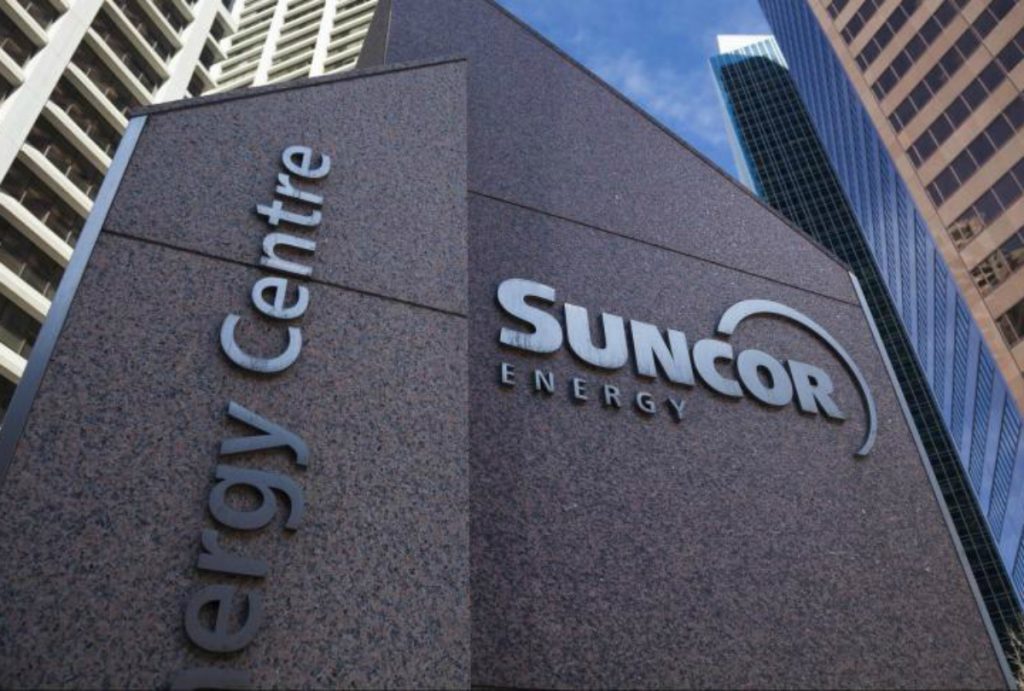
Suncor Energy Inc. is “encouraged” by an agreement on carbon policy and a potential pipeline, but chief executive Rich Kruger says it is too early to know whether the deal will change the company’s long-term growth plans.
His remarks came as the Calgary-based oilsands producer said it tripled profits in the spring despite wild weather that led to production challenges.
Kruger said the temperature in the industry has warmed up with a three-way memorandum of understanding between oilsands producers, Ottawa and Alberta, but Suncor remains in wait-and-see mode.
“There’s a lot of work to do to turn this non-binding set of ambitions into definitive agreements,” Kruger told analysts on Wednesday.
The deal could lead to a new West Coast pipeline. Suncor, Cenovus Energy Inc., Canada Natural Resources Ltd., Imperial Oil Ltd. and ConocoPhillips Co. agreed to work with governments in Ottawa and Alberta to add production to fill the pipeline.
In a conference call discussing quarterly earnings, Kruger said there’s a different mood around the industry, but the company’s position isn’t materially different from six months ago.
“We want to be very thoughtful on long-term commitments,” Kruger said. “If there’s opportunity for selective, high-quality, globally competitive growth, our shareholders value it. We see it. We have the ability to pursue it.”
This spring, Suncor more than tripled profits to $3.7 billion, which allowed it to boost shareholder rewards and more than double royalty payments to governments.
Sky-high commodity prices due to an effective closure at the Strait of Hormuz helped drive those increases, despite some production challenges at Suncor’s Firebag project.
“What’s the difference between the story of Noah’s Ark told in the book of Genesis and the Fort McMurray region in the second quarter of 2026?” Kruger posed. “In Noah’s Ark, the torrential rains stop after 40 days and 40 nights.”
Kruger said in the Fort McMurray area, record rain and snowmelt continued throughout the quarter, with total precipitation reaching its highest levels in more than 30 years, putting a dent in mining productivity and quarterly production.
Upstream production fell to 760,900 barrels a day from 808,100 on a planned turnaround at Firebag. Meanwhile, cash operating costs at Fort Hills rose 21 per cent to $44.50 per barrel, which the company also blamed on weather.
Maintenance at Syncrude that was supposed to happen this spring has been pushed to the third quarter.

“We’ve got more work to do in the third quarter, but our second quarter results position us well for a strong second half,” Kruger said.
Suncor sold 654,800 barrels a day of refined product, a record for the April to June period.
Michael Berger, a senior analyst at energy research firm Enverus, said the Hormuz-induced supply shortage was apparent in the company’s results, which show nearly $2 billion in free cash flow from its downstream business.
“It was a really strong quarter for the company,” Berger said.
Suncor also started producing jet fuel at its Montreal refinery in November, just months before war in the Middle East led to a sharp spike in profit margins for refiners.
Crack spreads — which measure margins generated by converting oil into fuels like gasoline and diesel — roughly doubled in the period stretching from April to June.
Despite strong earnings, Berger said oilsands companies are generally unwilling to sanction major capital projects to bring on new production without a clearer picture of the economic incentives at play.
“They’re waiting for clarity from the government,” Berger added.
Last week, Cenovus chief executive Jon McKenzie said there’s a major investment opportunity ahead for Canada with new or expanded pipeline proposals.
McKenzie said the memorandum of understanding represents “meaningful progress towards creating a competitive investment environment for Canada’s vast oilsands,” a more optimistic tone from when he criticized the government earlier this year.
Suncor said free funds flow, the cash left after spending, hit a record $3.9 billion. The company sent $1.7 billion to shareholders with dividends and purchases of its own stock, which can lift the share price.
Suncor said it would spend $500 million buying its own stock every month, up from $350 million starting this month. Net debt fell to nearly $4.5 billion from $7.6 billion a year ago.
Government royalties, which overwhelmingly flow to Alberta, rose to $1.2 billion, up sharply from $600 million a year ago.
Net earnings worked out to $3.17 a share, up from $1.13 billion or 93 cents in the same quarter of 2025. North American oil averaged US$92.85 a barrel, compared to US$63.70 a year ago.
- Email: [email protected]
- Email: [email protected]
Share This: