


 CDN NEWS |
  US NEWS









After reporting billions in profits, some Canadian energy producers expect to invest in new production, a change from the past decade
By Nykole King, Naimul Karim, Graison Foster
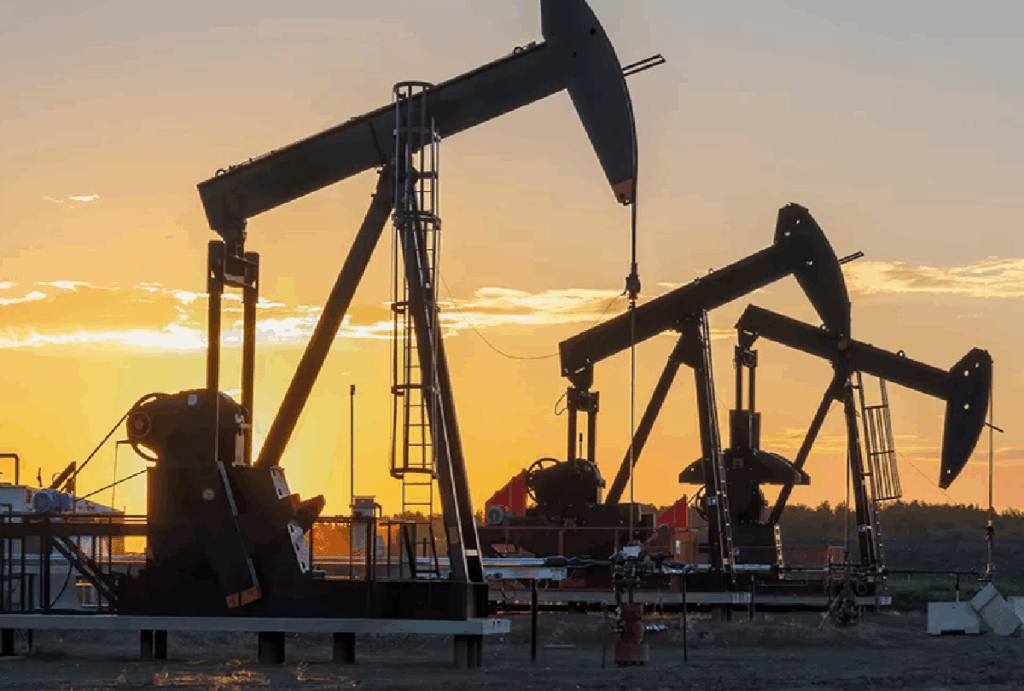
After reporting billions of dollars in profits, some Canadian energy producers expect to return excess cash to the business by investing in new production — a sharp change from more than a decade of restraint.
Oil producers are reporting their earnings from the spring quarter, showing that many are seeing a surge in profits from spiking prices during an energy shock largely triggered by war in Iran.
At the halfway point through earnings season, there’s “definitely some excitement over growth again,” Michael Spyker, principal analyst for HTM Energy Partners, said in an interview.
Tamarack Valley Energy Ltd. was one of the first companies out of the gate, reporting $205.7 million in profits during the second quarter, up by a stunning 140 per cent over last year.
“With higher commodity prices and cash flows, we are dedicating more capital for growth,” Steve Buytels, Tamarack’s president, told analysts during the company’s earnings call this week.
Tamarack Valley raised its capital budget for the year by nearly 10 per cent to as much as $450 million.
Growth projects can boost the wider economy because they often involve more workers and contractors. But the oilpatch has generally been out of the greenfield growth game for years.
Ever since the massive oil price crash that began late 2014 — sparking a two-year recession in Alberta — oilpatch companies have been pressed by their investors to avoid expensive expansions.
Instead, the industry has focused on cutting costs, paying debts and returning excess cash to shareholders, which analysts say have made these companies more attractive investments.
But events over the past two years may have marked a turning point. War in Iran and the energy supply shock that followed sent major global oil consumers looking for more reliable trading partners.
The shift happened as the federal government under Prime Minister Mark Carney prioritized energy production in a sharp departure from his Liberal predecessor Justin Trudeau.
This confluence of forces appears to have offered some companies enough confidence to spend on greenfield projects — but the feeling is far from universal.
Cenovus Energy Inc., the first major oil producer to report second-quarter earnings, didn’t promise any new dollars to capital projects.
While Cenovus tripled its profits, the Calgary company upped its capital spending by just three per cent as planned. Shareholders reaped the excess with $1 billion added to equity value through share buybacks and $400 million in dividends.
Still, there are many signs that smaller players are in the mood to grow.
One of the key upgrades Spyker is seeing companies invest in — including Athabasca Oil Corp., Cardinal Energy Ltd. and Headwater Exploration Inc. — is thermal projects that use heat on heavy oil to make it flow faster from the well.
“Historically, these were incredibly expensive, and it would be very rare for somebody to finance one of these themselves without issuing equity,” said Spyker.
“But now a lot of companies are using their own internal cash flows to fund these massive thermal projects,” he added.
Athabasca reported second-quarter cash flows increased by close to a third. The mid-sized oilsands producer reported that it put another $65 million into its capital budget for thermal oil assets alone, bringing the total to $340 million. It expects to produce thousands of barrels more per day by 2030 on account of that investment.
Oil a different story than gas
But the sentiment for natural gas is not as upbeat.
Tourmaline Oil Corp., Canada’s largest gas producer, reported on Thursday that expenses in the second quarter dented net earnings by 64 per cent compared to the same time last year.
The company said more production is on the way to power data centre projects as they materialize in the U.S. and Alberta.
Mike Mueller, a research analyst at Canaccord Genuity, said that the sentiment for natural gas has generally stayed “pretty poor.”
“That’s somewhat indicative of the basin being somewhat oversupplied on the gas front, at least over the next couple of years,” he said.

Spyker said Tourmaline’s hopes that natural gas prices in Western Canada would rebound didn’t materialize in the quarter, pointing to futures contracts that don’t show much optimism.
“It’s not easy to be extremely excited and bullish about (natural gas),” says Spyker. “The supply outlook is fairly bleak, and the demand outlook is equally as bleak.”
TC Energy Corp., which beat analysts’ expectations on rising demand for power, sanctioned about $700 million worth of projects in the second quarter, which brought its total to about $3 billion in 2026.
The company’s chief executive, François Poirier, expects rising power needs to further increase demand for natural gas in the next decade and that demand should grow.
“Accelerating power demand accounts for more than half of this increase,” said Poirier in a call with analysts on Thursday. “Nearly 70 per cent of this demand growth is concentrated in the U.S. heartland, Alberta and Mexico regions where TC Energy has a strong incumbent position and significant existing infrastructure.”
TC Energy now has roughly $7 billion worth of projects nearing approval, up by about $1 billion from the previous quarter.
Some oil producers are spending more, too. Saturn Oil & Gas Inc. almost doubled its capital expenditure outlook for the year and now expects to spend $355 to $375 million, up from the previous guidance of $180 to $190 million.
“To capitalize on elevated oil prices during the quarter, we accelerated capital from the back half of 2026 into Q2,” John Jeffrey, Saturn’s chief executive, said in a statement. “Our development team rapidly mobilized to get drilling rigs back in the field a month sooner than originally planned.”
Spartan Delta Corp. reported a 127 per cent increase in its oil and gas sales leading to a steep jump in profits. The company also increased its capital budget by roughly 10 per cent to as much as $575 million.
Other producers, meanwhile, are holding back.
Whitecap Resources Inc. nearly tripled its profit last quarter and paid debt with it, while smaller rivals put theirs in the ground.
The Calgary producer earned $889.5 million in the three months ended June 30, or 73 cents per diluted share, up 186 per cent from last year.
Rather than investing in expansion, Whitecap threw roughly $900 million at its debt in the first half, taking it down to $2.5 billion.
“From a capital spending point of view, we are not making any changes to our 2026 capital spending of $2 to 2.1 billion,” said Grant Fagerheim, the company’s chief executive, on a conference call Thursday.
Growth is happening regardless. Whitecap raised its production forecast for the second time this year, by 5,000 barrels of oil equivalent per day to about 389,000 and has about 12 rigs working. Management said 55 per cent of the gain came from new wells and 45 per cent from squeezing more out of the ones already drilled.
Not all of it was upside. Whitecap had agreed months ago to sell some of its oil at set prices, and that cost the company $190 million once crude climbed higher.
Whitecap has some of the barrels Alberta needs most. Condensate. The company says they are the fourth-largest condensate producer in Western Canada at roughly 60,000 barrels a day. That light oil thins bitumen enough to move it down a pipeline, and it expects demand to climb as new export capacity opens.
While Whitecap held off on spending more, Obsidian Energy Ltd. went the other way. The Calgary producer borrowed to buy.
Net income hit $42.0 million in the quarter, or 63 cents a share, up from $15.3 million a year earlier.
Then it went shopping. Obsidian, on June 30, picked up Belly River light oil land at Wilson Creek for $98 million. The deal came with about 2,500 barrels of oil equivalent a day. That put net debt at $353.6 million, up from $240 million six months earlier.
“The recent expansion of our syndicated credit facility combined with the successful issuance of an additional $75 million to our existing senior unsecured notes due in 2030, has further strengthened our financial position, providing us greater flexibility to capitalize on opportunities across our asset base”, said Stephen Loukas, president and chief executive of Obsidian.
Spyker says companies don’t know if the “windfalls” attributed to the war in Iran will carry on much longer into the third quarter. That’s why they are living it up while it lasts without committing to long-term plans.
“We don’t know if oil will be back to $60 (per barrel) next week, so a lot of that money is being faced towards kind of discretionary debt pay-down.”
[email protected]
Share This:





















COMMENTARY: Natural Gas ‘Flying Under the Radar,’ But Big Growth is Coming