


 CDN NEWS |
  US NEWS







By Terry J. Winnitoy
Canadians like myself that have been directly involved or indirectly asociated with the oil and gas industry have no illusions about what comes next. But those Canadians that are not should be aware of what comes next as well.
For the first time in years, much of the country appears prepared to build again. Ottawa and Alberta have advanced a proposed one-million-barrel-per-day pipeline to the West Coast, with Trans Mountain Corporation leading development, Pembina participating as an investor and an opportunity for Indigenous equity ownership built into the plan. Alberta and Ontario are also studying an energy corridor that could carry western Canadian oil to Sarnia, while Alberta is welcoming Meta’s $13-billion AI data centre, supported by new power generation and grid infrastructure.
These are not isolated announcements. They reflect a larger national shift toward energy security, export diversification and economic self-reliance.
But for other groups not so enamoured with the energy industry, that shift will not go unanswered.
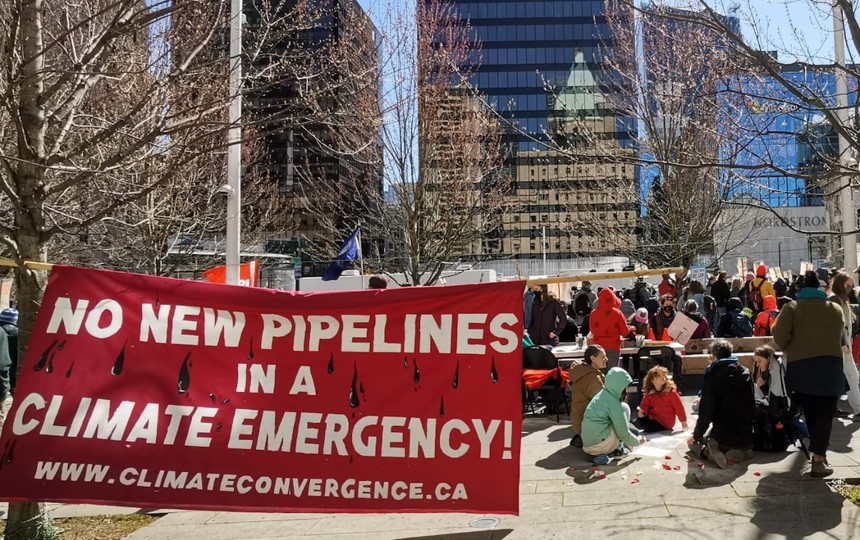
Canadians should expect anti-oil-and-gas activists to mobilize with renewed intensity. The demonstrations, lawsuits, media campaigns, regulatory interventions, fundraising appeals and pressure tactics that surrounded Northern Gateway, Keystone XL, Energy East and the Trans Mountain expansion are likely to return.
In fact, the mobilization has already begun.
In June, more than 120 organizations endorsed a declaration opposing new pipelines “not here or anywhere.” Environmental Defence responded to the July 2 West Coast pipeline announcement by declaring the proposal would fail. Stand.earth has promised lawsuits, street protests and national and international resistance, saying opposition could exceed the campaigns against Trans Mountain, Enbridge and Keystone XL.
These organizations are not concealing their intentions. They are telling Canadians directly that they plan to stop the project.
This is not a new phenomenon. It is the revival of a political and communications strategy that took shape nearly two decades ago.
The so-called “anti-tar sands” campaign emerged in the late 2000s as environmental organizations in Canada joined with advocacy networks and philanthropic foundations in the United States and Europe. CorpEthics, one of the campaign’s strategic advisers, openly says it worked with Canadian groups, brought additional support from Europe and the United States, and advised foreign foundations interested in slowing Canadian oil production.
It also credits the broader campaign with helping persuade former U.S. president Barack Obama to reject Keystone XL and with expanding opposition to pipelines and other fossil-fuel infrastructure.
The Alberta government’s public inquiry into anti-Alberta energy campaigns later documented substantial foreign funding directed toward Canadian environmental initiatives. Its findings identified $54.1 million in grants described as supporting “anti-Alberta resource development activity” between 2003 and 2019, within a much larger flow of foreign environmental funding.
The inquiry also found no illegality or wrongdoing by the organizations it examined, an important distinction that should not be ignored. Advocacy, protest and litigation are legitimate democratic rights. The issue is not whether these groups are permitted to speak. They are.
The issue is whether Canadians understand the scale, coordination, funding and objectives of campaigns attempting to shape national policy. Most don’t.
Funding matters because sustained campaigns require professional staff, legal expertise, research, advertising, social-media production, organizers and access to decision-makers. A relatively small number of committed organizations can therefore generate a public presence far larger than their actual share of public opinion.
Groups such as Stand.earth, Environmental Defence, Ecojustice, Climate Action Network Canada, the David Suzuki Foundation and West Coast Environmental Law have become highly skilled at influencing the national conversation.
Their tactics differ. Some organize public demonstrations. Some intervene in regulatory proceedings. Some launch court cases. Some pressure banks, insurers and investors. Others produce studies and communications designed to frame projects as economically reckless, environmentally catastrophic or incompatible with reconciliation.
They have every right to make those arguments. But Canadians should also recognize the pattern. The objective is often not to improve a project, strengthen environmental safeguards or negotiate better benefits. The objective is to indefinately delay a project or have it outright cancelled.
For many of the most determined organizations, the stated position is opposition to new fossil-fuel infrastructure in principle. When the demand is “no pipelines, not here or anywhere,” there is no route adjustment, emissions technology, Indigenous ownership model or economic benefit capable of producing a “yes”.
That is why facts and benefits often struggle to break through. In the big scheme of things, they don’t matter.
A pipeline can offer Canadian producers access to world markets, reduce dependence on the United States, strengthen domestic energy security, create construction and operating jobs, generate government revenues and support Indigenous ownership.



A data centre can attract billions of dollars in investment, build power infrastructure and establish Canada as a serious participant in the global AI economy. An LNG project can give allies an alternative source of energy while creating long-term employment at home.
None of this guarantees that every project should be approved. It does mean projects deserve to be assessed on evidence, engineering, economics and environmental performance, not rejected automatically because they involve hydrocarbons or industrial development.
The activists’ influence is magnified by a mainstream media culture that often treats confrontation as more newsworthy than consent. Ten protesters blocking a road can receive more attention than thousands of workers quietly supporting a project. A dramatic prediction of ecological disaster makes a stronger headline than a detailed engineering plan, an emissions-reduction commitment or an Indigenous partnership agreement.
Over time, repeated coverage can create the impression that loud and organized opposition represents the country from coast to coast to coast.
It does not.
Recent polling shows how much Canadian attitudes have changed. An Ipsos survey conducted in late 2025 found that 75 per cent of Canadians supported new pipelines to British Columbia or Eastern Canadian ports, while 71 per cent believed major-project approvals were too slow and needed reform.
In May 2026, Angus Reid found national majority support for the Westcoast natural-gas pipeline expansion, including 61 per cent support in British Columbia. The same survey found that 61 per cent of Canadians now prioritize economic growth over environmental protection in energy policy—a major shift from 2019.
Earlier Angus Reid polling found 74 per cent support for fast-tracking major national projects, although Canadians still wanted proper environmental reviews.
That last point matters.
Supporting development does not mean abandoning environmental responsibility. Canadians expect credible impact assessments, enforceable standards, safe construction, emissions reduction, meaningful Indigenous consultation and transparent economics. They should. Responsible resource development is not a licence to cut corners.
But environmental review must not become an endless procedural weapon. Consultation must not be deliberately converted into paralysis. Court challenges should test whether governments followed the law, not become a permanent substitute for democratic decisions.
Public policy should not be dictated by organizations whose fundamental objective is to prevent projects from being built regardless of the conditions attached to them.
Canada has spent too many years acting as though saying no is a substitute for an economic strategy. The result, particualy over the last 10 years, has been lost investment, delayed infrastructure, excessive dependence on the American market and a weakening belief that this country can complete anything difficult.
The political environment is now changing. Provinces are cooperating. Ottawa is speaking openly about sovereignty, energy security and national-interest projects. Canadians increasingly understand that pipelines, LNG facilities, electricity systems, mines, ports and data centres are not opposing visions of the future.
Together, they are part of the infrastructure a modern, secure and prosperous country requires.
The opposition will be loud. It will be organized. It will be well funded. It will receive significant media attention. Canadians should listen to legitimate environmental concerns, insist on high standards and respect lawful dissent.
But Canada cannot allow a determined minority, whether funded domestically or from abroad, to hold the national interest hostage.
The country can protect the environment and build major projects. It can reduce emissions and responsibly develop its resources. It can respect Indigenous rights while expanding Indigenous ownership, employment and economic opportunity.
Polls show that Canadians across the country are increasingly ready to move pipelines, energy infrastructure and other nationally important projects forward. Governments now appear more willing to act on that public support.
Canadians and politicians that want to build Canada must also be prepared to withstand the campaign that is coming. And make no mistake about it, it’s coming.
Share This:






















INSIGHT: The Northern Shield Energy Corridor Provides Energy Security for All Canadians – Yogi Schulz