


 CDN NEWS |
  US NEWS







By Jock Finlayson and Steven Globerman
The Gravity Model and Efforts to Diversify the Markets for Canadian Exports
- The Gravity Equation of Trade provides important insights into Canada’s export and broader trade dependence on the US market, why this dependence has persisted over time, and the types of policies that might contribute to achieving greater geographic trade diversification.
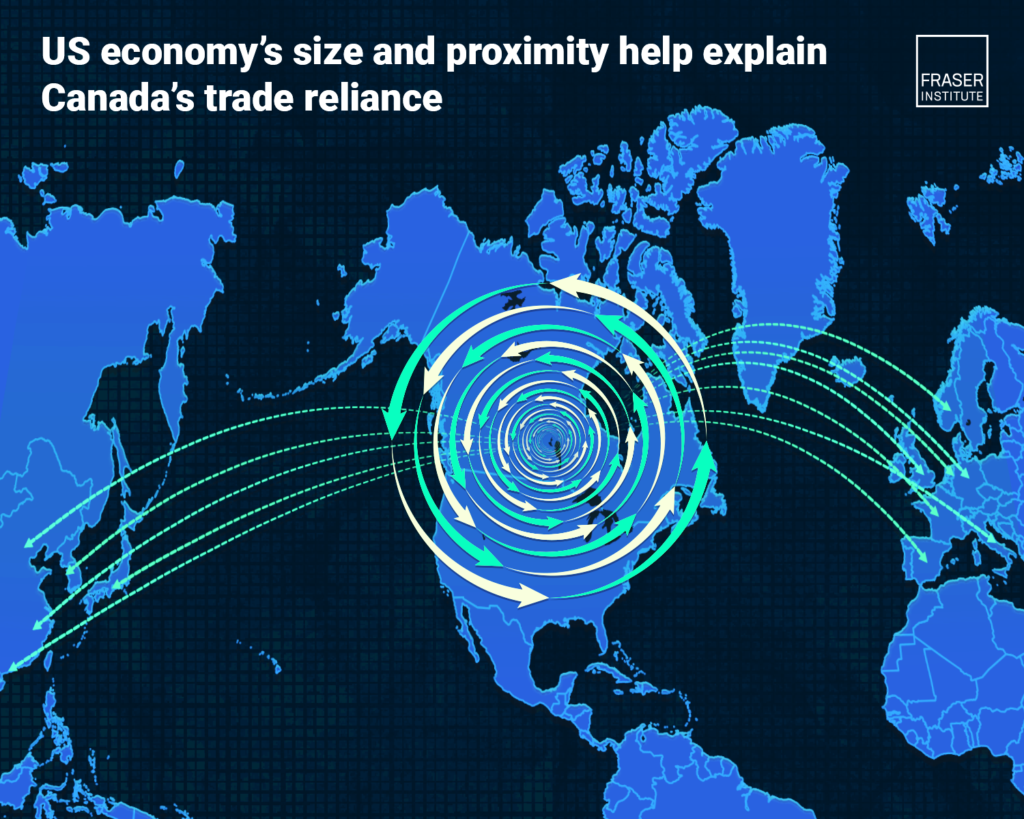
- According to the Gravity equation, the volume of trade between any two countries is positively related to their economic sizes relative to the size of the world economy. The large absolute and relative size of the US economy is therefore a major factor contributing to Canada’s reliance on the United States as a market for its exports.
- The Gravity equation also identifies relative transportation and freight costs, as well as costs associated with doing business in countries with different laws and regulations, customs and business practices and the like, as influencing geographical trade patterns.
- These costs are typically smaller, the less the physical distance between trade partners. Hence, geographic proximity and a long-shared physical border between Canada and the United States is another factor contributing to Canada’s disproportionate reliance on the US market.
- These insights suggest that geographical trade diversification will likely require substantial investments in Canadian rail and port infrastructure to reduce the cost of transporting products from Canada to non-US markets.
- Trade agreements with non-US partners and ongoing trade promotion initiatives by governments and business organizations might help lower non-transportation-related hurdles to increased Canadian exports to non-US markets.
- Perhaps the most straightforward insight is that for Canada the most promising alternative foreign markets are those that are poised to increase their share of world GDP, particularly if those markets are already relatively large in size in the global context.



Share This:






















INSIGHT: The Northern Shield Energy Corridor Provides Energy Security for All Canadians – Yogi Schulz