


 CDN NEWS |
  US NEWS







Ksi Lisims clears more hurdles on the road to FID
Two Indigenous-led LNG projects in B.C. ticked boxes and marked milestones this week.
On Monday, Samsung Heavy Industries announced it has launched the hull of the FLNG Megúgu for the Haisla’s $5.5 billion Cedar LNG project.
It will now begin assembling the topside modules for the floating LNG platform, which will eventually be shipped to Kitimat.
Shoring up international buyers
Meanwhile, the Nisga’a Nation’s Ksi Lisims LNG ticked some important boxes this week on the path to a final investment decision.
One was the signing of a second offtake agreement with another German buyer — the second in two weeks.
The other was the signing of new benefits agreements with three neighbouring First Nations, the result of which is that two signatories are dropping court challenges to the project’s approval.
Two weeks ago, the German energy trader, SEFE, signed a one million tonne per annum (MTPA) offtake agreement with Ksi Lisims.
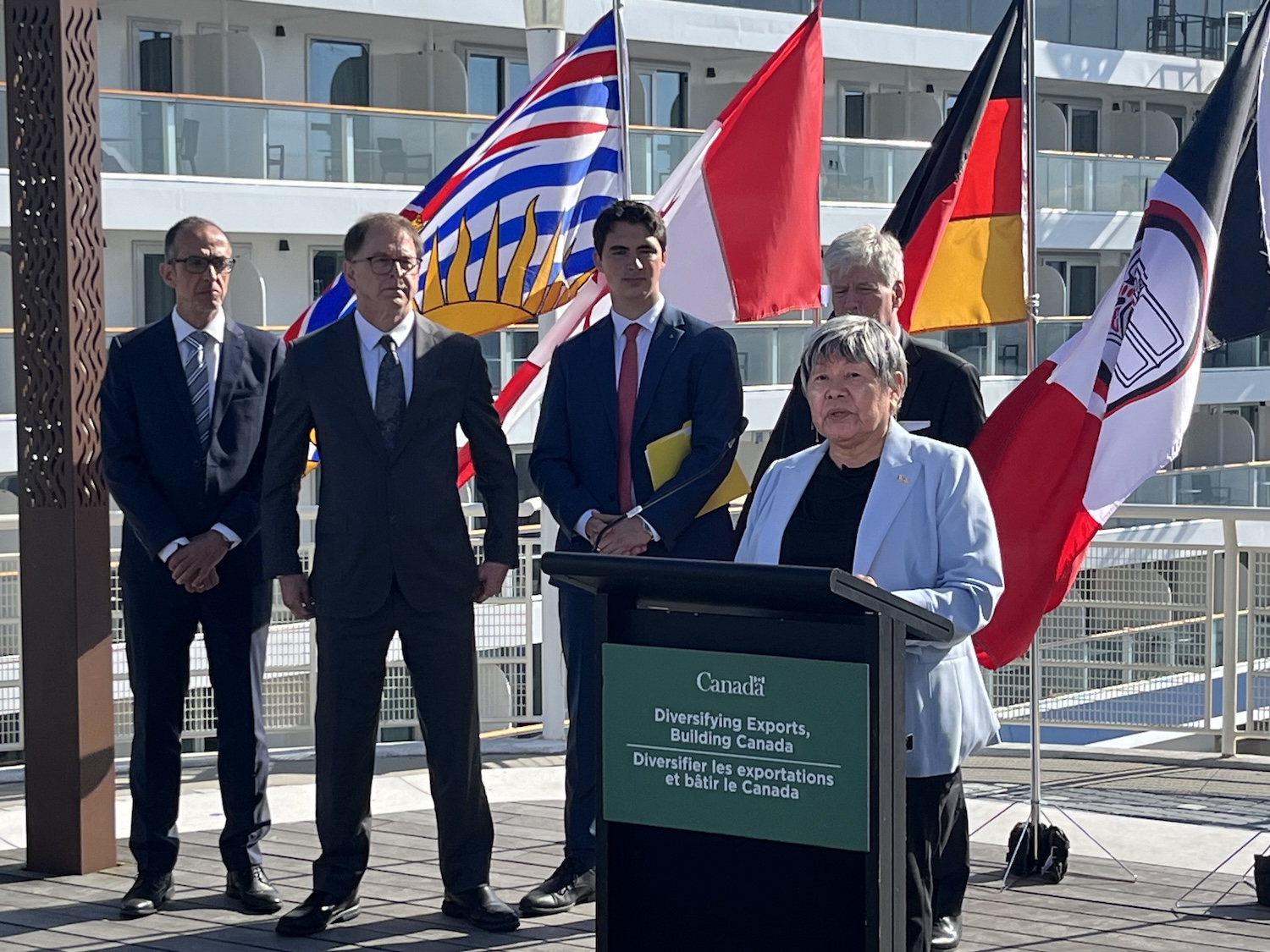
“In this time of global instability, the world is looking to Canada for reliable, responsible energy solutions,” Nisga’a Nation President Eva Clayton said at a press conference on the SEFE announcement.
On Monday, another German company, Uniper, announced it had signed a letter of interest to take two MTPA.
“Expanding and diversifying our LNG supply portfolio remains a key priority for Uniper,” Uniper CEO Michael Lewis said in a press release.
“Canada offers an attractive environment with significant gas resources, strong political stability and reliable regulatory frameworks. We see potential in projects like Ksi Lisims LNG to further enhance the resilience and flexibility of our supply portfolio.”
That brings total offtake commitments to seven MTPA, which is 58% of the Ki Lisims’ annual nameplate production capacity.
One more agreement like this may be all that is needed for the joint venture partnership — Nisga’a, Western LNG and Rockies LNG — to go to the bank to secure financing for a $20-billion final investment decision.
Securing First Nations consent
Ksi Lisims is also gaining support for the project from First Nations.
On Tuesday, Ksi Lisims announced it has signed benefits agreements with three nations in the Prince Rupert region: Gitxaala, Lax Kw’alaams, and Metlakatla. An agreement with Kitselas was previously signed last year.
A fifth agreement is expected to be announced later this week.



The agreements include updates to benefits agreements previously signed on the Prince Rupert Gas Transmission natural gas pipeline, which would supply the natural gas to a floating LNG facility at Pearse Island.
The agreements with Lax Kw’alaams and Metlakatla are particularly important because both nations had opposed the project and had filed judicial reviews challenging a federal environmental certificate for Ksi Lisims.
As part of the agreements announced today, the Lax Kw’alaams and Metlakatla have agreed to withdraw their legal challenges.
The agreements announced this week are in relation to the Ksi Lisims project. There are separate agreements for the PRGT. So far, 16 of 20 First Nations along the route have signed agreements.
Though mutual benefits agreements with First Nations are not typically made public, they can be worth millions to each of the signatories.
In the case of Coastal GasLink, benefits agreements with First Nations included cash payments and a share of $10 million annually in revenue.
In the case of the Lax Kw’alaams, the benefits agreement includes procurement opportunities for Lax Kw’alams businesses.
The fact that a treaty nation — the Nisga’a — is one of the joint venture partners in the Ksi Lisims LNG project, which is being developed on Nisga’a treaty land, does not exempt it from having to seek the same consent and support that any other developer would.
But it does appear to make negotiations with other First Nations a bit easier.
“The right-of-way nations were really happy for the Nisga’a Nation to become a co-owner of the project,” said Rebecca Scott, communications director for Western LNG and spokesperson for Ksi Lisims LNG.
“And I think it sets a great example for what can be achieved when a nation is working in partnership with a project proponent, especially when they take an equity stake.”
A new model for sovereign Indigenous relations
At a time when concerns are deepening over DRIPA and First Nations rights and title issues, projects like Cedar and Ksi Lisims LNG are examples of what can be accomplished when First Nations are owners.
It’s the kind of business model that Deloitte points to in a new report on what it calls “sovereign Indigenous economic relations.”
“Canada is at a pivotal moment where economic dynamics are quickly shifting, with its growth depending on how First Nations, Inuit, and Métis nations are included in decision-making and partnerships,” Deloitte says.
It estimates that Indigenous gross income in Canada grew from $37.6 billion in 2013 to $63.7 billion in 2023.
Those numbers can be expected to grow significantly with projects like Ksi Lisims LNG, which represents an investment of roughly $20 billion.
Final investment decisions on both Ksi Lisims and LNG Canada phase 2 are expected before the end of this year.
Nelson Bennett’s column appears weekly at Resource Works News. Contact him at [email protected].
Share This:





















INSIGHT: The Northern Shield Energy Corridor Provides Energy Security for All Canadians – Yogi Schulz