


 CDN NEWS |
  US NEWS







In Canadian oil and gas operations, reliable level indication is not just a convenience; it plays a direct role in safe startup, process confidence, maintenance planning, and day-to-day operator decision-making. This is especially true in cryogenic and low-temperature services, where insulation, frost buildup, flashing liquids, and difficult access points can make standard level instrumentation more challenging to operate and maintain.
Applications involving LPG, NGLs, LNG, light hydrocarbons, ammonia refrigeration, CO₂, and industrial gases often require local visual level indication on vessels, receivers, accumulators, storage tanks, and process drums. While advanced instrumentation and remote monitoring have an important place in modern facilities, local indication remains valuable because it gives operators a direct visual reference at the equipment.
However, in cold service applications, maintaining that clear visual reference takes careful product selection and installation planning.
The Challenge: Frost, Insulation, and Limited Access
Cryogenic and low-temperature applications often require insulation to help maintain process temperature and protect equipment. While necessary, insulation can create practical issues around armored glass level gages and the valves connected to them.
In these environments, frost buildup can obstruct the viewing area of a level gage, making it harder for operators to confirm liquid level. This is why non-frost extensions are commonly used on glass level gages in cryogenic service. They help maintain visibility by extending the viewing area away from the cold surface where frost and ice may form.
The same challenge can apply to the gage valves. When a glass gage assembly is insulated, the valve handle and position indicator can become recessed, obstructed, or difficult to access. In some installations, operators may need to work around insulation, jacketing, or frost-covered components just to confirm valve position or operate the valve safely.
That may seem like a small inconvenience, but in real operating conditions, poor access can increase the risk of error, slow down maintenance, and reduce confidence during startup or commissioning.
Why Valve Position Matters During Commissioning
One of the most important considerations with armored glass level gage assemblies is ensuring the operator is seeing an accurate level indication. During commissioning and startup, trapped pressure, improper valve sequencing, or restricted flow through the gage can contribute to misleading or false readings.
This is where the Jerguson 360 Series Safety Ballcheck Valve offers a practical advantage. Its patented internal bypass design helps support accurate level indication during commissioning by allowing the gage to equalize properly. The valve is designed to improve usability and operator awareness through a visible quarter-turn handle, colour indicator ring, bypass mode, lock-out/tag-out capability, and safety ballcheck functionality.
In other words, the valve is not only isolating the gage; it is helping operators better understand and control the condition of the level indication system.
Extended Stem Option for Insulated and Hard-to-Reach Installations
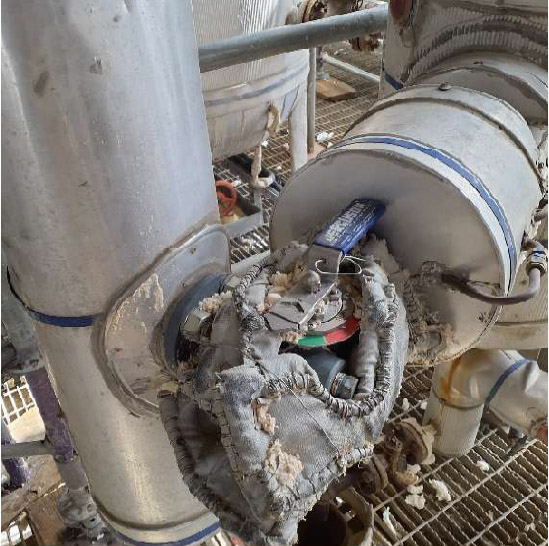
Clark Reliance has introduced a new extended stem option for the Jerguson 360 Series Safety Ballcheck Valve. This enhancement is especially useful in cryogenic, insulated, high-temperature, or hard-to-access installations where standard valve configurations may not provide enough clearance for easy operation.
The extended stem moves the operating handle and visual position indicator outward, beyond the insulated area. This allows the valve body to remain fully insulated while keeping the handle and indicator accessible to plant personnel.
For cryogenic applications, this can help solve several common issues:
The valve handle remains easier to operate without removing or disturbing insulation.
The visual position indicator stays outside the insulation envelope, making it easier to confirm valve status.
The insulation system can be completed around the valve body without leaving gaps that may allow moisture intrusion and contribute to frost buildup.
Operators can access the valve more safely and confidently, even in installations where space is limited or components are jacketed.
This is a simple design improvement, but it addresses a very practical field problem.
Recommended Configuration for Cryogenic Glass Level Gage Applications
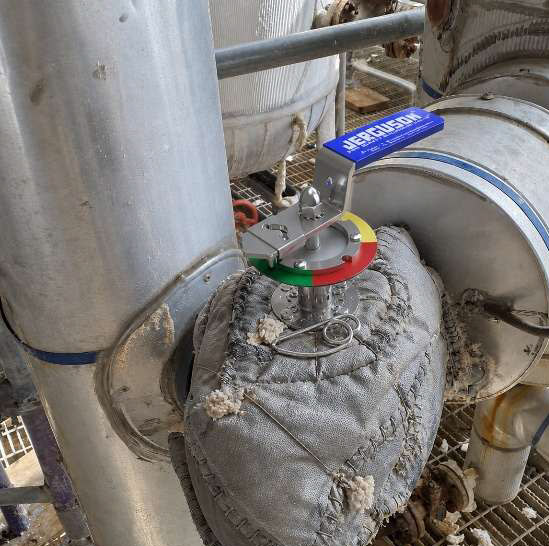
For cryogenic service, Jerguson commonly recommends using an L10 Series Large Chamber Gage to help minimize the effects of boiling or flashing liquids. In these applications, non-frost extensions are used to help keep the visible indication area clear, while spring washers help maintain gasket loading and reduce maintenance requirements.
Cold insulation should then be applied to maintain process temperature and complete the insulation system. When isolation valves are required, the 360 Series Safety Ballcheck Valve with extended stems helps keep the valve handle and position indicator accessible outside the insulation.
The result is a more complete cryogenic glass gage assembly that supports local level visibility, improves operator access, and allows insulation to be properly applied without burying key valve components.
Practical Value for Canadian Energy Facilities
For Canadian oil and gas facilities, especially those working with low-temperature hydrocarbon, LNG, NGL, refrigeration, or petrochemical processes, small equipment details can have a major impact on reliability and safety.
- A properly configured glass level gage assembly can help operators:
- Maintain local level visibility in demanding low-temperature applications.
- Reduce the risk of false level readings during commissioning.
- Improve access to isolation valves in insulated installations.
- Confirm valve position more easily.
- Support safer operation and maintenance practices.
- Reduce the need to disturb insulation during routine checks.
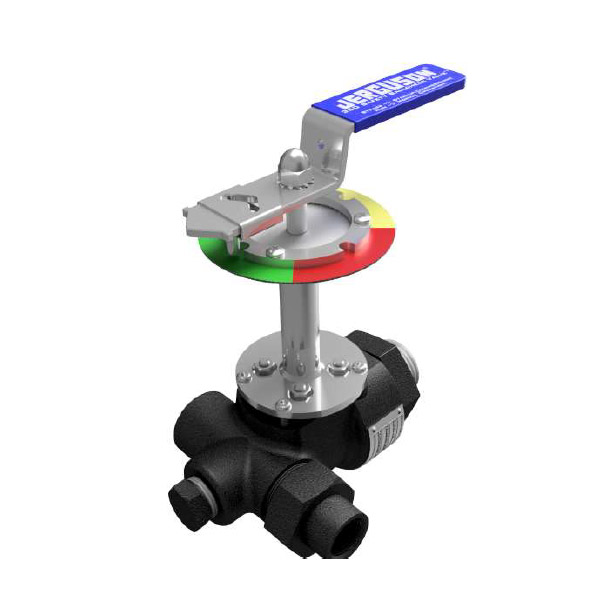
In cold environments, equipment is often operating under conditions where visibility, access, and usability matter just as much as the core product specification. Selecting the correct gage, non-frost extensions, valve configuration, and insulation approach can help avoid operational headaches later.
Supporting Reliable Level Measurement Solutions
Westech Industrial is the exclusive Canadian distributor for Clark Reliance and Jerguson solutions, supporting level measurement applications across Canada’s energy and industrial sectors. Our team can help customers review the full application, including process conditions, visibility requirements, insulation challenges, valve access, serviceability, and long-term maintenance considerations.
In addition to supplying level indication products, Westech provides technical support, service capabilities, and custom fabrication solutions for process applications where standard configurations may not fully address site requirements.
For facilities working with cryogenic or low-temperature services, the goal is not just to select a level gage or valve. The goal is to build a complete level indication assembly that remains visible, accessible, and dependable in the environment where it will actually operate. For more information please call us at 1-800-912-9262 or email us at [email protected] or visit our website at https://westech-ind.com.
Share This:






















On The Verge: Energy Sector Primed for New Wave of Growth – ATB Economics