


 CDN NEWS |
  US NEWS







Robert Delamar says the proposed 12-million-tonne facility near Prince Rupert is a test of whether Canada can turn its energy wealth into real projects.
By Ian Biana
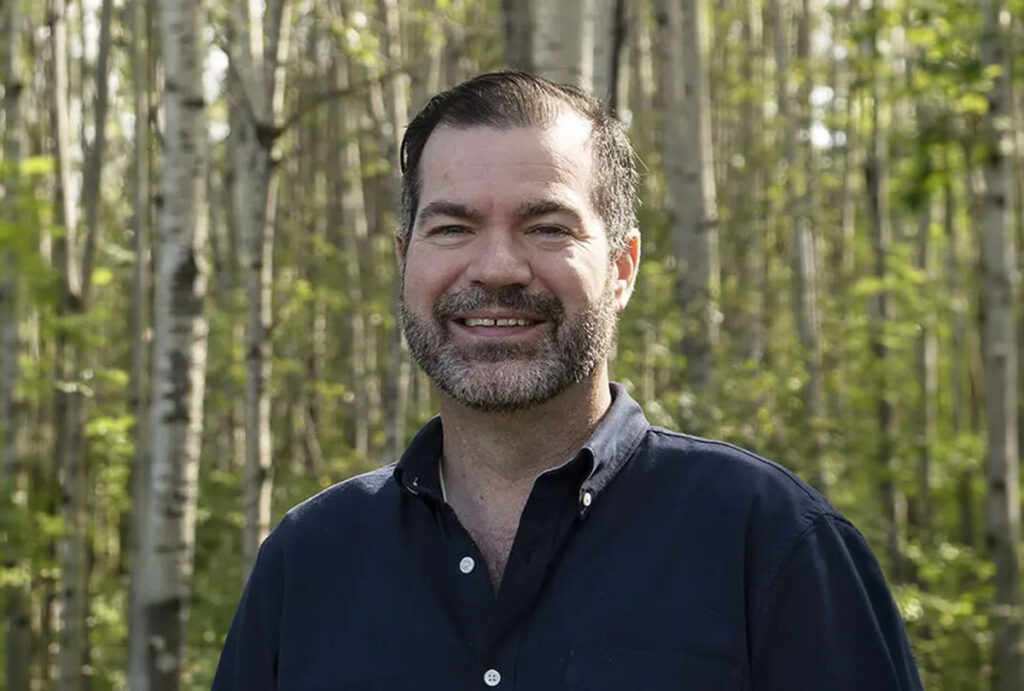
Robert Delamar, Chief Executive Officer & Co-Founder, Kanata Clean Power & Climate Technologies Corp. | Kanata Clean
To the public, Kanata LNG arrived as big news, seemingly out of nowhere. But Robert Delamar knew better: it was the payoff of a 12-year journey.
“I saw some of the headlines about ‘Where did this come from?’” he said. “And in fact, it’s a 12-year journey to get here.”
Delamar, a Chilliwack-raised lawyer turned clean-energy entrepreneur, joined Stewart Muir from a Tokyo hotel room for an episode of Power Struggle to explain what he has been building, and why he thinks it matters for Canada.
That journey now points toward Prince Rupert. If built, Kanata LNG would be a 12-million-tonne-per-year LNG facility. Delamar says it would anchor a broader energy hub for northwestern B.C.
The project is backed by Kanata Clean Power and Climate Technologies Corp., the Calgary-based company Delamar co-founded. Its largest shareholder is Frog Lake First Nations, a Cree nation in northeastern Alberta.
For Delamar, that ownership is more than a side note. It’s central to the model.
He frames Kanata LNG as a climate project, an economic project and an energy security project. More than that, he sees it as a test of whether Canada still knows how to build.
A project born from pressure
It was fitting that Delamar was in East Asia when he spoke with Muir. Japan and South Korea depend heavily on imported energy and recent disruptions in global shipping and energy markets have sharpened that concern.
Delamar said Canadians often miss that point. Canada has abundant resources, three oceans and one powerful neighbour. Canadians live with a level of energy security many countries cannot imagine. That gap shapes the LNG conversation.
“Canadians really do not understand what the rest of the world has to go through in order to maintain a standard of life similar to the one that we enjoy.”
Critics often argue the world does not need more LNG, but Delamar sees a different reality in Asia. Buyers want cleaner energy. They also need affordable energy.
That’s where the hard part begins.
Coal remains cheap. LNG is cleaner, but often more expensive. Delamar says the climate argument only works if Canada can compete on price, and points out that Western Canadian natural gas offers one of the world’s clearest opportunities to cut emissions by displacing coal.
“If we are able to simply reduce coal-fired power, which produces about 11 gigatons of CO2 annually, that’s about a quarter of the world’s CO2 emissions.”
Replacing coal with natural gas, he argued, could cut those emissions sharply. And because Canada has the resource and the location, it also has the obligation to help.
“Canada is the solution to this problem. Our natural gas in Western Canada specifically is the solution to this problem.”
The cost of geography
However, Delamar doesn’t pretend Canada has an easy path.
In fact, he spends much of the conversation explaining why Canada has struggled to turn resource wealth into export strength. The issue is not the gas. Canada has plenty of it. The issue is infrastructure.
The U.S. Gulf Coast has dense energy networks. Pipelines, power and port systems already exist. A new LNG plant can plug into that system.
British Columbia does not have the same built-out energy network.
Canada’s geography makes everything harder. Gas fields sit far from tidewater. New pipelines are expensive. Each project often carries costs that competitors can spread across existing systems.
Delamar reached for an old Canadian line to explain it.
“Some countries have too much history and Canada has too much geography.”
That geography becomes a cost problem. Cost becomes a competitiveness problem.
His answer is not to build one isolated project. It is to create what he calls an energy node. The more projects and shared infrastructure that emerge, the more competitive Canada becomes.
That’s why Kanata LNG is being pitched as part of an energy hub, not just a single export terminal. The project could eventually connect to other fuels, including low-carbon hydrogen. It could also support new power generation and other infrastructure.
Delamar also notes that Canada once had a stronger consensus around shared infrastructure, one that was true across political lines. He believes the country needs that spirit again.
“If we can truly make a dent in climate change, this country, by selling natural gas around the world to displace coal, then as a country, shouldn’t we be writing our MPs and saying, where are those policies?”



First Nations at the centre
The most important part of Delamar’s model may be ownership.
He rejects the idea that First Nations opposition killed B.C.’s first wave of LNG proposals, saying that perspective misses the deeper history.
Large industrial projects were once built without proper Indigenous input or consent. Section 35 of the Constitution changed the legal and political landscape. First Nations then gained tools to assert rights, title and economic power. Delamar sees that change as essential.
The old model moved from consultation to benefits agreements. The new model, he says, is ownership. Frog Lake First Nations helped shape that approach with Kanata LNG.
The nation has significant oil and gas experience. Its resource wealth has helped fund community infrastructure. But Delamar said Frog Lake also wrestled with the climate implications of that economy, which led to work on a low-carbon hydrogen and ammonia project. It also helped shape the partnership model now being offered in B.C.
Kanata has approached three First Nations with rights and title in the Prince Rupert area. Out of respect for those nations and their decision-making processes those details can’t be disclosed yet, but Delamar did explain the offer: a 50-50 joint venture and co-development model.
“It’s a template that you’ve seen with the Cedar LNG development with Haisla.”
“We use our modern democratic legal and other structures to implement something quite old in order to move a project forward.”
The governance structure would also be shared. Delamar said that design forces partners to work through problems together, reflecting an older concept of consensus, rather than simply legal architecture.
A builder’s argument
Delamar’s energy argument is also a cultural argument.
He grew up in Chilliwack, B.C., in a family that ran a small business. He later went to UBC law school, left during the dot-com boom for Silicon Valley, then returned after Sept. 11 to finish his degree.
That Silicon Valley experience stayed with him. He saw young people build things that did not exist before. He saw companies form around ambition, uncertainty and risk.
Canada does not always reward that mindset. In Silicon Valley someone might propose building a data centre on the moon and hear one question: how do we do that?
In Canada, the answer is often different. “You’re out of your mind.”
Delamar believes that instinct hurts the country. He’d like to see Canadians respond to difficult ideas with curiosity instead of dismissal. He knows Kanata LNG sounds audacious. That doesn’t bother him.In his view, every major project starts with problems. The task is to solve them in order. Start with a site. Talk to the people most affected. Build partnerships. Raise capital. Execute.
He also rejects the myth of the lone founder. Teams build companies. Teams also build countries. That’s why he talks as much about people as he does about gas.
His co-founders include engineers, capital markets leaders, First Nations leaders and entrepreneurs. Their experience spans project development, finance, space technology and Indigenous economic development.
That mix matters.
“When you get into the arena, of course, there’s going to be critics. That’s OK. No problem. Bring it on. But the way that you win is with people.”
The question Canada must answer
Kanata LNG still has a long road ahead.
It needs customers, permits, capital, infrastructure and durable partnerships. It also needs Canada to prove it can move at the speed global energy markets require.
Delamar says recent federal moves, including the push for faster major project approvals, could help. Permitting certainty matters because capital follows certainty. But policy is only part of the answer. The larger question is whether Canada can believe in its own capacity again.
Delamar sees natural gas as a climate tool. He sees First Nations ownership as a better development model. He sees Asian energy demand as a real opportunity. And he sees Canadian hesitation as one of the country’s largest obstacles.
His challenge to Canadians is simple.
When someone proposes something hard, ask how it can be done. Not why it can’t.
That may be the real story behind Kanata LNG. It’s not only about an export project near Prince Rupert. It’s about whether Canada can turn resources, reconciliation and ambition into something the world needs.
“I think that resilience and partnership with First Nations and those skills will allow this project to succeed in the end.”
Delamar thinks it can.
Watch the video on Power Struggle
Power Struggle on social media:
- Power Struggle on LinkedIn
- Power Struggle on Instagram
- Power Struggle on Facebook
- Power Struggle on X
Ian Biana writes for the Resource Works Accelerate team and can be reached at [email protected].
Share This:





















On The Verge: Energy Sector Primed for New Wave of Growth – ATB Economics