


 CDN NEWS |
  US NEWS







For decades, Canada’s oil and natural gas industry has been one of the country’s most important economic engines. While energy development is often viewed through a regional lens, the reality is that the benefits extend far beyond Alberta, Saskatchewan, British Columbia, and Newfoundland and Labrador.
From manufacturing plants in Ontario and engineering firms in Quebec to Indigenous-owned businesses in northern communities and federal tax revenues that support public services nationwide, Canada’s energy sector is deeply connected to the country’s economic well-being.
As governments and industry leaders increasingly discuss new pipelines, LNG export terminals, oil sands expansions, natural gas processing facilities, and export infrastructure, the conversation is shifting toward a larger national question:
What would increased Canadian oil and gas production mean for all Canadians?
The answer is measured not only in barrels, cubic feet, and export revenues—but also in jobs, hospitals, schools, housing, infrastructure, Indigenous economic reconciliation, and Canada’s ability to finance its future.
A National Industry, Not Just a Western Canadian Industry
Canada’s oil and natural gas sector remains one of the largest contributors to the national economy.
According to industry data, the sector contributed approximately $88 billion to Canada’s GDP in 2025, representing nearly four per cent of the country’s entire economic output. When indirect and induced economic activity is included, the contribution is substantially larger.
The industry’s footprint reaches every province.
Steel manufactured in Ontario, financial services in Toronto, engineering expertise in Quebec, Atlantic Canada’s offshore sector, Indigenous-owned service companies across the country, and thousands of suppliers from coast to coast all participate in Canada’s energy economy.
Some estimates suggest the industry supports roughly 900,000 direct, indirect, and induced jobs across Canada.
Those jobs are not confined to drilling rigs and oil sands sites. They include:
- Engineers and geoscientists
- Equipment manufacturers
- Construction workers
- Transportation and logistics providers
- Technology developers
- Environmental specialists
- Indigenous-owned service companies
- Financial and legal professionals
In many cases, these are among the highest-paying jobs in the country.
The Revenue That Funds Public Services
Perhaps the most overlooked contribution of Canada’s energy industry is the enormous amount of government revenue it generates.
According to industry estimates, Canada’s oil and natural gas sector contributed approximately $45 billion in payments to governments in a single year through royalties, corporate taxes, income taxes, land payments, and other fiscal contributions.
Those revenues do not simply stay within producing provinces.
Federal corporate taxes and personal income taxes flow into Ottawa, helping finance programs used by Canadians from British Columbia to Prince Edward Island.
Provincial royalties and taxes support:
- Hospitals
- Schools
- Universities
- Public transit
- Affordable housing programs
- Road and bridge construction
- Emergency services
- Social programs

To put the numbers in perspective, $45 billion could finance:
- Multiple major hospitals annually
- Thousands of affordable housing units
- Significant military procurement programs
- Major transportation infrastructure projects
- Expanded healthcare staffing and education initiatives
At a time when governments face rising healthcare costs, growing infrastructure deficits, housing shortages, and increasing national defence commitments, resource revenues represent one of the few large-scale sources of wealth creation available to Canada.
Why New Infrastructure Matters
Canada possesses some of the world’s largest energy reserves.
The challenge has never been finding resources.
The challenge has been getting those resources to market.
Every new pipeline, LNG terminal, export facility, processing plant, petrochemical project, or transmission corridor creates a wave of economic activity before a single molecule of gas or barrel of oil is sold.
Construction projects create:
- Skilled trades jobs
- Engineering contracts
- Manufacturing orders
- Equipment purchases
- Indigenous procurement opportunities
- Municipal tax revenues
Once operational, these assets continue generating economic benefits for decades.
The completion of the Trans Mountain Expansion and the startup of LNG exports from British Columbia have already demonstrated how infrastructure can unlock new international markets and improve the value received for Canadian energy products. Increased access to global customers generally translates into higher revenues, stronger investment, and more economic activity throughout the supply chain.
LNG: A New Chapter for Canada
Liquefied natural gas (LNG) may be Canada’s largest energy growth opportunity in a generation.
For years, Canada watched LNG projects advance in the United States, Australia, and Qatar while domestic proposals struggled to move forward.
That is now changing.
British Columbia’s LNG industry is emerging as a significant new export sector, connecting Canadian natural gas producers directly with Asian markets.
The economic implications are substantial.
New LNG facilities require:



- Natural gas production
- Pipeline construction
- Compression infrastructure
- Marine terminals
- Skilled labour
- Long-term operational staff
The benefits extend far beyond British Columbia.
Natural gas producers in Alberta and northeastern B.C. gain access to higher-value international markets, while manufacturing, engineering, technology, and service companies across Canada participate in project development.
Indigenous Economic Reconciliation in Action
One of the most significant transformations occurring within Canada’s energy industry is the rise of Indigenous ownership.
For generations, Indigenous communities were often excluded from major economic opportunities occurring on their traditional territories.
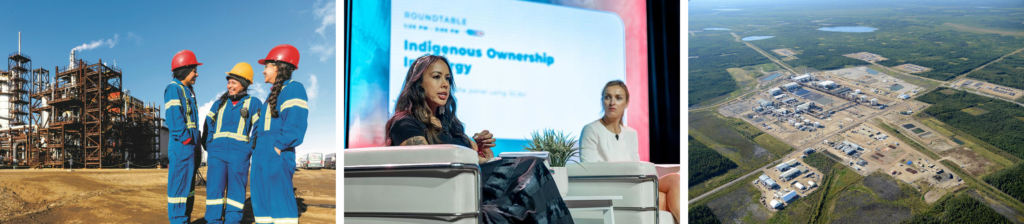
That model is changing rapidly.
According to the Canada Energy Regulator, Indigenous nations and groups have acquired ownership interests in more than 5,000 kilometres of Canadian pipeline infrastructure since 2021 and are increasingly becoming equity partners in LNG and energy projects.
Examples include:
- Indigenous ownership stakes in pipeline systems
- Equity participation in LNG facilities
- Indigenous-led energy projects
- Procurement agreements with Indigenous businesses
- Long-term revenue-sharing arrangements
One of the most notable examples is Cedar LNG, where the Haisla Nation became the majority owner of what is expected to be the world’s first Indigenous-majority-owned LNG export facility. Revenues generated from the project are expected to support community infrastructure, social services, housing, and economic development for future generations.
The Coastal GasLink project also saw significant Indigenous participation through employment, procurement, and ownership arrangements. Indigenous-owned businesses secured substantial contracts, while Indigenous communities gained long-term economic opportunities tied to infrastructure ownership.
For many communities, these projects represent something more profound than employment.
They represent own-source revenue.
That means funding generated by communities themselves rather than reliance on government transfers.
These revenues can help support:
- Housing development
- Water infrastructure
- Education
- Healthcare initiatives
- Community services
- Economic diversification
In practical terms, successful energy partnerships are increasingly being viewed as a pathway toward reducing poverty and improving long-term economic self-determination.
A Stronger Economy Means Stronger Public Finances
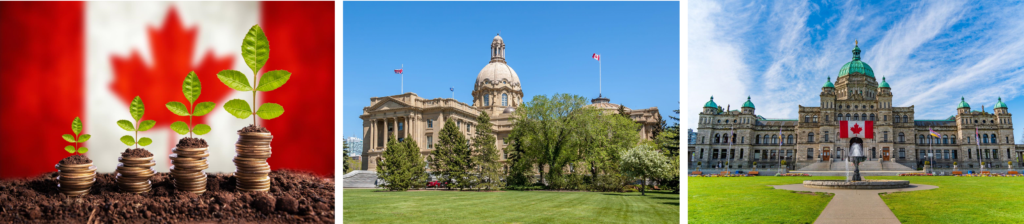
The connection between energy revenues and government finances becomes particularly apparent during downturns.
When oil prices weaken or production declines, government revenues often fall as well.
Alberta’s recent fiscal challenges linked to lower commodity prices highlight how resource revenues continue to play an important role in supporting public finances.
Conversely, increased production, improved market access, and expanded exports can generate significant fiscal benefits for governments.
Those revenues ultimately support services Canadians rely on every day.
At a time when Canada faces major spending pressures related to healthcare, housing, defence, infrastructure renewal, and population growth, economic growth becomes increasingly important.
Without growth, governments face difficult choices between higher taxes, higher debt, or reduced services.
A Unifying National Opportunity
Canada’s energy future is often discussed in terms of regional interests.
But the economic reality is much broader.
The benefits of a growing oil and gas sector extend across provincial boundaries, supporting workers, businesses, governments, and Indigenous communities from coast to coast.
The industry already contributes tens of billions of dollars to government revenues, supports hundreds of thousands of jobs, and generates economic activity in every region of the country.
As new LNG projects, pipelines, processing facilities, and export infrastructure move forward, the potential exists to create even greater national prosperity.
For Canada, the discussion is increasingly becoming less about whether energy development benefits the country and more about how the country can responsibly maximize those benefits.
In a world demanding secure, reliable, responsibly produced energy, Canada possesses both the resources and the expertise to meet that demand.
The opportunity is not simply to produce more oil and natural gas.
The opportunity is to transform that production into jobs, government revenues, Indigenous prosperity, economic growth, and a stronger future for Canadians from coast to coast.
Share This:






















INSIGHT: Canada’s Economy Falling Behind Despite Misleading Headlines – Fraser Insitute