


 CDN NEWS |
  US NEWS







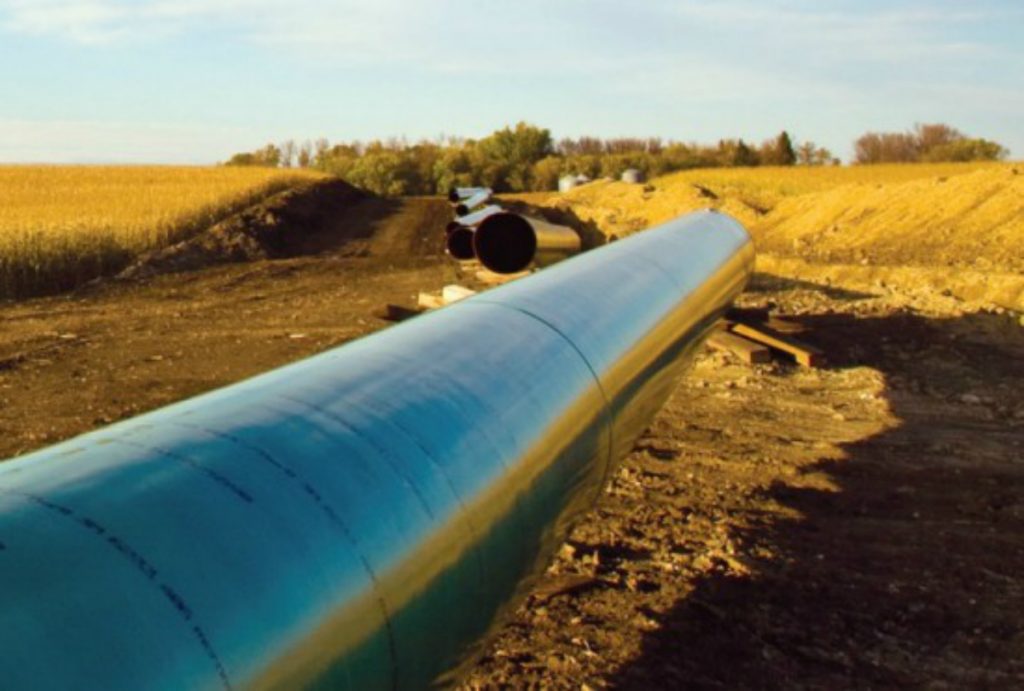
As people might remember, the Keystone XL (KXL) project of (then) Trans Canada Ltd. would have seen a pipeline built to run from Hardisty, Alberta (the heart of the oilsands) to Steele City, Nebraska. KXL was slated to carry some 830,000 barrels per day of Canadian diluted bitumen (oil sands crude oil) to refineries in the U.S. Gulf Coast.
KXL faced extreme opposition and demonization from environmental and Indigenous groups, which turned what would have been, 10 years earlier, a routine pipeline project into a global cause célèbre for climate activists. After years of activist and legalistic delay, KXL was unceremoniously killed in 2021 when President Joe Biden revoked a previously approved presidential permit for KXL to cross the U.S. border. In June of 2021, the renamed TC Energy Corporation terminated the project.
KXL seemed as dead as dead could be, and environmentalists it seemed had scored a major victory. But the underlying economic incentives to build such a pipeline never changed. Alberta still has a product it wants to sell to U.S. refiners, and those refiners still want to buy Alberta oil.
And so it turns out that KXL might not have been all the way dead, and President Donald Trump might have just breathed new life into it.



On April 30, Trump signed a presidential permit to allow Bridger Pipeline LLC, a private American company, to develop a cross-border pipeline project using pre-existing infrastructure originally built for KXL. Some 70 per cent of Bridger’s route would use pre-existing rights-of-way secured for KXL.
On the Canadian side, the current owner of the KXL assets, a TC Energy spinoff called the South Bow Corporation, has been developing a pipeline it calls the “Prairie Connector,” which would move oil from Hardisty to the Canada-U.S. border where there’s “potential” for it to connect to Bridger’s project. All in all, while with different routing, different companies, and different investors, KXL might be rising from the ashes. Bridger’s 36-inch pipeline would have a capacity of about one million barrels per day—though would initially carry only 500,000, somewhat less than the original KXL. Call it KXL 2.0.
The Carney government, thus far, has had little to say about the project. Charlotte Power, a spokesperson for Natural Resources Minister Tim Hodgson, said the minister was aware of the permits awarded to Bridger. Power added, “The Government of Canada remains focused on strengthening Canada’s position as an energy superpower, supporting North American and global energy security, and advancing the diversification of our trade partnerships.” So currently, it seems unlikely the government will try to stand in the way of a KXL 2.0.
And that’s a good thing, because while Canada is waiting for the promised pipeline to Pacific tidewater outlined in last year’s Ottawa-Alberta “Memorandum of Understanding” (MOU), Alberta oilsands producers can certainly use the extra transport capacity of KXL 2.0, and it’s likely to see development faster than the theoretical MOU pipeline, which is dependent on finding a funder, getting federal project approval, and developing a world-class carbon capture and storage system to render the project carbon-neutral. Still, while KXL 2.0 would be good, Alberta and Canada do need pipeline access to the British Columbia coast as a pathway to diversify Alberta’s oil customer base away from the United States, which, while it has been Canada’s only buyer for decades, is itself undergoing changes that may result in a smaller appetite for Canadian oil.
The resurrection of KXL might stand as a minor miracle, and one that Canada, and Alberta in particular, could use given today’s economic doldrums. Canada still has a product with massive market value sitting underground in Alberta, and a world-class market a thousand miles south, which is eager to buy. Whether it’s this new KXL pipeline redux, or another project waiting in the wings, Alberta’s oil will flow, and that’s a good thing for the entire country.
Share This:






















INSIGHT: The Northern Shield Energy Corridor Provides Energy Security for All Canadians – Yogi Schulz