


 CDN NEWS |
  US NEWS









By Ron Wallace
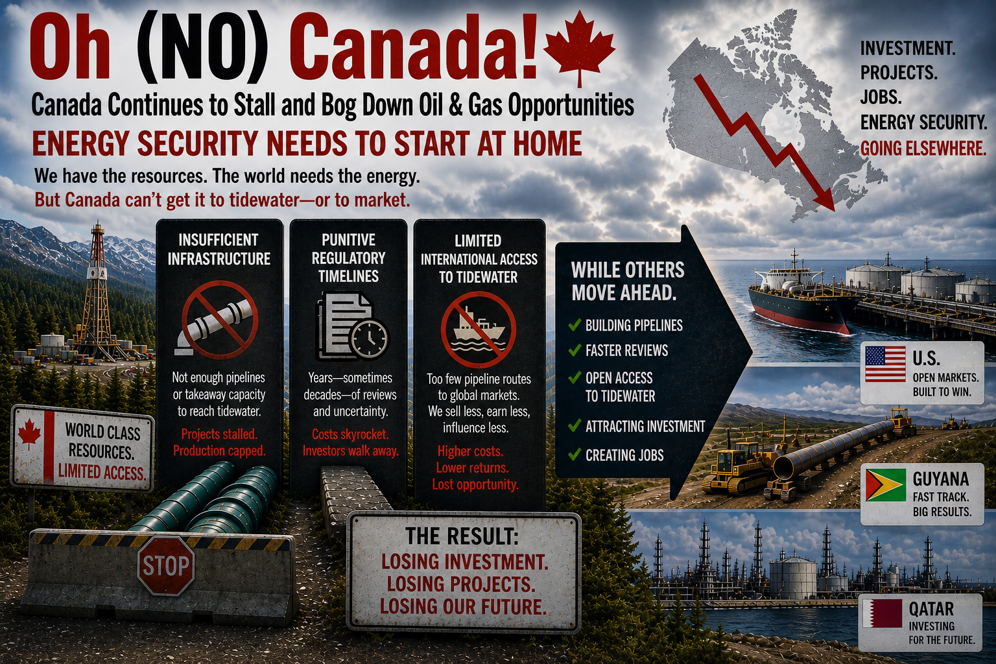
As the fourth largest global producer of crude oil Canada’s opportunities have been limited by insufficient infrastructure, punitive regulatory timelines and limited international access.
“North America and particularly the European Union are experiencing the consequences of misguided energy policies that have undermined efforts to sustain energy security throughout the West. Recent geopolitical events have resulted in a wholesale, material re-evaluation of Western energy policies with consequential new directions to restructure energy infrastructure and trade not just in Europe but in North America.” Mintz and Wallace, 2022.
The closure, first by Iran and then subsequently by the United States, of the Strait of Hormuz has caused an international energy crisis. It has created one of the largest modern disruptions to global oil and gas flows, with prices spiking above US$100–120/bbl and LNG prices jumping more than 50% from 2025 averages.
While the current events in the Straight of Hormuz were not predictable at the time we wrote our paper in 2022, the consequences of emissions policies that advocated for the curtailment, and in some cases the elimination, of vital fossil fuels were nonetheless predictable. As Western economies raced to reduce carbon emissions many lost sight of the vital contribution that fossil fuels make to economic resilience and national, regional and international security. Those policies, especially in the E.U., have demonstrated that energy transitions are neither automatic nor inherently secure and have been seen to result in market instabilities, power interruptions and continued price escalations.
The blockade of the Strait of Hormuz has left 20 million barrels of oil and 20% of global LNG trade immobilized. This has forced the E.U. to urgently re-evaluate net‑zero pathways and instead to consider energy security as a central principle. Evidence from Germany’s recent experience demonstrates that assumptions of a smooth, inevitable shift to renewables has seriously underestimated system complexity and has shifted the emphasis to reliability, affordability and geopolitical resilience. The strategic role of firm energy supply was demonstrated when the E.U. was forced to spend an additional €6 billion in just 17 days on fossil fuel imports as renewables alone could not stabilize their grid. The EU’s energy bill rose by €24 billion in the first 52 days of the Iran conflict, showing how price escalations and supply insecurity persisted despite aggressive decarbonization policies.
A 2026 analysis by the Canada Energy Regulator highlights that geopolitical volatility has increased the importance of energy self‑sufficiency, supply‑chain resiliency and export diversification. While Canada remains relatively energy self‑sufficient, central Canada remains heavily reliant on U.S.‑transiting pipelines and U.S. natural gas. The Canadian Association of Petroleum Producers (CAPP) has emphasized that oil and natural gas remain strategic assets for NATO‑aligned countries, with Canada ranking second only to the U.S. among Western producers. Infrastructure expansions such as Coastal GasLink and the Trans Mountain Expansion (2024) have only just begun to strengthen Canada’s ability to diversify supply allies and enhance global energy security.
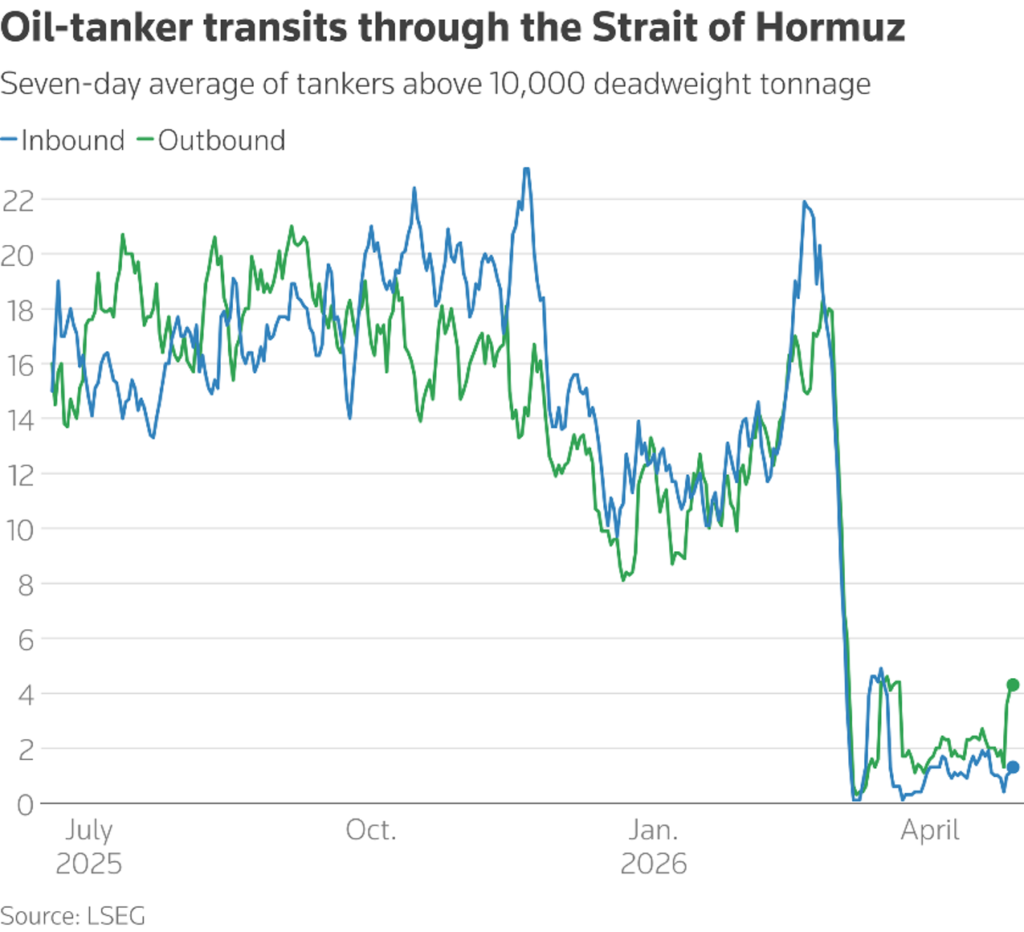


This is what global energy security looks like. Global oil prices jumped to a four-year high from concerns of a protracted Middle East oil supply disruption. The impacts from the closure of the Strait of Hormuz will be felt most acutely in Europe.
Our paper in 2022 argued that energy security would consistently trump concerns for climate change because of the outsized economic and strategic importance of oil and gas. Although recent announcements indicate that policy changes may be at hand, since 2015 Canada has implemented regulatory and tax policies that have substantially blocked Canadian energy from reaching beyond traditional destinations to enter the international marketplace. The exception is the performance of the Trans Mountain pipeline that in 2025 delivered an annual average of 761,000 barrels per day with an annual average utilization of 86% to return more than $1.7 billion to Canada through interest payments, dividends and fees. While these results indicate the importance of encouraging enhanced Canadian access to international markets, they also present a sobering reminder of the income foregone by Canada because of major project cancellations made by the Trudeau government.
While the Carney government is struggling to overcome restrictive Trudeau-era policies to re-position Canada as an “energy superpower” it remains to be seen if agencies such as the Major Project Office (MPO) and the Memorandums of Understanding (MoU) will be sufficient to recognize the enormous shift that has occurred throughout global energy markets.
Canada and Alberta have both maintained legislated or policy‑anchored net‑zero commitments, frameworks that are explicitly designed to constrain the emissions profile of hydrocarbon production. The federal policy roadmap explicitly states that Canada must “aggressively decarbonize” to remain relevant in a net‑zero global economy. This implies policy‑driven constraints on future production even if not framed as explicit emissions and production caps. Meanwhile, as European states reassess and evaluate the effects of energy‑security shocks, at this critical time Canadian energy could be backfilling against sanctioned Russian oil and gas and curtailed shipments from the Middle East. Despite reassurances, Canada appears fixated on policies for net zero with few realistic options to increase exports to the E.U. or to optimize energy security within Canada.
The Iranian conflict demonstrates that policies for net zero and renewable energy, commitments that required vast financial investments, are wholly insufficient to maintain energy and economic security. The 2026 US National Defense Strategy (NDS) recognised the need to prioritize energy autarky and bloc-based energy supply over climate co-operation. The reality is that sanctions, “weaponized trade” and maintenance of sea lanes have forced the prioritization of fossil fuel production as a hedge against international economic and trade disruptions. The NDS is a reflection that the U.S. has pivoted to policies that are far more “energy-centric” than any prior considerations for net zero and climate.
Europe’s strategic policy decision to undermine its own energy production in favour of renewables has exacerbated the effects of the Iran crisis. Europe is now twice as exposed to the Hormuz crisis as is the U.S. and faces an imminent shortage of strategic supplies such as jet fuel – a dual threat to the military and industrial capacity of Europe. Meanwhile, the U.S. has become a major net exporter of refined products, including jet fuel, with shipments to Europe surging to record levels. Europe, by contrast, must import 60% of its total energy and 40–75% of its jet fuel.
As the fourth largest global producer of crude oil Canada’s opportunities have been limited by insufficient infrastructure, punitive regulatory timelines and limited international access. The Iran shock has exposed the false assumptions of uninterrupted global trade and steadily falling demand for fossil fuels. Canada could expand production and attract investment as buyers seek diversification away from Middle Eastern chokepoints.
Ron Wallace is a former Member of the National Energy Board.
Share This:



















COMMENTARY: Mark Carney’s Rhetoric Doesn’t Match Reality: McTEAGUE