CDN NEWS |
  US NEWS









In energy operations, there is no shortage of instrumentation. Plants and facilities rely on PLCs, DCS platforms, transmitters, analytics, and remote monitoring systems to keep processes running efficiently. Yet when it comes to protecting critical assets such as pumps, compressors, turbines, and gas handling equipment, many operators still depend on one simple question:
What happens when a pressure or temperature limit is reached, and you need a dependable response right away?
That is where independent pressure and temperature switches continue to play an important role.
The challenge in energy applications
Across upstream, midstream, power generation, and industrial gas applications, operators face a common challenge: process conditions can shift quickly, and when they do, equipment needs to respond immediately.
High pressure can threaten equipment integrity. Low pressure can point to process instability, loss of flow, or developing mechanical issues. Temperature excursions can indicate overheating, poor cooling performance, changing process conditions, or risk to downstream equipment. In many cases, the goal is not just to monitor these changes on a screen, but to trigger a specific action such as an alarm, interlock, or shutdown before the issue escalates.
That sounds straightforward, but in the real world, it is not always enough to rely only on the control system.
Facilities increasingly value protective devices that can operate independently of the main control platform. When an application calls for a hardwired response, a local switch still has a very practical place. It provides a direct, dedicated layer of protection without depending on software, communications, or network availability.
Why electromechanical switching still has value
In an industry that continues to modernize, electromechanical switches remain relevant because they are simple, direct, and purpose-built for alarm and shutdown duties.
For many energy applications, the priority is not adding more data points. It is making sure the right action happens at the right limit.
This is especially important on assets such as compressors, turbines, pumps, and gas production equipment, where process deviations may need to initiate multiple responses at once. One set point might activate a warning alarm, another might trigger an operational response, and a third might initiate a shutdown. Having these functions separated and clearly defined can help operators protect both equipment and process continuity.
A practical solution for multi-point alarm and shutdown duties
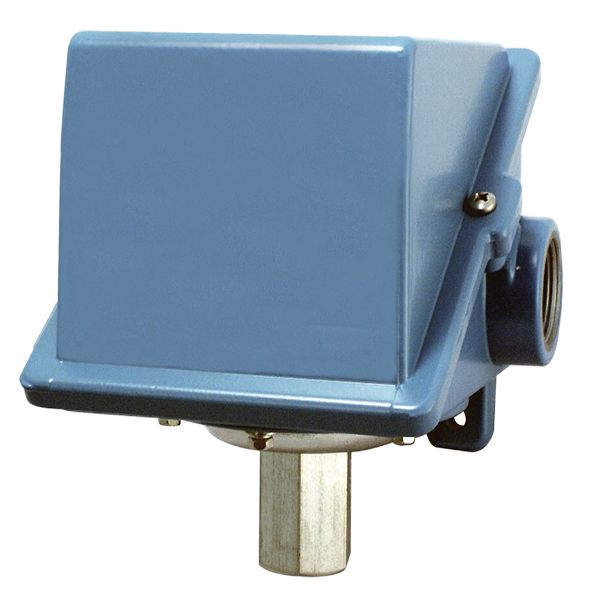
The United Electric Controls 400 Series Pressure and Temperature Switch is designed for exactly this kind of role.
It provides low and/or high limit alarm and safety shutdown capability through one, two, or three independent switches, with switch separation up to 100% of range. That flexibility allows the device to handle multiple set points within one instrument, supporting layered protection strategies without overcomplicating installation.
For field teams, simplicity also matters. The 400 Series is built for quick installation, with ample access to the wiring compartment and straightforward set point adjustment using either a reference dial or calibrated gauge. That can help reduce setup time and make ongoing adjustment more manageable during commissioning or maintenance.
Its versatility is another strength. With a range of available sensors, microswitches, process connections, and pressure or temperature ranges, the switch can be configured for a wide variety of applications. In differential pressure service, the optional visual indication can also allow it to replace both a switch and a gauge, helping reduce device count while maintaining clear local visibility.
Where it fits in the energy industry
This type of switching technology is well suited to applications where reliable alarm and shutdown functions are critical to safe and efficient operation.
Typical uses include industrial gas production and protection of rotating equipment such as pumps, turbines, and compressors. In these environments, operators often need a device that can function independently, withstand industrial conditions, and provide discrete outputs for multiple responses.
With FM approval, NEMA 4X protection, and multiple SPDT or DPDT switch output options, the 400 Series is designed for demanding service where environmental durability and dependable switching matter.
Beyond monitoring: designing for action
One of the biggest lessons in energy operations is that monitoring alone does not solve problems. A pressure or temperature reading only becomes useful when it leads to the right operational response.
That is why independent switches continue to be specified in so many critical services. They help bridge the gap between knowing a condition exists and doing something about it. They are not a replacement for modern control systems, but they remain an important complement to them, particularly where alarm integrity, shutdown reliability, and operational independence are priorities.
Support matters too
Selecting the right switch is only part of the equation. Range selection, switch configuration, process connection details, environmental considerations, and application fit all affect long-term performance.
Westech Industrial supports customers with product selection, application guidance, and technical support to help ensure pressure and temperature switching solutions are aligned with the realities of the service. Whether the need is alarm indication, equipment protection, or emergency shutdown functionality, the goal is to match the device to the application so it performs when it is needed most.
In energy applications, dependable protection does not always need to be complicated. Sometimes the most effective solution is still a well-applied switch designed to act when limits are reached. For more information you can call us at 1-800-912-9262 or email us at [email protected]. You can also visit our website at https://westech-ind.com.
Share This: