


 CDN NEWS |
  US NEWS







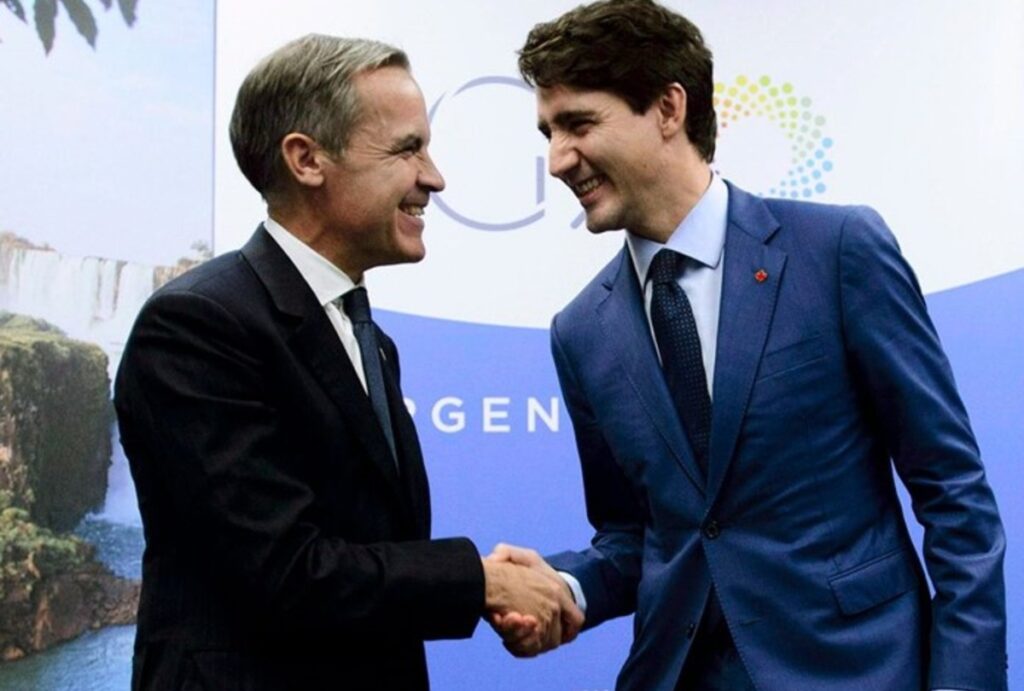
On Tuesday, the Carney government will update Canadians on the state of federal finances. While early indications suggest that deficit projections will be lower than the government forecasted in November, the Carney government remains committed to the fiscal approach of the Trudeau era, which produced record levels of red ink and dismal economic growth.
To quickly recap, during its tenure (2015 to 2025), the Trudeau government increased per-person program spending by 22.9 per cent, ran nine consecutive deficits (ranging from $16.8 billion to $384.9 billion) and increased federal debt by 34.5 per cent (per-person). Meanwhile, per-person GDP (a broad measure of living standards) grew by just 3.4 per cent—anemic by historical standards and compared to peer countries—while government job creation significantly outpaced private-sector jobs, and business investment per-worker (excluding residential investment) declined by 5.1 per cent. (All figures adjusted for inflation.)
This stood in stark contrast to Jean Chrétien’s tenure as prime minister, even though Trudeau and Chrétien share the same political party. The Chrétien government cut spending substantially, ran seven budget surpluses, and reduced debt (per-person) by 12.9 per cent. At the same time, per-person GDP grew by 26.5 per cent under Chrétien—nearly eight times more than under Trudeau. Private-sector job creation also averaged 2.5 per cent per year—a full percentage point more than Trudeau. And business investment per-worker increased 37.0 per cent under the Chrétien government. (Again, all figures adjusted for inflation.)
Fast-forward to today, and Prime Minister Carney has promised a “very different approach” to federal finances compared to Trudeau, including to “spend less” and deliver the “strongest economy in the G7.” But while the tone may be different, the data so far show that instead of emulating Chrétien’s approach, Carney has followed the Trudeau playbook.



According to last November’s budget (Carney’s first as prime minister), from 2025/26 to 2029/30, the government plans to spend $67.6 billion more than the Trudeau government planned (in its last fiscal update). And run $321.7 billion in cumulative deficits over that five-year period—more than double what the Trudeau government planned in its last update. Total federal debt will now reach a projected $2.9 trillion by the end of the decade compared to $2.6 trillion under the Trudeau plan (which itself was very concerning). And this fiscal year, federal debt interest payments will reach a projected $60.0 billion, which is more than the government plans to spend on health-care transfers to the provinces.
While it looks likely that Tuesday’s fiscal update will include higher revenue projections and smaller projected deficits than in November’s budget, the Carney government remains poised to spend at or above the levels the Trudeau government had planned. The Carney government’s “comprehensive spending review” has also done little to offset the increased defence spending (which, to be fair, was overdue), increased GST payments, a fuel tax holiday, and several other campaign commitments.
Clearly, Ottawa’s fiscal trajectory is unsustainable. The Carney government should start fresh with a new Chrétien-style plan to make tough decisions and return to budget balance by re-evaluating every dollar of federal spending, with no exceptions. That means taking a hard look at programs such as national day care, dental care, pharmacare, Old Age Security (OAS), and federal transfers to the provinces.
Prime Minister Carney was right to criticize the Trudeau government’s approach to federal finances. Tuesday’s fiscal update, however, will almost certainly demonstrate the prime minister’s fiscal approach looks a lot more like Trudeau than Chrétien. Maintaining the Trudeau-era status quo will only burden future generations of Canadians with a rising bill while likely producing similar dismal economic results.
Prime Minister Carney was right to criticize the Trudeau government’s approach to federal finances. Tuesday’s fiscal update, however, will almost certainly demonstrate the prime minister’s fiscal approach looks a lot more like Trudeau than Chrétien. Maintaining the Trudeau-era status quo will only burden future generations of Canadians with a rising bill while likely producing similar dismal economic results.
Share This:






















INSIGHT: The Northern Shield Energy Corridor Provides Energy Security for All Canadians – Yogi Schulz