CDN NEWS |
  US NEWS









Saskatchewan is the world’s No. 2 world exporter of uranium
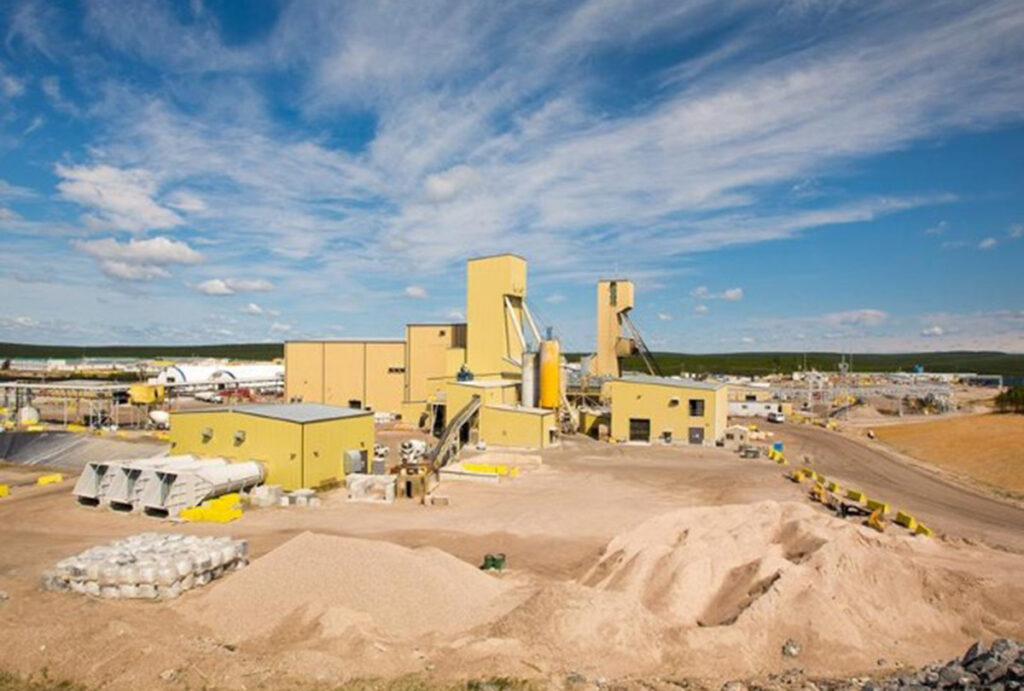
Cigar Lake uranium mine, Saskatchewan
By Resource Works
More News and Views From Resource Works Here
It’s been a while since Canada sold one of its pioneering CANDU nuclear-power reactors to an overseas buyer, but a new push is under way.
So are efforts to sell more Canadian uranium to foreign purchasers.
And at home in Canada a new drive is under way to develop more nuclear capacity, including new Small Modular Reactors, SMRs, that can be shipped to various locations to generate power (for example, at remote communities and industrial sites) and to replace coal-burning power plants.
Today, some 15% of Canada’s electricity comes from nuclear power, with four operating nuclear power plants (containing 17 CANDU reactors) in Ontario and New Brunswick.
And Ontario is looking at major nuclear expansion to meet rapidly rising electricity demand.
The expansion could include a new large-scale nuclear station at Wesleyville (Port Hope), a potential “Bruce C” project on Lake Huron, and a four-unit SMR project at the existing Darlington site.
A report by the Ontario Chamber of Commerce finds the Bruce C project could contribute an estimated $238 billion in GDP.
The global and economic impact of CANDU
There are 27 CANDU reactors at work in South Korea, China, Argentina, Pakistan and Romania, which announced in 2024 that it would purchase two more CANDU reactors — the first new CANDU reactors to be built since 2007. And India runs 17 ‘Candu- derivative’ reactors.
In 2025 the federal government approved a loan of up to $304 million, over four years, to AtkinsRéalis (formerly SNC-Lavalin) for next-generation development of CANDU technology for potential use in Canada and export overseas. AtkinsRéalis already has a new Candu Monark design.
A 2024 report by the Conference Board of Canada showed that building four CANDU units would generate more than $41 billion of GDP impact for Canada and the equivalent of more than 20,000 jobs and over 324,000 person-years of employment.
To that, add some $50 billion of GDP impact during the operation phase. If at one power plant the four reactors would sustain 3,500 full-time equivalent jobs per year over its operating life of 70-plus years. And expect $29 billion in additional tax revenue across municipal, provincial and federal governments over the life of such a project.
One advantage of the CANDU (CANada Deuterium Uranium) technology is that it uses natural (unenriched) uranium, reducing fuel costs and eliminating the need for complex and costly enrichment facilities.
Saskatchewan leads global uranium production
Canada now is the second largest producer and exporter of uranium in the world, with around 24% of global production. That’s second to Kazakhstan’s 44% of global mine production, and ahead of Namibia’s 12%.

Approximately 90% of Saskatchewan’s uranium production is available for export. It is shipped to North and South America (44%), Asia (17%), and Europe (39%). In 2024, Canada supplied 33% of the uranium purchased by U.S. nuclear reactors, making it the largest foreign supplier of uranium to the United States.
The uranium is also used in the CANDU power reactors in Canada, and for medical purposes.
Saskatchewan now has two uranium mines: Cameco’s Cigar Lake mine and Cameco’s McArthur River/Key Lake mine and mill. There is also the McClean Lake uranium mill, which processes ore from Cigar Lake.
With grades 100 times the world average, Cigar Lake is one of the highest-grade uranium deposits in the world.
In March, Cameco signed a nine-year agreement (2027–2035) to supply approximately $2.6 billion worth of uranium to India’s Department of Atomic Energy for its growing nuclear operations. Cameco already supplies Ukraine’s Energoatom and the China Nuclear International Corporation.
New mining projects on the horizon
And now two new uranium mines are heading for construction in northern Saskatchewan’s Athabasca Basin, which holds the world’s largest high-grade uranium reserves, after receiving federal approval this year.
They are Denison Mines Corp.’s Wheeler River project and NexGen Energy Ltd.’s Rook I project. These are the first Canadian uranium mines to be approved for construction since 2004.
Wheeler River will host the Phoenix In-Situ Recovery (ISR) uranium mine, and a potential future underground mine at the nearby Gryphon Deposit. Phoenix will be the first ISR uranium mine to be built in Canada. Rook I will mine the Arrow Deposit.
Chris Beaudry, Saskatchewan’s energy and resources minister: “Wheeler River and Rook I will provide generational economic opportunities for Saskatchewan people, particularly the Indigenous and Métis communities in the north, and strengthen our position in becoming the world leader in uranium production.”
The two projects represent a total estimated investment of $2.8 billion. They will create over 1,600 jobs during construction, and employ more 700 people during operation. Saskatchewan’s current uranium mines and mill are responsible for over 3,300 jobs, and are a major employer of northern and Indigenous workers.
And now Australia’s Paladin Energy expects to make a final investment decision in 2027 on its Patterson Lake South uranium project in Saskatchewan.
Paladin has secured an exemption from Canada’s non-resident ownership policy for the project, and has signed benefits agreements with the Buffalo River Dene Nation and Clearwater River Dene Nation.
However, it still has to deal with the Métis Nation–Saskatchewan’s (MN-S) application for a judicial review of Paladin’s environmental approval. The application claims Saskatchewan “inadequately consulted” MN-S before granting the approval. Paladin says it has been consulting with MN-S for many years.
- Most countries tear down aging nuclear reactors. Canada refurbishes them. In this Power Struggle video, Dr. Anthony Ciccone explains why Canada’s edge matters more than ever right now: https://bit.ly/4ctLgnp
Don MacLachlan is a writer for Resource Works, a non-partisan organization that champions responsible resource development in British Columbia and Canada. Reach him via [email protected]
Share This: