CDN NEWS |
  US NEWS







In energy facilities, condensate tanks are often tucked into utility areas—boiler houses, steam/condensate return rooms, or outdoor enclosures—where lighting, access, and weather can make even routine checks more complicated than they should be. And when level indication is hard to read, the impact isn’t just inconvenience. It can create inefficiencies, add unnecessary exposure for maintenance teams, and delay decisions when operators need a quick, confident answer.
That challenge shows up most often with traditional tubular glass level gauges. Over time, visibility can become a real issue—especially in low-light conditions or when the gauge needs to be read from a distance. In one real-world example, maintenance personnel were forced to walk out to the tank, climb platforms, and use a flashlight just to confirm level—an approach that was time-consuming and increased exposure to safety risks.
While that case involved a large institutional facility, the underlying problem is very familiar in the energy sector. Whether it’s upstream operations, midstream terminals, refineries, petrochemical plants, or power generation, steam and condensate systems are foundational utilities—often spread across large sites where safe access and efficient monitoring matter.
The operational reality: level checks shouldn’t require a ladder and a flashlight
A level gauge that can’t be read reliably creates a chain reaction:
- Operators lose confidence in what they’re seeing, which can lead to unnecessary re-checks.
- Maintenance teams spend more time on routine verification—especially during off-hours or poor weather.
- Field checks become the default, even when a safer, more efficient option is available.
This is particularly relevant in large energy facilities, where condensate equipment can be located in low-light utility areas or remote parts of the site, making routine level checks time-consuming and higher-risk.
A practical upgrade: magnetic level indication
A straightforward solution is to replace tubular glass gauges with a magnetic level indicator (MLI)—designed to provide clear, at-a-glance indication that remains readable in challenging environments.
In the example noted above, the facility replaced tubular glass gauges with Jerguson® Magnicator® Magnetic Level Indicators on their condensate tanks to improve visibility and reduce the maintenance burden.
The outcome was immediate: the level indication became highly visible and could be seen from the control room, eliminating the need for personnel to physically approach the tank to confirm level.
For energy facilities, that type of improvement matters because it reduces routine “walkdowns” while supporting faster operational decisions—especially when staffing is lean or conditions are less than ideal.
What changed after the upgrade
After switching to a magnetic level indicator, the facility reported benefits that map directly to common energy-site goals: safety, efficiency, and reliability.
Key outcomes included:
- Improved visibility: clear indication visible at a distance and from the control room
- Enhanced safety: reduced need to climb platforms or stand directly in front of the gauge
- Increased efficiency: less time spent manually checking levels in the field
- Reliable operation: a robust design suited for condensate tank applications
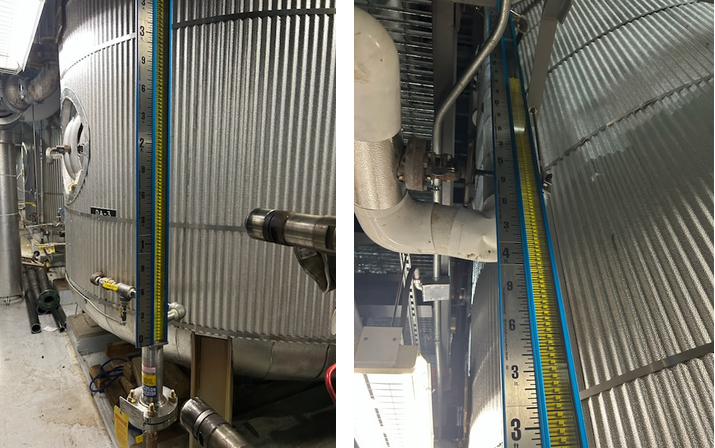
The broader takeaway is simple: upgrading level indication can improve both operational efficiency and safety by enabling confident monitoring without unnecessary exposure or manual effort.
Why this is relevant across Energy applications
Condensate service is often deceptively demanding. Even when the fluid is “just condensate,” the real-world installation can introduce challenges:
- variable temperatures and thermal cycling
- vibration from nearby rotating equipment
- inconsistent lighting and viewing angles
- outdoor exposure, snow buildup, and glare
- access limitations that turn routine checks into elevated-risk tasks
When you zoom out, the value of improved level indication isn’t only the readability of the gauge itself—it’s the operational behavior it enables:
- fewer trips into the field just to verify level
- fewer delays waiting on manual confirmation
- more predictable, safer maintenance practices
In many facilities, an MLI becomes a sensible standard where teams want durable indication and better visibility without adding complexity.
Implementation considerations that matter in the field
A level indication upgrade is rarely “one-size-fits-all.” A good result depends on aligning the configuration with the process and the way the site operates. Typical considerations include:
- process connections, valving, and isolation requirements
- materials selection and compatibility
- visibility needs (line-of-sight, distance viewing, indoor vs outdoor)
- safe access for maintenance and future inspections
- whether the site wants local indication only, or additional signals for alarms/trending
This is where practical application experience makes a difference—ensuring the instrument choice, configuration, and installation approach match what the site actually needs.
How Westech Industrial supports these projects
Westech Industrial works with customers across Canada to support instrumentation and mechanical solutions for utility and process systems. When facilities evaluate upgrades like magnetic level indication, support typically includes:
- assessing what’s installed today and identifying the root cause of visibility or maintenance issues
- recommending an appropriate level indication approach for the service conditions
- helping align the configuration with operational requirements (visibility, access, and maintenance practices)
- supporting installation needs—including custom fabrication when site-specific mounting, assemblies, or integration hardware are required
The goal is to help facilities implement solutions that are practical, reliable, and aligned with safe work practices—without turning a straightforward improvement into a complicated project. To learn more please visit our website at https://westech-ind.com or call us today at 1-800-912-9262.

Share This: