


 CDN NEWS |
  US NEWS







For Alberta, the big takeaway is that healthy growth in oil production continued during 2025, and output has more than doubled since 2010, led by the oilsands
This Article and More by Chris Varcoe Here • Calgary Herald

CEO and president of Suncor Energy Rich Kruger was photographed at the Suncor office building in downtown Calgary on Tuesday, May 9, 2023. Azin Ghaffari/Postmedia file
Setting records will grab attention, and the Canadian oil sector is putting up some mighty big numbers to jump-start 2026.
Canadian oilsands giant Suncor Energy released its fourth-quarter results on Tuesday, reporting daily production of 909,000 barrels (bpd) during the final three months of the year, 34,000 bpd higher than its previous quarterly record.
Analysts expect Cenovus Energy could eclipse the production mark of one million bpd in 2027, following its November takeover of MEG Energy and ongoing growth initiatives.
And Canadian Natural Resources recently released production guidance of 1.62 million boe per day in 2026, which would be up three per cent from 2025 levels.
At Suncor, the company continues to set upstream and downstream records, as it prepares for its next investor day in March.
It’s planning to release a new “value improvement plan,” with three- and 15-year objectives — with the longer term focusing on bitumen supply and development options, Suncor CEO Rich Kruger said Wednesday on a call with analysts.
“We have been constructing a longer-term plan where we can have our cake and eat it, too, where we can develop incremental resources over time, and we can continue to return capital to shareholders while we’re doing that.”
For Alberta, the big takeaway is that healthy growth in oil production continued during 2025, and output has more than doubled since 2010, led by the oilsands.
Data from the Alberta Energy Regulator show the province shattered another oil production record in 2025, pumping out more than 4.1 million bpd throughout the year, an increase of 3.8 per cent from 2024 levels. In December, production averaged 4.4 million bpd.
“It’s impressive. And not only that, we’ve had sustained production increases year after year, despite a lot of volatility,” ATB Financial chief economist Mark Parsons said Wednesday.
“What’s important for Albertans and Canadians to understand is this is a desirable, long-life asset, and there’s a lot of attention now on the Canadian oilsands because costs have come down per barrel, emissions intensity has come down and we have new market access.”
Increased pipeline capacity, highlighted by the startup of the Trans Mountain expansion in 2024 and Enbridge’s Line 3 replacement project in 2021, is allowing the sector to hike production, following years of pipeline constraints in Western Canada.
More capacity is on the way.
Calgary-based Enbridge is developing plans to expand its Mainline system by up to 400,000 barrels per day before the end of the decade, while Trans Mountain Corp. is looking to optimize its network, potentially adding up to 360,000 bpd of capacity.
More egress would give the industry extra room to increase output in the coming years without running head-on into pipeline bottleneck issues and wider price discounts on Canadian crude.



According to energy consultancy Wood Mackenzie, oilsands production is expected to grow by 92,000 bpd this year, and by another 64,000 bpd in 2027.
The UCP government has set a target to boost oil output to eight million barrels per day by 2035, and wants to see a new bitumen pipeline approved by the federal government that would move one million bpd to the B.C. coast for export.
“The future outlook is really commodity price focused, but there is egress capacity that’s being added in the mid-term,” said Jonah Resnick, principal research analyst with Wood Mackenzie.
“Then, the major questions will be beyond the 400,000 to 500,000 barrels of potential near- to mid-term egress capacity, pipeline capacity, that’s being added. What’s happening beyond that?”
Wood Mackenzie’s tracking of the world’s largest oil and gas producers (excluding national oil companies) shows three Calgary-based companies now crack the top 20 — based on expected 2026 output — with Canadian Natural Resources now the 11th largest producer, Cenovus in 17th spot and Suncor the 20th largest.
(Earlier this week, Oklahoma-based Devon Energy announced a deal to buy Coterra Energy, with the two companies having combined production topping 1.6 million boe per day and an enterprise value of US$58 billion, catapulting it up the list.)
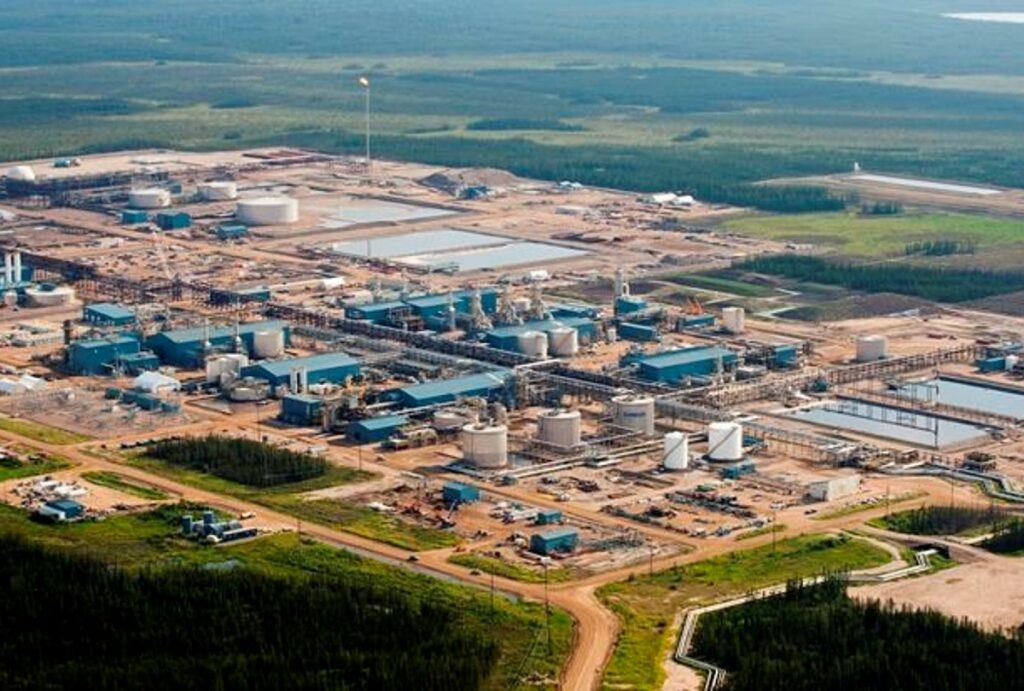
Suncor Energy increased its output in the past year without making major acquisitions, but by increasing production organically and “squeezing more out of the assets” that it operates, said analyst Menno Hulshof with TD Cowen.
“Their mantra continues to be, and should be, value over volume,” he said.
“They’re hopefully going to give us (at the next investor day) a better sense of what this company could look like over the next five, 10, even 15 years.”
As for Cenovus hitting the one million bpd level, likely in 2027, Hulshof considers it a major milestone, but noted large oilsands producers are already relevant to global investors.
“The basin continues to grow and find new and creative ways of getting their production to market. But then the other piece, of course, is consolidation . . . it’s becoming more and more concentrated, and with that comes more global relevance.”
Oilsands producers have grown in recent years through various price cycles, while lowering their cost structure — improving their ability to withstand weaker commodity prices.
Prices for U.S. benchmark West Texas Intermediate crude closed Wednesday at $65.14 a barrel, up $1.93, after sliding through the second half of last year.
“It speaks to our resiliency, that we’re not going away. These are strong companies, strong balance sheets,” said ATB’s Parsons.
“They can weather price volatility, and I think that we have a more resilient oil and gas sector now than we have had in the past.”
Chris Varcoe is a Calgary Herald columnist.
Share This:




















SETTING OFF ALARM BELLS: Carney’s EU Deal Threatens Alberta, Energy, & Sovereignty – 170,000 Reasons to Reject Canada’s EU “Associate Membership” – The Nemeth Report