


 CDN NEWS |
  US NEWS







By Terry J. Winnitoy
Canada’s energy rhetoric has changed, but investors are still waiting for binding policies, durable regulations and commercially viable projects.
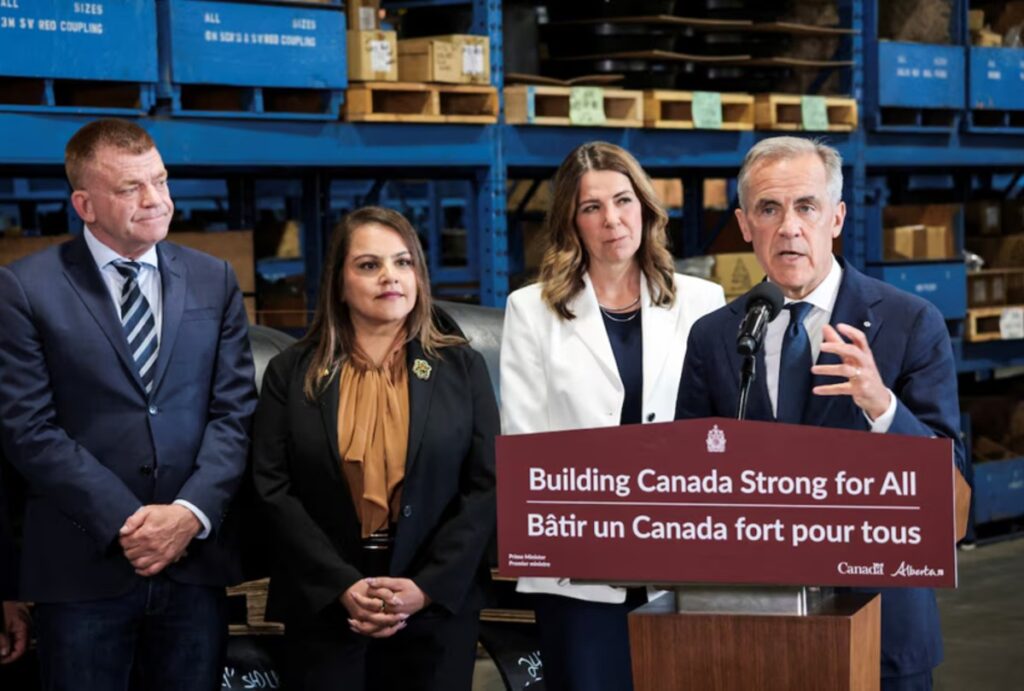
Prime Minister Mark Carney wants Canadians, and global investors, to believe his government represents a decisive break from the energy policies of Justin Trudeau.
The language has certainly changed. Ottawa now talks about making Canada an “energy superpower,” expanding oil and natural gas production, diversifying exports, accelerating approvals and treating major infrastructure as a national priority. The proposed oil and gas emissions cap has been shelved, the Clean Electricity Regulations have been placed in abeyance in Alberta while a court challenge proceeds, and the federal government has established a Major Projects Office to move selected developments through the approval process more quickly.
Those are meaningful shifts from the Trudeau era.
But changing the language of government is not the same as changing the investment climate. And recent developments suggest Carney is rapidly running out of time to prove that his energy reset is more than a collection of announcements, frameworks and political compromises.
A Pipeline That is 90 Per Cent Publicly Owned
The clearest warning sign is the ownership structure proposed for the new one-million-barrel-per-day West Coast oil pipeline.
Pembina Pipeline Corporation, the only major private-sector participant currently identified, will hold a 10 per cent economic interest through construction, with an option to increase that interest by another 10 per cent after the pipeline enters commercial operation. The remaining 90 per cent will initially be divided equally between federally owned Trans Mountain Corporation and the Alberta Petroleum Marketing Commission.
Strictly speaking, Ottawa and Alberta have not yet committed to paying 90 per cent of every construction dollar. Funding details, toll arrangements and the eventual financing structure are still being negotiated. But the proposal does place 90 per cent of the initial ownership, and therefore most of the project’s development and equity exposure, in the hands of federal and provincial public entities and ultimately Canadian taxpayers.
That distinction matters, but it does not change the underlying message.
If Canada had successfully restored investor confidence, private pipeline companies, infrastructure funds, pension plans and oil producers should be competing to lead a project of this size. Instead, governments are again being asked to absorb the early regulatory, political and construction risk while private investors take a comparatively modest position.
Governments can legitimately support infrastructure that serves a national strategic purpose. But public ownership should be a catalyst used to overcome exceptional barriers, not the normal model required to build major energy infrastructure in Canada.
The federal government is already carrying the legacy of the Trans Mountain expansion. As of June 2025, its as-built expansion costs and expenses had reached approximately $33.7 billion, with final costs still subject to project closeout and outstanding claims. Asking taxpayers to assume most of the exposure on another very large pipeline will inevitably raise questions about whether Canada has truly repaired its investment environment or merely replaced private risk capital with public money.
Enbridge Has Delivered the Market’s Verdict
The second warning came from Enbridge.
On July 31, the company postponed the 250,000-barrel-per-day second phase of its Mainline optimization program. Enbridge had previously indicated that the expansion could enter service as early as 2028, but Canadian oil producers were not prepared to make the binding production and transportation commitments needed to support it. Enbridge will instead prioritize two smaller downstream expansions serving American refining markets.
This is particularly significant because the Mainline is an existing system, not a speculative greenfield proposal. It already transports approximately three million barrels per day from Western Canada to Eastern Canadian and U.S. markets. Expanding an operating pipeline should be among the least complicated ways to add export capacity.
Yet producers remain reluctant to make long-term commitments and they are starting to get frustrated.
Enbridge executives acknowledged that Canada has an opportunity to expand production because of recent federal policy changes. But they also said most of the changes remain non-binding and have not been written into law. The company does not expect producers to make the commitments required for final investment decisions until there is substantially greater regulatory and policy certainty.
That is not a Conservative opposition talking point, an Alberta grievance or an industry lobbying slogan. It is the commercial judgment of Canada’s largest pipeline operator.
When a company with existing infrastructure, customers and operating experience postpones an expansion because producers will not sign binding contracts, Ottawa should pay attention.
An MOU Is NOT an Investment Decision
Carney’s government has placed enormous political weight on memorandums of understanding with Alberta and the major oil sands producers.
Don’t get me wrong, MOUs can be useful. They can establish common objectives, create negotiating frameworks and reduce political hostility. But they do not automatically create enforceable obligations.
Not every document called an MOU is necessarily non-binding; its legal effect depends on its wording. In this case, however, there is no ambiguity.



The July agreement among Canada, Alberta and the Oil Sands Alliance describes its provisions as “non-binding mutual understandings.” It says the document is intended to guide the negotiation of future binding agreements, that the participants’ commitments are conditional on those definitive agreements being signed, and that nothing in the MOU creates a legally binding agreement or has any legal effect. The MOU is scheduled to remain in force only until November 15, 2026, unless the parties agree otherwise.
In other words, the current document is a letter of intent, not a final commercial agreement.
An MOU cannot guarantee a carbon price, secure construction financing, compel oil producers to increase production, establish pipeline tolls or require individual companies to invest billions of dollars in carbon capture facilities. It cannot be used by a corporate board as a substitute for enforceable contracts, approved regulations or dependable project economics.
That is why the definitive Pathways agreement expected this fall are so important. If the November deadline is missed, extended or replaced with another framework for future negotiations, investor confidence will not improve. It will deteriorate.
Progress Has Been Made, but Too Much Remains Conditional
The Carney government deserves credit for recognizing that the Trudeau government’s approach had become an obstacle to investment.
Ottawa and Alberta have reached a co-operation agreement on environmental and impact assessments, an agreement-in-principle on methane-equivalency regulations and an industrial carbon-pricing arrangement. Ottawa has also committed to pursuing legislative changes intended to reduce federal review and decision-making timelines, while advancing the West Coast pipeline through the Major Projects Office.
But many of these measures remain subject to future legislation, regulatory approval, negotiations and implementation.
The West Coast pipeline itself has only been referred to the Major Projects Office for consideration as a project of national interest. A decision on listing is targeted for October 1, 2026. Even if it is listed, construction cannot begin until consultation obligations, permitting requirements and project conditions have been addressed. The earliest suggested construction date is September 2027.
Investors do not finance projects based on political enthusiasm. They finance expected cash flow after considering construction costs, regulatory timelines, tolls, taxes, carbon costs, Indigenous partnerships, litigation risk and the possibility that a future government will reverse today’s policies.
Carney’s challenge is therefore not to announce more agreements. It is to make the existing commitments durable.
The Clock Is Now Ticking
By this fall, the federal government should be able to demonstrate several concrete achievements.
The West Coast pipeline should receive a clear national interest determination. Ottawa and Alberta should publish a credible financing and tolling model that shows how public ownership will decline as private and Indigenous investment increases. The Pathways MOU should be replaced by enforceable agreements containing measurable obligations, financing arrangements and construction milestones. Promised changes to federal assessment and approval processes should be written into law rather than left as government intentions.
Ottawa must also provide a stable industrial carbon-pricing system that companies can use when evaluating projects extending over several decades. Investors need to know not only the price of carbon but how credits will be generated, traded and recognized—and whether those rules will survive changes in government.
Most importantly, Carney must demonstrate that privately financed projects can proceed in Canada without first requiring governments to become their dominant owners.
The prime minister understands capital markets. He knows the difference between an announcement and an investment, between a framework and a contract, and between political momentum and a final investment decision.
That is why expectations are higher for him than they were for his predecessor, who had trouble even recognizing a “business case”.
Canada has a genuine opportunity to expand energy exports, strengthen national security, reduce its dependence on the United States and attract billions of dollars in private investment. But opportunities do not remain open indefinitely. Capital moves, construction windows close and competing jurisdictions improve their own investment terms.
To his credit, Carney has successfully changed the conversation about Canadian energy. He has not yet conclusively changed the investment environment.
The Enbridge postponement and the 90-per-cent public ownership structure of the proposed West Coast pipeline are clear indications that the market is still waiting for signals from the Carney government of a more palatable private investment environment.
Canada does not need another MOU announcing what governments hope will happen. It needs binding agreements, enacted reforms, approved projects and private capital willing to build them.
Until those arrive, the Carney energy superpower reset remains more convincing on paper than it is in the capital markets.
Share This:





















COMMENTARY: Varcoe: ‘Do No Harm’: Should Alberta Step in to Fix Gas System Constraints, Given Past Energy Interventions?