CDN NEWS |
  US NEWS









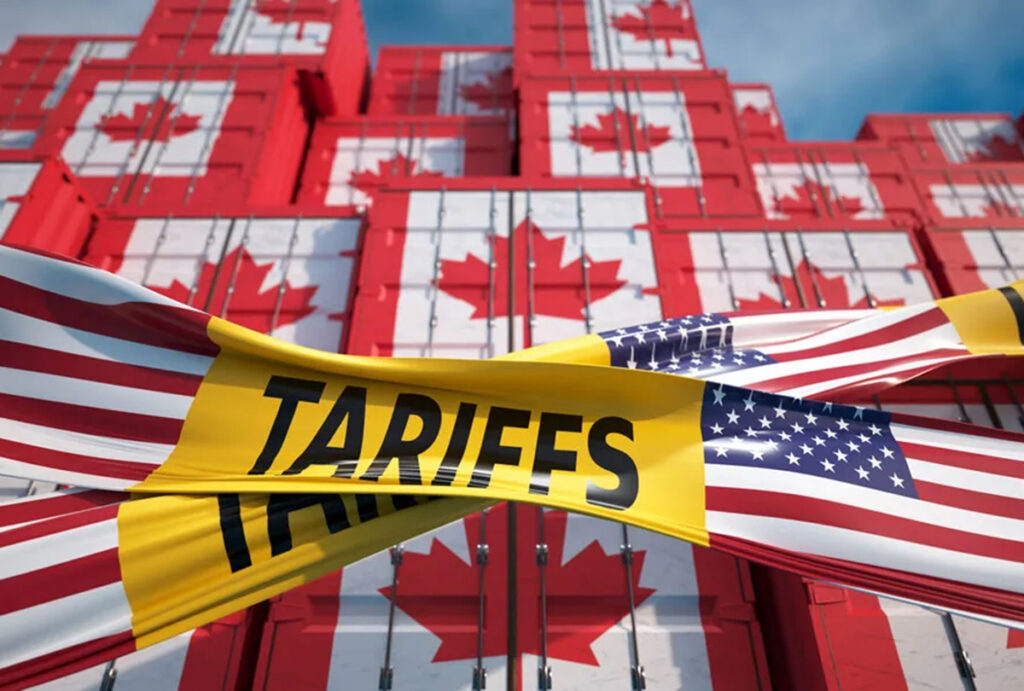
In a much anticipated ruling from the Supreme Court of the United States (SCOTUS), a 6–3 majority of the justices, including two Trump appointees, ruled that the president’s use of a 1977 law to impose global tariffs as well as selected tariffs on countries like China, Mexico, and Canada was illegal. The decision nullifies a central trade and fiscal policy of the Trump administration and increases uncertainty, which will have direct economic consequences for the U.S. as well as its trading partners like Canada.
The decision by SCOTUS upholds earlier lower-court decisions that found the 1977 law (IEEPA) did not grant the president tariff powers, which reside with the U.S. Congress.
There are two main categories of uncertainty arising from the decision, affecting both the United States and the broader global trading economy. The first is the implication for U.S. fiscal policy. Revenues from the tariffs were expected to be roughly $1.6 trillion over the next decade and were a foundational piece of the recent U.S. federal budget and tax reductions. This creates an enormous hole in the U.S. federal budget and one that will have to be rectified in the short-term.

There are also questions about the status of the tariffs already collected. One estimate suggests that the U.S. federal government will have to refund roughly $175 billion over the next few months.
This brings us to the second category of uncertainty: trade. Many might be hopeful that the SCOTUS decision would put an end to the President’s use of tariffs, but unfortunately this is wishful thinking. The President has three other levers to use to impose tariffs, though each is narrower and requires greater input from Congress. Indeed, as of Friday afternoon, President Trump committed to introducing a global 10 per cent tariff based on a different authority than was used for the tariffs ruled illegal by SCOTUS and recommitted to sectoral tariffs.
In addition, the Trump administration may use this court ruling setback to engage more aggressively on bilateral and multilateral trade agreements such as CUSMA. Some observers are already speculating that the court decision will make trade negotiations between Canada, Mexico and the United States more difficult.
More information and analysis on the court decision and its implications will no doubt emerge over the coming weeks but what is clear now is that uncertainty has increased about the U.S.’ federal finances and borrowing, as well as its trade policies more generally. A rise in uncertainty at a time when uncertainty is already high will inevitably affect business investment, which has broader economic implications. Like too much of the Trump presidency, chaos and uncertainty rule the day.
Share This: