CDN NEWS |
  US NEWS







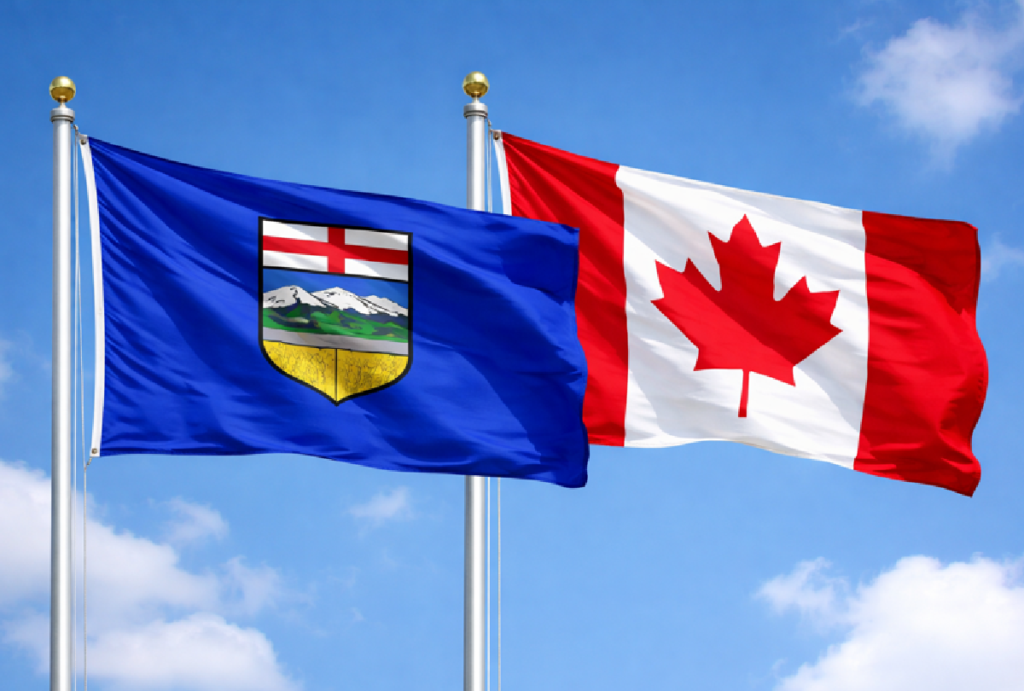
To put it mildly, there’s a lot going on these days. Understandably, the attention of the public can be easily swayed, which is why it’s worth revisiting the deal, struck at the end of November by the Smith and Carney governments, that may shape Alberta’s energy policy landscape for the next several decades.
To recap, according to the deal, the Alberta government formally bends the knee and publicly pledges to achieve “net zero” greenhouse gas (GHG) emissions by 2050, an agenda which virtually every country pursuing it has failed to achieve. Alberta raises its provincial carbon tax on industrial GHG emitters substantially (timing and details to be determined by April 2026) and commits to what might be one of Canada’s most ambitious industrial-policy initiatives since the National Energy Plan—a $16.5 billion carbon capture, utilization and storage (CCUS) project known as “Pathways,” to be run by the country’s five largest oil companies.
In exchange for these titanic Alberta tax-and-spend promises, Ottawa aborts the pending federal emission cap on Alberta’s oil and gas sector and (for Alberta) the imminent federal “Clean Electricity Standards.” The federal government also relaxes some speech controls about climate change (that should never have existed in the first place). Additionally, Alberta gets a list of highly-contingent maybes, which include a bitumen pipeline to a British Columbia port.



The Smith government says the deal is a breakthrough for Alberta energy independence, the liberation of its largest natural resource from monopoly capture by the United States, and a victory for Alberta sovereignty—or at least, sovereignty over some of its natural resources.
There is, it seems, some small bit of truth in all that. Under the new regime, most of this taxing-and-spending on carbon emissions and CCUS is internal to Alberta. Monies raised and spent in the province will, in theory, help create jobs and stimulate the economy of the province, rather than being transferred across Canada via the federal government (although B.C. may receive some assistance in building power transmission lines across Alberta).
But of course, taxes degrade economic productivity and raise production costs, so ultimately Alberta’s oil products will likely become more costly to produce and less profitable to sell in world markets. The magnitude of that impact remains to be seen. But you can’t tack massive taxes onto oil and gas production, processing and transport without affecting the costs of production, transport, market price and profitability. In addition, the Alberta government, which lauds itself as a free-market supporter, signs on to two of the biggest federal industrial policy initiatives one can imagine: the “net zero” GHG emission-suppression plan (based on internationally determined levels) and the CCUS project.
Again, according to the Smith government, the deal is a victory for Alberta, its oil-and-gas sector, and all Albertans who depend on the economic productivity of that sector for much of their wellbeing. To be fair, at the very least the Smith government brought Ottawa into public negotiations that recognized how the Trudeau government’s extremist GHG-control mentality hurt Alberta’s economic prospects. Premier Smith deserves kudos for that. But Albertans should understand the reality—the “deal” does not look like a particularly good one for Alberta, and will require extensive revision to even be rendered benign. The signing of the deal will probably not be the end of Alberta’s energy policy sovereignty battle, but merely a new starting point.
Share This: