CDN NEWS |
  US NEWS









The Canadian government will likely look at selling equity in the state-owned Trans Mountain Energy Minister Tim Hodgson said.
By Brian Platt
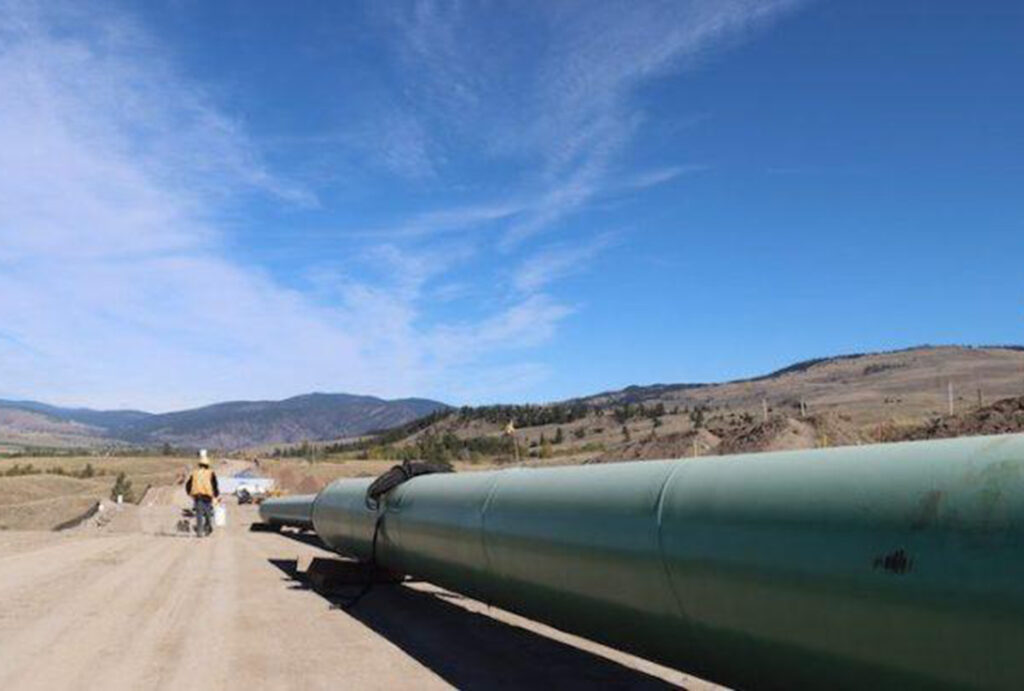
The Canadian government will likely look at selling equity in the state-owned Trans Mountain oil pipeline only after steps are taken over the next few years to maximize its output, Energy Minister Tim Hodgson said.
The government purchased the pipeline in 2018 to ensure a major expansion was built. The project ballooned in cost to about $34 billion, but it opened last year and roughly tripled the pipeline’s capacity to bring crude oil from Alberta to a port near Vancouver.
Former Prime Minister Justin Trudeau, who oversaw the purchase, consistently said the government did not intend to be the long-term owner of Trans Mountain and would seek to sell it to the private sector, with a significant equity stake likely being gifted to Indigenous groups along the pipeline’s path.
Mark Carney succeeded Trudeau as prime minister in March, but his government will likely wait until tolling issues are settled and other projects are built to further expand Trans Mountain’s capacity, Hodgson told Bloomberg in an interview.
“As somebody who spent my life in the private sector doing deals, if and when somebody’s going to sell a project, you do it when you’ve optimized the output,” said Hodgson, who spent two decades at Goldman Sachs Group Inc. and served on the board of oil producer MEG Energy Corp., among other roles.
Shippers using the Trans Mountain line have disputed the tolls they’re being charged as too expensive, arguing they shouldn’t be held responsible for the project’s cost overruns. The regulatory dispute may not be settled until late 2026 or early 2027, Mark Maki, Trans Mountain Corp.’s chief executive officer, said in an interview Friday. The companies and shippers are in talks on a settlement, with the next update expected by Feb. 6.

The government would want clarity on the tolls “so that uncertainty doesn’t depress a sale price,” Hodgson said.
Trans Mountain is also looking at multiple “optimization projects” that could raise the system’s capacity to about 1.25 million barrels per day, up from a maximum of 890,000 per day today. The Vancouver Fraser Port Authority also intends to dredge a waterway into the harbor to allow tankers to load more oil.
“There’s a number of very cost effective de-bottleneck steps that can be done, which would significantly increase the production capability of the existing infrastructure,” Hodgson said. “We should get that stuff done before we contemplate monetizing the value that’s been created for Canadian taxpayers.”
Under Trudeau, the government had begun consulting with First Nations on how to transfer equity in the pipeline. Then-Finance Minister Chrystia Freeland proposed a special-purpose vehicle that would hold a stake in the pipeline, and Indigenous groups would have the chance to opt in.
But the plan proved very complicated. The government had identified more than 120 Indigenous groups as being potentially impacted by the pipeline, and there were disagreements over whether some should be given better terms for equity based on their geographic proximity to the route. An initial meeting in Vancouver in the fall of 2023 did not go well.
Carney’s government has not yet said whether it intends to follow the same process for Indigenous ownership in Trans Mountain. But last week Carney unveiled a memorandum of understanding with Alberta Premier Danielle Smith, and it made Indigenous co-ownership a key requirement for any new oil pipelines to the British Columbia coast.
In that document, the federal government committed to using federal loan guarantees “to help backstop Indigenous co-ownership” of any new pipelines, and potentially also of the carbon capture project for the oil sands known as Pathways.
— With assistance from Robert Tuttle.
Share This: