CDN NEWS |
  US NEWS







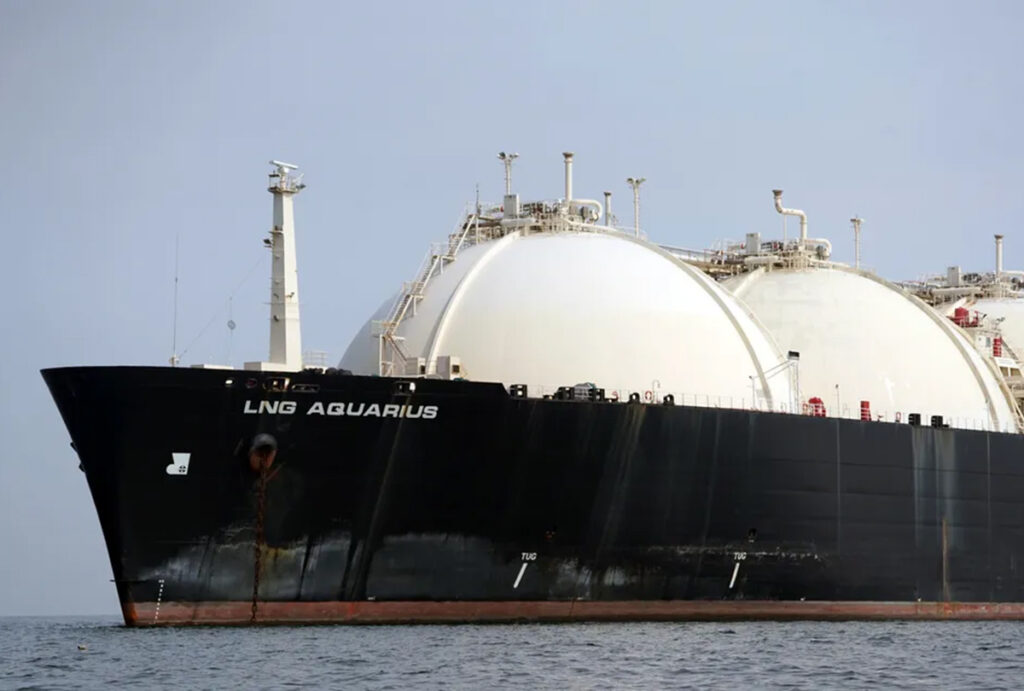
(Reuters) – Asia’s imports of liquefied natural gas (LNG) are poised to hit a six-month high in July while Europe’s imports plunge to their lowest in nearly two years.
While some of the strength in Asia is because of seasonal demand during the summer peak, the weakness in Europe underscores just how far the second-biggest consuming region is falling behind in building inventories for winter demand.
Asia’s imports of the super-chilled fuel are estimated at 23.05 million metric tons in July by commodity analysts Kpler, up for a fourth straight month. That’s about 6% higher than June and than the same month a year earlier.
The recovery in arrivals is being driven by China, the world’s largest LNG buyer, which has lifted imports in recent months, with Kpler estimating 5.62 million tons for July, the most since January and 55% above the 3.62 million tons in April, which was the weakest month for eight years.
China had earlier pulled back on LNG imports after spot prices leapt 143% in the wake of the U.S. and Israeli attack on Iran on February 28.
Spot LNG for delivery to North Asia went from $10.40 per million British thermal units (mmBtu) on February 27 to a high of $25.30 in the week to March 20.
It subsequently dropped back to a low of $15.30 per mmBtu by June 19, two days after the United States and Iran signed a 60-day ceasefire.
The ceasefire led to hopes that the Strait of Hormuz would fully reopen, allowing Qatar to resume LNG shipments and restoring about 20% of global supplies.
However, it has since collapsed. The United States and Iran have resumed trading strikes, while Tehran has said the Strait is now closed to vessels, and has struck several ships, including a Qatari LNG tanker that attempted passage last week.
The resumption of hostilities has started to feed through to higher spot LNG prices, which rose to $18.00 per mmBtu in the week to July 10, up from $16.40 the previous week.
It’s likely that higher spot prices will discourage Chinese buying, but it’s unlikely to dissuade some other Asian importers, especially wealthier countries such as Japan, South Korea and Singapore.

U.S. SWINGS
It’s also worth noting that those countries have been replacing Qatari LNG with cargoes from the United States, the world’s biggest LNG exporter ahead of Australia and Qatar.
Japan’s imports of U.S. LNG are expected to reach 940,000 tons in July, the third-highest on record, according to Kpler and almost 15 times the 60,000 tons from February, the last month before the start of the Iran conflict.
Japan, the world’s second-biggest LNG buyer, is on track for total imports of 5.37 million tons in July, a five-month high and also above the 4.72 million tons for the same month last year.
South Korea, the third-biggest LNG importer, is expected to receive 870,000 tons of U.S. LNG in July, the third-highest in Kpler records and up from just 13,000 tons in February.
Overall, Asia’s imports of U.S. LNG are expected to reach a record high of 4.23 million tons in July, about three times the 1.34 million tons from February.
Asia’s demand for U.S. LNG has meant that Europe has seen its imports from its top supplier drop, with Kpler tracking arrivals of just 3.94 million tons for July, down from a recent peak of 7.79 million in January and the lowest since November 2024.
The switching of U.S. cargoes to Asia has resulted in Europe’s total LNG imports falling to an expected 6.90 million tons in July, the lowest since September 2024 and down from 8.72 million tons in July 2025.
The drop in LNG imports comes as Europe’s refilling of natural gas inventories falls well behind schedule, with data from energy analyst John Kemp showing a storage deficit of 158 terawatt hours by July 7, about 22% wider than the 10-year seasonal average.
This means that European utilities are likely going to have to bid up spot LNG prices to levels that knock Asian buyers such as China and India out of the market.
It also means the longer Qatar’s LNG remains effectively unavailable amid the Iran conflict, the more likely spot prices will climb.
The views expressed here are those of the author, a columnist for Reuters.
Editing by Edwina Gibbs
Share This: